Recent Posts

Is Dune Awakening Co-op? Explore the Game’s Multiplayer


Survival game fans are buzzing with one question: can you team up with friends in the vast deserts of Arrakis? The upcoming survival MMO has sparked intense debates across gaming forums, especially among players who love shared adventures like those in Conan Exiles.

Early discussions reveal split opinions. Some gamers praise the potential for collaborative exploration in a harsh, open-world environment. Others worry features might feel shallow—like separate quests that don’t require real teamwork. Steam threads highlight hopes for mechanics that push players to rely on each other, not just share a map.

This title aims to blend massive multiplayer elements with survival challenges. Developers promise a unique mix of resource management, faction battles, and environmental threats. How well these systems support meaningful teamwork could make or break the experience.

Understanding multiplayer options matters. Players want to know if investing time here means building alliances or grinding solo. This article digs into gameplay details, developer insights, and community expectations to help you decide.

Key Takeaways

  • Players are eager to know if teamwork is central to surviving Arrakis.
  • The game’s blend of MMO and survival mechanics has generated major hype.
  • Community feedback shows excitement about shared worlds but concerns over shallow collaboration.
  • Features like faction wars and sandstorms could test true cooperative play.
  • Multiplayer design choices will heavily impact long-term player engagement.

Dune Awakening Multiplayer Overview

The gaming world braces for a desert storm of innovation as 2025 approaches. This title merges survival grit with MMO-scale social dynamics, letting players forge alliances or spark rivalries across shifting sands. Early trailers hint at mechanics where every decision impacts both personal survival and faction power balances.

Release Date and Anticipated Features

Mark your calendars: early 2025 brings this ambitious project to life. Developers promise:

  • Shared base-building against lethal sandstorms
  • Faction wars over spice-rich territories
  • Dynamic events requiring group strategies

Leaked gameplay clips show teams coordinating shield wall defenses during worm attacks. These moments could define whether alliances thrive or crumble under Arrakis’ sun.

Innovative MMO and Survival Elements

Traditional survival games focus on solo crafting. Here, water harvesters become team objectives, and spice harvests trigger PvP raids. The risk-reward balance pushes groups to specialize roles:

Feature Dune Awakening Traditional Titles
Resource Conflicts Real-time territory battles Static resource nodes
Environmental Threats Collaborative sandstorm survival Individual weather prep
Progression Systems Faction reputation unlocks Solo skill trees

One developer noted: “We want every player to feel like part of a living ecosystem – sometimes the predator, sometimes the prey.” This philosophy shapes everything from trade routes to betrayal mechanics.

is dune awakening co-op: A Closer Look at Game Mechanics

Building alliances in hostile environments takes center stage through innovative design choices. Developers reimagined teamwork by integrating lore-friendly systems that reward coordinated play while respecting limited schedules.

A group of players cooperatively navigating a vast, arid landscape in Dune Awakening. In the foreground, two characters work together to operate a large, heavily armored vehicle, its sturdy treads churning up the sand. In the middle ground, a squad of players coordinate their movements, utilizing each other's specialized abilities to overcome environmental obstacles. In the distant background, the iconic silhouette of a towering sandworm rises from the dunes, a looming threat that requires collective action to overcome. Warm, natural lighting illuminates the scene, casting dramatic shadows and highlighting the collaborative nature of the gameplay. The overall atmosphere conveys a sense of teamwork, strategy, and the harsh, unforgiving beauty of the Dune universe.

Co-op Combat and Shared Strategies

Battles demand more than button-mashing. Players must synchronize shield deployments during sandworm attacks while managing water reserves. One fighter might distract enemies while others sabotage spice harvesters—a dynamic requiring voice chat coordination.

Collaborative Building Systems and Exploration Tools

Solido projections let teams construct bases like architects. Place holographic blueprints, then watch allies contribute materials to manifest structures. Need to relocate? Copy entire outposts using blueprint replicas for instant rebuilding.

Feature This Title Standard MMOs
Construction Team-built projections Pre-fab templates
Resource Sharing No-trade restrictions Level-gated exchanges
Gear Accessibility Veterans craft for rookies Solo progression locks

Exploration becomes collective with shared storm maps. Chart deadly weather patterns, then distribute scanned data to allies. This eliminates redundant scouting missions—saving time for spice diplomacy or ambush planning.

“We removed arbitrary walls between players,” explains Creative Director Joel Bylos. Veterans can forge endgame weapons for new friends immediately, ensuring uneven schedules don’t fracture groups. Survival hinges on united efforts, not solo grinds.

Community Insights and Player Perspectives

Player discussions paint a vivid picture of hopes and concerns for collaborative adventures. Steam forums buzz with debates about whether this game will foster genuine teamwork or leave allies wandering the same desert without purpose.

Feedback from General Discussions

Many fans draw parallels to Conan Exiles, praising the potential for joint base-building and spice-driven politics. One enthusiastic thread states: “This could redefine how we play together in survival games.” Others voice frustration about solo-style quests that ignore group dynamics. A top-voted complaint notes: “Running parallel missions with friends feels like watching separate movies in the same theater.”

Comparisons with Other Co-op Games

How does it stack up against established titles? The table below reveals key differences:

Feature This Title Conan Exiles Valheim
Shared Objectives Territory control focus Clan-based building Boss progression
Player ID Systems Faction tags only Custom markers Map pins
Quest Integration Individual tracking Group milestones Server-wide events

Developers recently addressed concerns in a Reddit AMA: “We’re testing alliance-wide missions and improved visual identifiers based on your feedback.” This responsiveness gives hope that the final product might bridge the gap between lone survival and true co-op synergy.

Conclusion

Collaboration could become this survival title’s greatest strength—or its most glaring weakness. Early glimpses reveal innovative team-based systems, like holographic base-building and storm-tracking maps. Yet player tests highlight mismatched expectations: some find missions lack shared stakes despite occupying the same fiery dunes.

The 2025 launch window leaves room for adjustments. Developers recently pledged to expand alliance quests and improve visual coordination tools. If executed well, these changes might blend solo agency with group strategy better than competitors like Valheim or Conan Exiles.

Watch for updates as release nears. Mechanics around faction wars and resource sharing could still evolve based on beta feedback. Success hinges on balancing harsh environmental challenges with rewarding teamwork—a mix that might finally unite lone wolves and squad players.

Ultimately, your enjoyment will depend on how the final build handles collective goals. Follow developer streams and community discussions to gauge if this desert adventure aligns with your crew’s playstyle.

FAQ

Can I play with friends in Dune Awakening?

Yes! The game emphasizes collaborative gameplay, allowing you to team up with others to survive Arrakis’ harsh environment, strategize against threats, and build settlements together.

What platforms will support multiplayer features?

Dune Awakening is confirmed for PC, PlayStation 5, and Xbox Series X/S. Crossplay details are still pending, but Funcom aims for broad accessibility.

How does this title differ from other survival MMOs?

It blends political intrigue from Frank Herbert’s universe with dynamic sandstorms, resource scarcity, and faction-based alliances—offering a fresh take on the genre.

Are there shared building mechanics?

Absolutely. Players can collaborate on constructing bases, harvesting spice, and defending territories using tools inspired by the lore, like ornithopters and moisture farms.

Will combat require teamwork?

Coordinated strategies are key. Raid hostile forces, protect caravans, or engage in large-scale battles where roles like scouts or engineers impact success.

How does it compare to Conan Exiles or ARK?

While sharing survival-MMO roots, Dune’s unique setting and focus on diplomacy over pure PvP set it apart. Expect deeper narrative integration and environmental challenges.

When is the expected release window?

No official date is set, but rumors suggest late 2024 or early 2025. Stay tuned for updates from Funcom and Focus Entertainment.

Is Dune Awakening the Next Big Survival Game?


Funcom’s newest project drops players onto the scorching sands of Arrakis, blending ruthless desert survival with massive multiplayer action. Set in Frank Herbert’s iconic universe, this ambitious title promises to merge resource management, faction wars, and spice-fueled politics into one seamless experience. Scheduled for PC launch in June 2025, it aims to carve its place in a competitive genre.

What sets this release apart? Developers combine persistent world-building with dynamic environmental threats, requiring collaboration to survive sandstorms and rival clans. The MMO framework adds depth, letting thousands shape the narrative through alliances or betrayals. Early footage showcases vast deserts dotted with modular bases and roaming sandworms.

Funcom’s history with Conan Exiles proves their knack for crafting engaging survival systems. Still, questions linger: Can they balance hardcore mechanics with accessibility? Will the June release date clash with other major titles? Our analysis digs into gameplay previews, developer interviews, and market trends to gauge its potential impact.

Key Takeaways

  • Blends survival mechanics with MMO-scale player interactions
  • Built by creators of successful sandbox titles like Conan Exiles
  • PC version launches first, followed by console releases
  • Innovates with environmental storytelling and political systems
  • Faces stiff competition in a crowded gaming niche

Introduction to Dune: Awakening

Frank Herbert’s legendary sci-fi universe gets a fresh interactive adaptation through Funcom’s open-world survival project. After securing rights to the franchise in 2019, the studio partnered with German developer Nukklear to craft a persistent multiplayer experience rooted in Arrakis’ deadly beauty. Their goal? To merge brutal environmental challenges with the political tension that defines Herbert’s books.

Funcom’s Conan Exiles laid groundwork for this venture, proving their ability to balance harsh survival mechanics with player-driven storytelling. Creative director Joel Bylos states:

“We’re building systems where every drop of water matters, and alliances shift faster than desert sands.”

The setting naturally complements survival gameplay. Arrakis forces players to navigate:

Challenge Conan Exiles Dune: Awakening
Core Resource Food/Water Spice & Water
Environmental Threat Sandstorms Sandworms & Heat
Player Conflict Clan Raids Faction Espionage

Development focuses on authenticity. Modular base-building adapts to shifting dunes, while dynamic events like spice blows create unpredictable opportunities. Early testing reveals mechanics where moisture farming directly impacts faction standing – a clever nod to the novels’ themes.

With PC launch plans set for 2025, the team aims to honor Herbert’s vision while pushing survival genre boundaries. Success hinges on translating political intrigue into gameplay systems, a challenge Funcom seems prepared to tackle.

Overview of Gameplay and Key Features

This title reimagines collaborative survival through fluid role-playing opportunities. Unlike conventional MMOs, character progression avoids rigid class systems, letting participants craft unique strategies through gear and environmental mastery. You might forge alliances to control spice fields one day, then vanish into the dunes alone the next.

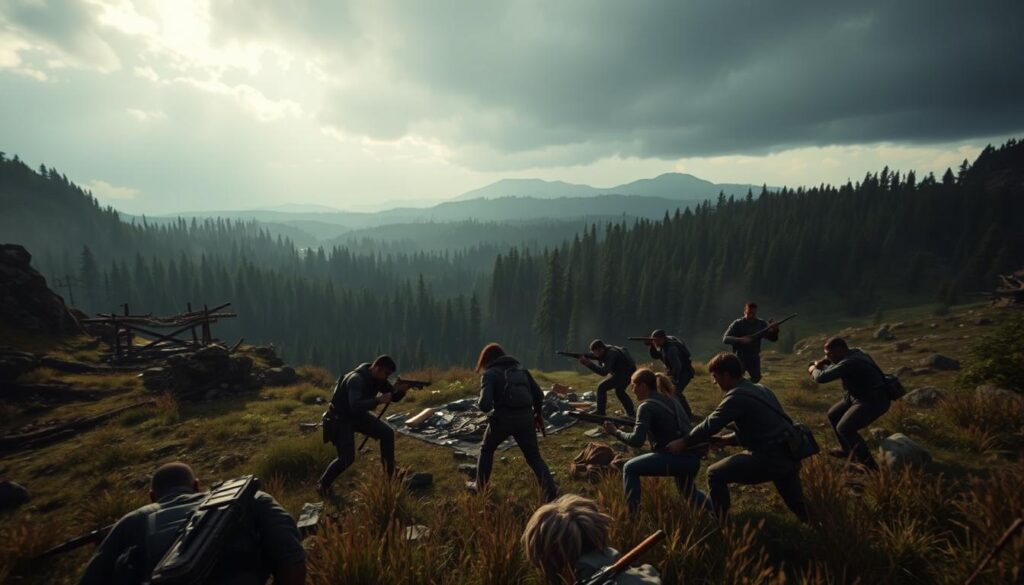
A vast open-world landscape, with a focus on the foreground where a group of players engage in a tense multiplayer survival game. Rugged terrain, dense forests, and a moody, overcast sky set the stage. In the center, players scavenge for resources, craft weapons, and strategize their next move, their faces etched with determination. Lighting is dramatic, casting long shadows and highlighting the intensity of the encounter. The camera angle is slightly elevated, providing a cinematic perspective on the gameplay mechanics unfolding below. An atmosphere of high-stakes competition and the ever-present threat of the unknown permeates the scene.

Social flexibility defines the experience. Built-in trading posts and faction hubs let groups barter resources or plot territorial expansion. Yet solitary adventurers thrive too – remote caves and hidden moisture farms offer refuge from political squabbles. Survival demands shift based on chosen playstyles, whether raiding enemy stockpiles or studying ancient Fremen survival techniques.

The developers ditch mandatory team mechanics seen in other titles. Instead, dynamic events like sandworm migrations create organic cooperation moments. One player might distract the creature while others harvest precious spice. These emergent scenarios replace scripted boss battles, rewarding improvisation over predefined roles.

Key systems include:

  • Player-driven markets influencing regional economies
  • Modular shelters adapting to sandstorms
  • Heat management requiring timed expeditions

Combat balances risk and reward. Raiding another clan’s stash could yield rare blueprints – or trigger costly vendettas. This tension between cooperation and competition keeps the persistent world unpredictable, mirroring Arrakis’ unforgiving nature.

Exploring Arrakis: World Map and Social Hubs

Navigating Arrakis demands mastery of three distinct zones, each shaping unique survival strategies. From the relative safety of Hagga Basin to the lawless Deep Desert, players adapt their tactics based on environmental threats and social dynamics.

The Vast Hagga Basin and Its Significance

Spanning 64 square kilometers, Hagga Basin serves as the primary PvE playground. Newcomers establish bases here, shielded from most player combat while tackling story missions and mastering spice harvesting. Permanent structures dot the landscape, protected by game rules preventing demolition in safe zones.

Social Hubs and the Role of the Deep Desert

Arakeen and Harko Village act as bustling trade centers. These hubs feature quest givers, craft stations, and pilot services for ornithopter flights. Players often regroup here before venturing into the Deep Desert – a PvP zone spanning 576 square kilometers of shifting sands.

Feature Hagga Basin Deep Desert
Size 64 km² 576 km²
Combat Focus PvE (Safe Zones) Full PvP
Access Method Walking/Ornithopter Flight Only
Reset Frequency Never Weekly

The Deep Desert rewards risk-takers with rare resources but resets weekly, erasing temporary bases. Survival here requires constant movement – stationary players become easy targets for rivals or roaming sandworms. As one beta tester noted: “You either master the dunes or become another skeleton buried beneath them.”

Is Dune Awakening the Next Big Survival Game?

This ambitious hybrid blends survival mechanics with MMO-scale interactions, creating a persistent world where strategic alliances determine success. Its server architecture breaks new ground – 40-50 participants per Hagga Basin instance share resources, while hundreds converge in the volatile Deep Desert. This layered approach solves a common problem in the genre: maintaining intimacy in safe zones while enabling epic clashes elsewhere.

A vast, arid landscape, the dunes of Arrakis stretch out as far as the eye can see. In the foreground, a group of survival game players navigate the harsh terrain, their faces etched with determination. They move stealthily, wielding an array of crafted tools and weapons, ever vigilant for the perils that lurk in the shadows. The middle ground reveals the dynamic interplay between the players, as they collaborate and compete, forming alliances and engaging in tense standoffs. The air is thick with the crackle of communication and the thrill of the hunt. In the distance, towering sandworms breach the surface, a constant reminder of the unforgiving nature of this world. The players must adapt and overcome, using their wits and resources to emerge victorious in this brutal, multiplayer survival game.

Traditional titles like Rust or ARK struggle with server population balance. Here, the system lets friends cooperate in manageable groups yet compete in grander conflicts. Political systems add depth – controlling spice fields impacts faction reputations, creating ripple effects across the shared map.

Long-term appeal hinges on content diversity. Early testers praise how base-building synergizes with exploration and sudden sandworm threats. One beta participant noted: “You never know if tomorrow brings new allies or a raid that wipes your stockpile.” Regular map resets in danger zones keep strategies fresh without erasing progress in secure areas.

The source material’s richness gives this project an edge. Factions mirror the novels’ power struggles, while resource control mechanics feel authentically tied to Arrakis’ lore. Market trends suggest players crave these layered experiences, but success requires polished execution at launch.

Industry analysts remain cautiously optimistic. The blend of familiar survival elements with massive multiplayer potential could attract both genre veterans and newcomers – if server stability and content updates meet expectations.

Multiplayer Dynamics and Cooperative Play

Collaborative strategies take center stage in this survival MMO, where group dynamics shape every expedition. From intimate scavenger teams to sprawling alliances, the social framework encourages meaningful interactions without forcing rigid playstyles.

Guilds, Parties, and In-Game Alliances

Small squads thrive through the four-player party system. These compact groups tackle spice harvesting runs or explore abandoned research stations. Shared waypoints and resource tracking keep teams synchronized during sandstorm evacuations.

Larger ambitions require guilds – organized groups capped at 32 members. Membership hinges on faction loyalty: Atreides devotees can’t collaborate with Harkonnen loyalists. This creates natural rivalries, as one beta participant noted:

“Choosing a house isn’t just lore – it locks you into wars and trade embargoes.”

Feature Parties Guilds
Max Size 4 32
Access Rights Shared loot Custom permissions
Faction Rules Mixed allowed Single house only

The permission system lets leaders control vehicle access and spice vaults. You might grant allies blueprint privileges while restricting sensitive areas. This flexibility supports everything from public trading posts to secret weapon caches.

Endgame content revolves around guild clashes in the Deep Desert. Controlling spice fields demands coordinated raids and defensive rotations. Solo players still contribute by scouting enemy movements or sabotaging moisture harvesters.

Character Progression, Professions, and Skill Customization

Arrakis rewards those who adapt. Five starting paths shape your journey: Bene Gesserit whisperers, battle-hardened Troopers, logic-driven Mentats, precision-focused Swordmasters, and terrain-savvy Planetologists. Each offers distinct playstyles through unique starting abilities and gear, though all roads eventually open through persistent exploration.

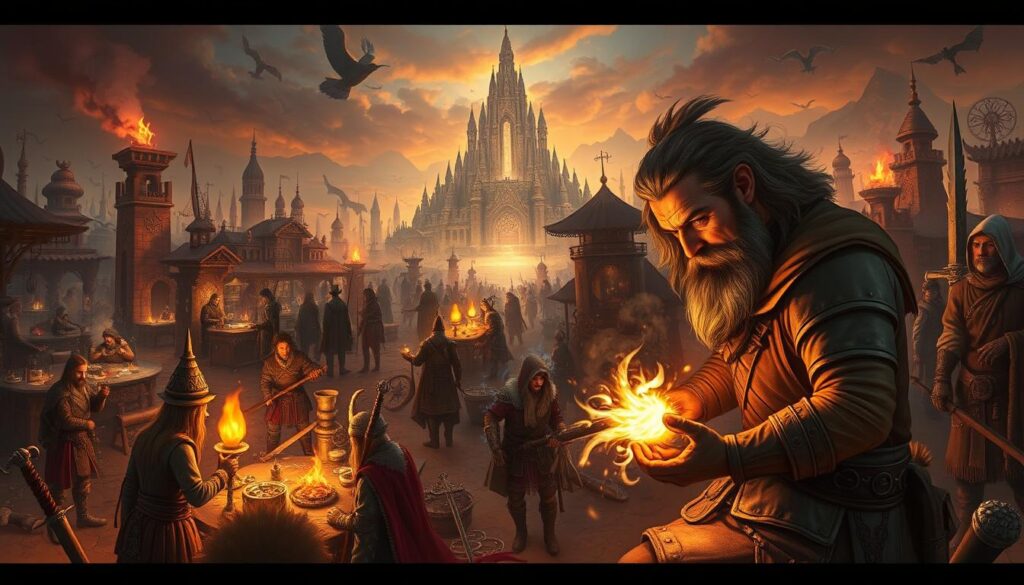
A sprawling landscape of diverse character professions, each with intricate skill trees and customization options. In the foreground, a skilled craftsman meticulously forges a gleaming sword, their face illuminated by the glow of the forge. Surrounding them, a bustling hub of activity - alchemists concocting potent elixirs, scouts charting treacherous terrain, and shamans communing with ancient spirits. The middle ground is filled with a tapestry of specialized tools, scrolls, and enchanted talismans, hinting at the depth of the character progression system. In the background, a towering citadel stands as a symbol of the game's rich, immersive world, bathed in warm, ambient lighting that casts a sense of wonder and discovery. This image captures the essence of a thriving, customizable character experience at the heart of the survival game.

Unlocking Unique Professions and Ability Trees

Your initial choice isn’t permanent. Earn skill points by completing faction missions or surviving spice harvests to unlock other roles. Early-game Bene Gesserit players might later master Trooper combat techniques, blending psychic persuasion with ballistic prowess.

Starting Profession Core Ability Unlock Requirement
Bene Gesserit Voice Command Complete 10 political quests
Planetologist Sand Analysis Survey 5 spice fields

Balancing Active Skills and Passives

Strategic loadouts trump overwhelming arsenals. You’ll manage:

  • Three instant-use powers like Mentat calculation bursts
  • Three persistent boosts such as reduced water consumption

Spice consumption temporarily amplifies selected abilities, creating risk-reward scenarios. One beta tester noted: “Using melange feels addictive – the power surge is incredible, but withdrawal debuffs leave you vulnerable.”

Respec options let you reallocate points when strategies shift. This flexibility encourages experimentation without punishing early choices, keeping progression fresh across hundreds of hours.

Surviving the Elements: Environmental Challenges

Arrakis tests players with threats far deadlier than rival clans. While hunger and sleep mechanics are absent, the desert punishes those who ignore its rules. Every decision revolves around one precious resource: water.

Hydration, Heat, and Hazardous Terrain

Water dictates life in this scorched landscape. Players monitor hydration levels constantly, seeking shade under rock formations or abandoned structures. Advanced gear like moisture harvesters becomes essential for long expeditions.

The iconic stillsuit plays a central role. Basic models recycle sweat, while upgraded versions extract water from defeated enemies. One tester joked: “Nothing beats the thrill of turning raiders into drinking water.”

Environmental dangers keep tension high. Sudden sandstorms reduce visibility and drain stamina. Quicksand traps demand quick reflexes, and radiation zones require protective suits. Night brings Sardaukar patrols – their searchlights mean instant combat if spotted.

Mastering these systems creates rewarding gameplay loops. Whether dodging sandworms or optimizing stillsuits, survival hinges on adapting to Arrakis’ ever-shifting threats. It’s a lot to handle, but that’s what makes conquering the desert so satisfying.

FAQ

What sets Dune: Awakening apart from other survival titles?

The game blends Frank Herbert’s iconic universe with dynamic survival mechanics, like spice harvesting and sand-based terrain challenges. Players also engage with factions like the Bene Gesserit while navigating Arrakis’ deadly ecosystems.

How does hydration and heat management work in the game?

Survival hinges on maintaining your stillsuit’s efficiency. Scavenging water, avoiding sun exposure, and upgrading gear are critical to endure Arrakis’ extreme climate. Hazardous sandstorms add unpredictable threats.

Can players join guilds or form alliances?

Yes! Cooperative play is central. Teams can ally with factions, build bases in social hubs like the Hagga Basin, and compete for control of spice-rich territories. Betrayal and diplomacy shape the multiplayer experience.

Are there unique professions or skill trees to explore?

Absolutely. Choose roles like Mentat strategists or Fremen scouts, each with distinct ability trees. Balance active combat skills with passive perks tailored to your playstyle, whether crafting or combat-focused.

What regions of Arrakis can I explore?

The Hagga Basin serves as a starting zone, while the Deep Desert offers high-risk areas with rare resources. Social hubs provide safe zones for trading, but venturing farther unlocks greater rewards—and dangers.

Will vehicles play a role in traversing the open world?

Yes. From ornithopters to sand bikes, vehicles help navigate vast dunes quickly. However, sandworms and shifting terrain make every journey a calculated risk.

How does the timeline connect to the original Dune story?

The game occurs during Duke Leto Atreides’ rise, blending established lore with new events. Players influence faction conflicts and uncover secrets tied to spice’s origins, reshaping Arrakis’ future.

Is Dune Awakening Worth Buying? A Comprehensive Review


Set in a reimagined Arrakis where Paul Atreides’ story never unfolded, Dune Awakening challenges gamers to survive brutal desert conditions. Launching June 10, 2025, this multiplayer experience blends cooperative mechanics with ruthless environmental threats. Scavenge resources, avoid colossal sandworms, and forge alliances—or rivalries—with other survivors on your server.

Three editions offer varying perks: the $49.99 Standard Edition, $69.99 Deluxe with cosmetic upgrades, and $89.99 Ultimate featuring early access. While solo play exists, teamwork becomes essential for overcoming Arrakis’ deadliest challenges. Early testers praise the dynamic world but note a steep learning curve for survival mechanics.

This review analyzes whether the game justifies its price across different player preferences. We’ll break down how its alternate timeline creates fresh storytelling opportunities compared to familiar Dune lore. Content depth, server stability, and long-term replay value will also factor into our final verdict.

Key Takeaways

  • Alternate Dune universe with no Paul Atreides storyline
  • Multiplayer survival focus requiring strategic cooperation
  • Three pricing tiers offering distinct cosmetic and gameplay benefits
  • Mixed early feedback on environmental challenges and progression systems
  • Potential for extended playtime through dynamic server events

Game Overview and Immersive Dune Experience

The sands of Arrakis tell a different story here – one where strategic survival replaces familiar narratives. This reimagined dune universe challenges players to master brutal conditions through clever planning and adaptation.

Exploring the Harsh Environment of Arrakis

Scorching days and freezing nights test your resolve in this authentic desert setting. Environmental threats escalate naturally – shimmering heat waves drain stamina, while sudden sandstorms force quick shelter searches. “There’s just so much to do,” notes gaming journalist Harry Alston, highlighting the map’s staggering scale.

Three key desert challenges create tense gameplay:

Hazard Effect Solution
Extreme Heat Rapid dehydration Night travel
Sandworms Instant death Shield management
Dust Storms Lost visibility Rock formations

Survival and Base Building Mechanics

Constructing a functional base becomes your lifeline. Storage units protect rare spice harvests, while moisture farms provide essential water. Unlike typical survival games, structures must withstand both enemy raids and tectonic shifts caused by wandering worms.

Progression systems reward exploration. Ancient ruins hide blueprints for advanced gear, encouraging risky expeditions. Cooperative players can share resource burdens, making alliance-building crucial for long-term success in this merciless universe.

Is Dune Awakening Worth Buying? Evaluating Content and Value

This desert survival epic rewards patience while respecting your time. Through smart crafting systems and layered challenges, it creates lasting appeal without overwhelming players.

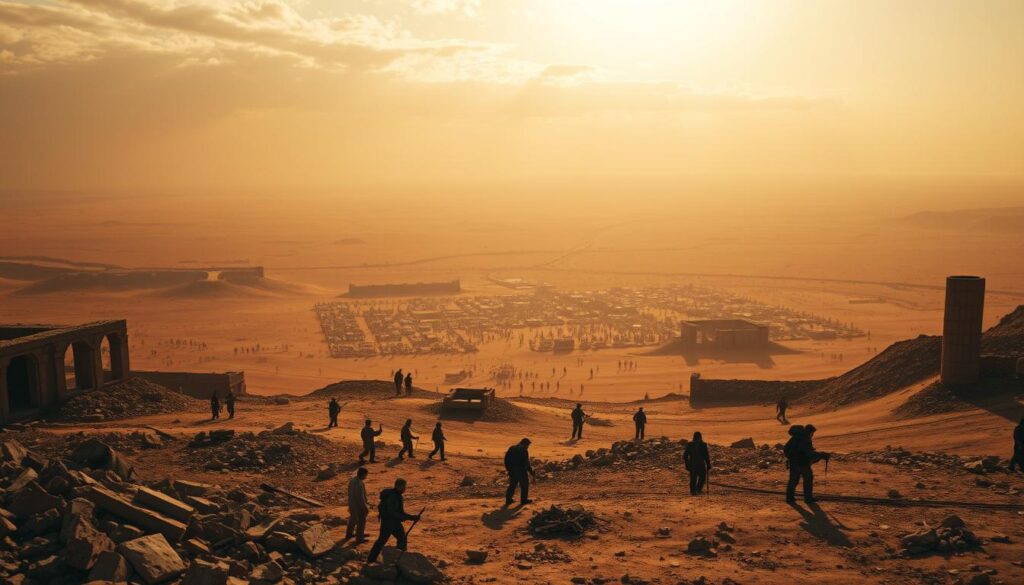
A vast, sun-scorched desert landscape stretches out, dotted with the crumbling ruins of an ancient civilization. In the foreground, a group of resourceful survivors scavenge for vital supplies - scavenging through rubble, crafting makeshift tools, and meticulously managing their limited resources. The middle ground reveals a sprawling, dystopian settlement, where desperate inhabitants vie for dwindling provisions. Overhead, a harsh, cloudless sky casts an ominous, sepia-toned glow, heightening the sense of a world on the brink of collapse. The scene is rendered with a cinematic, gritty aesthetic, capturing the intense struggle for survival in this harsh, unforgiving environment.

Gameplay Mechanics and Resource Management

Early survival focuses on water scarcity and basic shelters. Unlike typical grind-heavy titles, progression unlocks practical upgrades like automated moisture collectors. One beta tester remarked: “Researching new gear actually changes how you play instead of just boosting stats.”

The endgame shifts focus dramatically. Building advanced vehicles requires rare materials found in dangerous zones. While cooperative groups can tackle these faster, solo adventurers still enjoy meaningful advancement through scaled-down projects.

PvE, PvP, and Solo vs. Cooperative Play

Three main activity types dominate:

  • Exploratory PvE in ancient ruins
  • Optional PvP in contested spice fields
  • Massive 20-player raids on sandworm nests

Death carries consequences without frustration. Lost resources hurt, but kept gear lets you rebound quickly. This balance keeps sessions rewarding even after setbacks.

With over 80 hours of core content and endless sandbox potential, the game delivers substantial value. Whether building solo outposts or collaborating on megaprojects, Arrakis always offers new challenges for persistent survivors.

Player Reviews, Pricing, and Detailed Game Analysis

Early adopters praise the title’s ambition but highlight specific areas for improvement. Let’s examine how different editions stack up and whether mechanics live up to expectations.

Edition Breakdown and Cost Considerations

Edition Price Key Features Best For
Standard $49.99 Full survival experience Budget-focused players
Deluxe $69.99 Exclusive cosmetics + 3 building sets Style enthusiasts
Ultimate $89.99 Season pass + early access Hardcore fans

The Standard Edition delivers complete core gameplay. Cosmetic upgrades in pricier versions appeal to collectors but don’t affect progression. “You’re not missing crucial content if you skip extras,” confirms beta participant Lara Simmons.

Combat, Crafting, and Overall Player Experience

Ranged battles shine with tactical depth – weapon choices impact engagement ranges and enemy reactions. Melee struggles with clunky animations, though community discussions suggest upcoming tweaks.

Crafting systems receive universal praise. Researching new gear types fundamentally alters exploration capabilities. One player noted: “Unlocking the suspension vehicle changed how I approach spice harvesting entirely.”

While some enemy encounters feel unbalanced, persistent players find workarounds through cooperative strategies. Server stability remains impressive, with minimal crashes reported during peak beta testing hours.

Conclusion

Survival enthusiasts and franchise fans will find much to love in this desert odyssey. While following familiar survival game foundations, creative twists like tectonic base destruction and spice-driven economies refresh the formula. Teamwork transforms tense resource hunts into memorable triumphs, though solo adventurers can still carve their path through Arrakis’ dunes.

The endgame shines brightest when coordinating massive projects with others. As critic Jacqueline Zalace observes: “This adaptation captures Frank Herbert’s spirit through gameplay rather than story.” Technical stability surpasses most multiplayer launches, with servers smoothly handling 50-player worm hunts during peak tests.

At $49.99, the Standard Edition delivers satisfying content depth without premium pressures. Melee combat quirks may frustrate action purists, but tactical shield mechanics reward strategic thinkers. Those seeking a fresh desert challenge with strong community potential won’t regret investing time here – just pack extra water filters.

FAQ

How does the game handle survival elements like sandstorms or resource scarcity?

Players must manage water, shelter, and gear to endure Arrakis’ brutal climate. Sandstorms dynamically reshape the environment, forcing strategic base-building and resource scavenging. Limited water sources and hostile creatures add constant pressure.

Can I play solo, or is cooperation required for progress?

While solo play is possible, alliances help tackle tougher challenges like Spice harvesting or defending against enemy factions. PvE events and territory control often encourage teamwork, but solo explorers can still thrive with careful planning.

What makes combat unique compared to other survival games?

Battles emphasize environmental tactics—using sand to ambush foes or dodging enemy attacks during storms. Weapon crafting lets players customize gear for ranged, melee, or hybrid playstyles, keeping combat dynamic and adaptable.

Is there enough endgame content to justify long-term play?

Beyond base-building, endgame focuses on territory wars, rare resource hunts, and faction-based objectives. Regular updates and community events aim to keep the desert alive, though some players note repetitive grind loops in later stages.

How does crafting tie into the overall experience?

Crafting is central—you’ll create tools, vehicles, and modular base parts from scavenged materials. High-tier gear requires rare Spice or schematics found in risky zones, rewarding exploration and risk-taking.

Are there microtransactions or pay-to-win mechanics?

The current model focuses on cosmetic purchases, though some beta testers express concerns about time-gated upgrades. Developers confirm no paywalls for core progression, but final monetization details remain unclear.

How does the game balance PvP and PvE content?

Designated zones separate optional PvP from cooperative PvE areas. Raiders can attack unprotected bases, but defensive structures and alliances mitigate risks. Solo players can avoid conflict-heavy regions entirely.

Does the beta access offer a fair representation of the full game?

Early builds showcase core mechanics like survival and crafting, but lack polish in combat animations and late-game systems. Server stability and balancing are still works in progress, per recent player feedback.

Is Dune Awakening Worth It? A Detailed Review


Picture a vast desert world where survival depends on strategy, alliances, and quick thinking. Dune: Awakening drops players into an alternate version of Arrakis, where Paul Atreides’ absence reshapes the planet’s fate. Released on June 10, 2025, this multiplayer title challenges gamers to navigate sandworm threats, rival factions, and a merciless environment.

The launch surprised many with its polished performance. Servers stayed stable during marathon play sessions, and technical hiccups remained rare. Unlike typical survival games, this experience blends political intrigue with resource management, creating fresh stakes in a familiar universe.

But does it deliver lasting value? Our review digs into mechanics that set it apart, from dynamic weather systems to faction diplomacy. We’ll break down whether the Arrakis setting enhances the genre or feels like recycled desert tropes.

Fans of Frank Herbert’s novels will find clever nods to the source material, while newcomers get a streamlined entry point. The real test lies in balancing survival tension with meaningful progression—a make-or-break factor for long-term engagement.

Key Takeaways

  • Set in an alternate Dune timeline with no Paul Atreides
  • Combines survival mechanics with political strategy
  • Stable servers and minimal bugs at launch
  • Unique environmental challenges shape gameplay
  • Appeals to both franchise fans and survival genre enthusiasts

Game Overview and Unique Features

Step into an alternate Arrakis where survival hinges on more than just water and spice. This reimagined timeline skips Paul Atreides’ legacy, letting factions carve their own destinies across shifting sands. Political power plays collide with environmental hazards, creating tense moments where every alliance matters.

Setting and Thematic Background on Arrakis

The desert planet feels alive through dynamic weather patterns and territorial conflicts. Scavenger raids intensify as daylight fades, while sudden sandstorms force players to rethink strategies. Massive sandworms don’t just attack—they reshape entire landscapes during their destructive migrations.

Multiplayer and Survival Crafting Elements

Team up to construct hidden moisture farms or sabotage rival bases under cover of darkness. Crafting goes beyond basic tools, letting you build sonic disruptors to ward off worms or trade rare spices for advanced gear. Solo adventurers face tougher challenges but gain unique stealth advantages in crowded servers.

Key Feature Impact on Gameplay Dune Universe Integration
Dynamic Sandstorms Alters visibility and resource availability Mirrors Frank Herbert’s ecological themes
Sandworm Encounters High-risk navigation challenges Uses iconic creatures as environmental threats
Faction Alliances Unlocks faction-specific tech trees Expands on Great Houses’ political rivalries

Resource management becomes a storytelling device here. Securing water reserves might trigger unexpected story events, while over-mining spice attracts unwanted attention. This blend of mechanics keeps the experience rooted in the source material while offering fresh challenges.

Is Dune Awakening Worth It? Examining Gameplay and Mechanics

Survival here isn’t just about resources—it’s about adapting to ever-changing threats. The gameplay layers environmental challenges with strategic decision-making, creating tension that keeps your palms sweaty even in air-conditioned rooms.

Dune Awakening gameplay mechanics: A vast desert landscape, with towering dunes casting long shadows under a scorching sun. In the foreground, a group of players navigating the treacherous terrain, expertly controlling their ornithopter-like vehicles as they weave between the dunes. In the middle ground, a massive sandworm burrows through the sand, its colossal form a testament to the power of Arrakis. The background is filled with the shimmering haze of the horizon, hinting at the challenges and opportunities that await the players as they explore this iconic sci-fi world. The scene is rendered with a cinematic, high-contrast aesthetic, capturing the gritty, immersive nature of the Dune Awakening experience.

Immersive Gameplay: Exploration, Combat, and Crafting

Blade combat delivers satisfying crunch during close-quarters skirmishes. Parrying attacks requires precise timing, while ranged weapons demand careful ammo management. The “Attitude of the Knife” mission perfectly introduces these mechanics through escalating duels.

Crafting transforms scavenged materials into game-changing tools. Build moisture traps from wreckage during early hours, then later construct entire bases with shield generators. One player crafted an Ornithopter using spare parts—until a sandworm ate their landing pad.

Tutorial Missions and Survival Mechanics Explained

Newcomers spend 6-10 hours mastering survival essentials through story-driven lessons. “Shelter and Shields” teaches base construction while advancing faction alliances. Veterans blast through these tutorials in half the time, focusing on advanced tactics.

The progression system rewards mastery with blueprints for spice harvesters and climate-resistant armor. Every mechanic connects—ignore hydration warnings, and your character’s shaky hands will ruin delicate crafting attempts. This interdependence makes failures feel earned and victories monumental.

Detailed Cost Breakdown and Editions

Investment in this survival epic varies with cosmetic perks and strategic content access. Three tiers let players choose their commitment level to Arrakis’ challenges while balancing budget and benefits.

Standard, Deluxe, and Ultimate Edition Comparisons

The $49.99 Standard Edition delivers the full game with core survival mechanics. You’ll build bases, harvest resources, and face sandworms without extra frills. It’s perfect for newcomers testing the genre.

Upgrading to the $69.99 Deluxe Edition adds the Season Pass and Sardaukar armor. These extras suit dedicated fans wanting ongoing content and visual flair. The armor’s stats match mid-tier gear, making it more than cosmetic.

Ultimate Edition buyers ($89.99) receive exclusive film-inspired items and digital bonuses. The Caladan Palace building set transforms base designs, while the soundtrack enhances atmospheric gameplay. True collectors will cherish these nods to the universe.

Value for Price and Long-Term Investment Considerations

Even the base version offers 40+ hours before hitting demanding endgame progression. Compare that to similar-priced games offering half the playtime. The tutorial alone matches some indie titles’ full length.

Season Pass inclusion in premium editions future-proofs your purchase. Developers promise quarterly updates with new biomes and faction quests. For those planning months-long campaigns, higher tiers reduce later spending.

While cosmetics don’t affect survival chances, they deepen immersion. Riding a film-accurate sandbike or wearing Paul’s stillsuit makes every moment feel part of Herbert’s legacy. That emotional connection justifies the premium for many.

Player Experiences and Community Insights

Those venturing across Arrakis find themselves part of a passionate community shaping the game’s evolving landscape. Player stories reveal triumphs over environmental hazards and frustrations with progression walls, creating vibrant discussions about balancing challenge with accessibility.

A bustling community forum set against the backdrop of the vast, wind-swept dunes of Arrakis. In the foreground, players engage in lively discussions, their faces illuminated by the warm glow of their digital devices. The middle ground features a collage of vivid icons, charts, and graphs, capturing the diverse perspectives and feedback shared by the dedicated Dune Awakening players. In the distance, the towering, angular silhouettes of Arrakeen architecture loom, hinting at the immersive world that has captivated the community. The scene is bathed in a soft, diffused light, evoking a sense of contemplation and engagement as the players share their experiences and shape the future of this highly anticipated game.

Voices From the Sands

Early adopters praise the world’s staggering scale. One streamer spent 17 hours mapping cave systems before discovering a hidden research station. “The constant tension between exploration and survival keeps you hooked,” they noted during a live session.

Cooperative play emerges as a common theme in positive reviews. Groups sharing resources complete major projects 40% faster than solo adventurers according to player-collected data. This teamwork dynamic fuels memorable moments like coordinated sandworm diversions during spice raids.

Endgame Mountains to Climb

Advanced gear requirements spark heated debates. Crafting a single carryall transport demands:

  • 83 units of plasteel
  • 17 refined spice charges
  • 4 intact shield generators

Solo collectors report needing 12+ hours to gather these materials. Many suggest adjusting drop rates or adding alternative acquisition methods for lone wolves.

Challenge Solo Solution Group Advantage
Spice Harvesting Stealth extraction Distraction teams
Base Defense Automated turrets Rotating patrols
Worm Evasion Vibration dampeners Decoy runners

Combat receives measured praise despite not revolutionizing the genre. Melee enthusiasts enjoy dueling mechanics, while ranged specialists appreciate ballistic physics affecting projectile drop in thin air. Both agree the real adrenaline comes from environmental threats overriding scripted encounters.

Conclusion

Conquering Arrakis demands more than grit—it rewards those who master its harsh rhythms. Dune: Awakening stands tall among survival games by merging Frank Herbert’s visionary world with tense resource management. Blending political intrigue with environmental mastery creates a fresh take on the genre.

Explorers uncover new surprises even after 50+ hours, from hidden spice caches to evolving faction dynamics. Cooperative play transforms grinding for materials into shared victories, while solo adventurers gain bragging rights for overcoming steep odds. The desert planet feels alive through unpredictable storms and territorial shifts.

Though combat mechanics won’t redefine gaming, the overall experience delivers memorable moments. Building a thriving base as winds howl outside or outsmarting rival clans during spice raids creates lasting stories. True fans of the universe will appreciate how every decision echoes Herbert’s ecological themes.

For those seeking depth over instant gratification, this journey through shifting sands justifies the investment. Gather allies, stockpile resources, and let Arrakis test your limits—the results will stay with you long after logging off.

FAQ

How does the survival genre blend with the Dune universe?

The game merges harsh desert environments from Frank Herbert’s novels with classic survival mechanics. Players scavenge for spice, water, and shelter while navigating threats like sandworms. It’s a fresh take that respects the source material.

Does combat focus on solo play or multiplayer teamwork?

Both! You can tackle enemies like Fremen raiders alone, but teaming up with others to raid bases or defend against massive threats adds depth. The multiplayer elements encourage strategic alliances, mirroring the politics of Arrakis.

Are crafting and base-building overly time-consuming?

Early tutorial missions ease you into gathering materials and constructing outposts. While late-game projects require rarer resources, the pacing ensures you’re always working toward meaningful upgrades without feeling stuck.

How does the Deluxe Edition differ from the Standard version?

The Deluxe Edition includes cosmetic items like exclusive armor skins and a digital artbook. For hardcore fans, the Ultimate Edition adds early access and a story expansion focused on House Harkonnen. Base-game content remains the same across editions.

Is the open world repetitive after a few hours?

Dynamic sandstorms, shifting spice deposits, and random encounters keep exploration engaging. The map’s biomes—from rocky canyons to hidden sietch settlements—reward curiosity, though some resource-grinding is inevitable in the endgame.

Does the story tie into Denis Villeneuve’s Dune movies?

While it shares visual and thematic DNA with the films, the game’s narrative is standalone. You’ll recognize factions and lore, but the original storyline focuses on your survival journey, not retelling existing plots.

What’s the biggest challenge for new players?

Managing water and spice levels early on can feel punishing. However, mastering environmental mechanics—like using stillsuits or avoiding worm-attracting vibrations—turns these hurdles into satisfying strategic layers.

Discover the Pilot Dune Awakening: Your Guide


Navigating the vast deserts of Dune: Awakening can feel overwhelming at first. The game drops you into a sprawling world where survival depends on mastering its unique systems—especially transportation. While settlements like Harko Village and Arrakeen offer refuge, reaching them requires a resource many new players overlook: ornithopter pilots.

Early quests, such as “A Wider World,” push you to explore beyond starter zones. But locating pilots isn’t always straightforward. The game leaves clues sparse, leading many to wander tradeposts without clear direction. This guide cuts through the confusion, offering actionable steps to connect with these vital NPCs and unlock efficient travel routes.

Whether you’re a newcomer or a seasoned explorer, understanding how pilots operate is key to thriving on Arrakis. We’ll break down costs, timing, and strategies to maximize your exploration without drowning in jargon. By the end, you’ll confidently traverse the sands and access hidden content that elevates your gameplay experience.

Key Takeaways

  • Ornithopter pilots are essential for accessing major settlements like Arrakeen.
  • The “A Wider World” quest introduces the transportation system but lacks clear instructions.
  • Pilots are often found near tradeposts, though the game provides minimal hints.
  • Mastering pilot interactions unlocks efficient travel and hidden gameplay opportunities.
  • Planning routes in advance saves time and resources during exploration.

Where to find the pilot dune awakening

Securing reliable transportation transforms your desert survival experience. While settlements like Harko Village promise safety, reaching them demands connecting with specialized personnel who control aerial routes.

Identifying Ornithopter Pilots at Tradeposts

Every major trading hub features at least one transport operator. Look for NPCs stationed beneath glowing blue holograms shaped like aircraft wings. These markers shine through dust storms, making them visible from across crowded markets.

Griffin Reach in southern Hagga Basin serves as most players’ introduction to this system. Check sheltered areas near merchant stalls first – operators cluster there for efficiency. Keep 2,500 Solaris in your inventory, as they won’t accept bank transfers.

Navigating Harko Village and Griffin Reach

Your initial “A Wider World” quest directs you toward these hubs. Griffin Reach’s layout helps newcomers practice spotting holograms quickly. Once familiar, apply this skill when visiting Harko Village’s more complex market layout.

Three tips for efficient travel:

  • Scan for blue light patterns before entering crowded areas
  • Complete nearby resource-gathering tasks while waiting for transport
  • Book return trips immediately to lock in departure times

Mastering these locations early ensures smoother progression through later challenges. The 2,500 Solaris fee becomes manageable once you learn to combine trading runs with main story objectives.

Mastering Fast Travel with Ornithopter and Taxi Services

Efficient movement across Arrakis separates novices from veterans. The game’s aerial transport system lets you bypass hours of risky sand travel while conserving resources for critical upgrades.

A breathtaking landscape of the Dune world, bathed in warm ochre tones. In the foreground, an ornithopter craft hovers gracefully, its sleek, insect-like design capturing the essence of Arrakis. Behind it, a fleet of hovering taxi vehicles glides effortlessly, their contours echoing the organic forms of the environment. In the distance, the towering dunes of the desert stretch out, their undulating shapes casting long shadows under a brilliant sun. The scene exudes a sense of futuristic transportation and exploration, perfectly capturing the "Mastering Fast Travel with Ornithopter and Taxi Services" section of the article.

How Fast Travel Works

Ornithopter pilots operate like mobile taxi services. Approach them at marked locations, select your destination, and pay 2,500 Solaris from your inventory. Unlike other games, you can’t use bank funds – physical currency matters here.

Smart Solaris Management

Early-game players should treat each trip as an investment. Combine multiple objectives in one region before traveling. Need gear repairs and faction quests in Arrakeen? Knock them out in a single visit to maximize your Solaris.

Optimizing Travel Schedules

Advanced explorers recommend:

  • Mapping weekly quest clusters first
  • Booking return trips during off-peak hours
  • Using taxi service jumps to escape sandworm encounters

While personal ornithopters unlock later, mastering this system early builds habits that save both time and money. Keep 5,000 Solaris handy for emergency escapes – your survival might depend on it.

Expert Tips for Navigating Dune Settlements and Tradeposts

Thriving in Arrakis requires more than survival skills – it demands smart use of civilization hubs. These safe zones offer critical upgrades, gear repairs, and progression paths unavailable in the wild.

Understanding Map Markers and Key Locations

Every settlement uses color-coded symbols to guide explorers. Blue circles mark transport hubs, while gold triangles highlight vendors. Memorize these patterns to save time:

Marker Type Meaning Priority
Blue Wings Ornithopter Services High
Gold Hammer Equipment Vendors Medium
Green Flask Resource Traders Variable
Red Shield Combat Trainers Late-Game

Major cities like Arrakeen pack multiple markers into compact base areas. Use your first visit to chart paths between key services. This prep work pays off during time-sensitive missions.

Unlocking Advanced Trainers and Skill Upgrades

Specialized NPCs hide in less obvious corners. Look for these signs of premium services:

  • Glowing skill icons above NPC heads
  • Unique armor sets on trainers
  • Quest boards with purple-tier missions nearby

Investing in character abilities transforms desert survival. A single stealth upgrade from Harko’s shadowmaster can bypass entire patrols. Always check backrooms and upper floors – that’s where elite trainers operate.

Pro Tip: Build mental maps of each area’s specialties. One city might excel in barter skills, while another focuses on combat techniques. This knowledge lets you plan multi-stop journeys that boost multiple character attributes in one trip.

Conclusion

Mastering Arrakis’ skies becomes second nature with these strategies. This guide turns confusing flight networks into tools for domination. You’ve gone from scanning crowded markets to booking routes like a seasoned sandrider.

That initial struggle to complete “A Wider World” now fuels your confidence. Efficient travel lets you chase rare resources or faction alliances while others wander. Smart Solaris management means always having funds for emergency escapes.

These skills grow with your journey. Early efforts to reach Griffin Reach pave the way for controlling personal aircraft later. Shared tips with fellow players might reveal hidden drop points or discounted fares.

Now soar toward what makes this game unforgettable – political intrigue, spice battles, and forging your legacy. The skies are open, and every location holds new potential. Your next adventure awaits!

FAQ

How do I locate Ornithopter Pilots in the game?

Look for pilots near tradeposts marked on your map. These NPCs offer fast travel services using Solaris, the in-game currency. They’re often stationed at key hubs like Harko Village or Griffin Reach.

What’s the fastest way to reach Harko Village?

Use the taxi service at nearby tradeposts. Once unlocked, Griffin Reach also provides quick access to this settlement. Prioritize upgrading your map to spot these locations early.

How does fast travel work with Solaris?

Solaris is earned through quests or trading. Pilots charge this currency for instant trips between unlocked areas. Budget wisely—longer distances cost more, so plan routes around clustered objectives.

Are there strategies for efficient travel scheduling?

A> Yes! Group quests in the same region before traveling. Activate map markers for tradeposts first—they serve as fast travel hubs. Night cycles reduce heat risks, making desert journeys safer.

How do I unlock advanced skills or gear upgrades?

Visit trainers in major settlements like Hagga Basin. Complete faction quests to gain access to specialized upgrades. Regularly check tradepost vendors for rare schematics, too.

What do map icons mean for key locations?

Blue markers indicate active tradeposts with pilots. Gold icons highlight faction hubs or story-critical zones. Always zoom in to see elevation details—some paths require ornithopter flights.

How to Reach and Take Out the Legs in Dune Awakening


Embark on a high-stakes mission to disrupt oppressive forces in Dune Awakening. The Take Out the Legs contract challenges players to sabotage a critical slaver operation threatening Arrakis’ freedom. This Chain Contract quest isn’t just about combat—it’s a strategic strike against the Chattel Passage, the slavers’ primary fueling depot.

Located in the heart of the desert, the Chattel Passage gives slave hunters a dangerous advantage. Their ground vehicles enable rapid pursuit of escaping civilians. By targeting this base, you’ll slow their operations and create opportunities for vulnerable groups to flee. Success requires careful planning and precise execution.

This guide breaks down every step of the mission. Learn how to navigate enemy defenses, locate key targets, and maximize your impact. Whether you’re new to Arrakis or a seasoned survivor, these strategies will help you complete the contract efficiently.

Key Takeaways

  • Chain Contract quest focuses on disrupting slaver operations
  • Target the Chattel Passage to disable enemy mobility
  • Assist civilians by creating escape opportunities
  • Combines stealth and strategy for optimal results
  • Rewards include experience points and faction reputation
  • Tested tactics from experienced players ensure success

Overview of the Take Out the Legs Quest

This Chain Contract mission strikes at the heart of slaver operations on Arrakis. By targeting critical infrastructure, you’ll weaken their grip while earning valuable rewards. Let’s explore what makes this quest pivotal for both gameplay and story progression.

Quest Introduction and Background

The Chattel Passage isn’t just another outpost—it’s the lifeblood of slave hunters. Ground vehicles here enable rapid response teams to track escapees across dunes. Disabling this hub creates safe zones for civilians fleeing oppression.

Contract Rewards and Objectives

Completing this mission grants 350 XP, boosting your character’s growth. Three sabotage tasks form the core objectives:

Objective Impact Difficulty
Water Tank Disrupts hydration systems Medium
Supply Crate Causes chaotic explosions Low
Crane Equipment Halts cargo operations High

Key Locations: Chattel Passage and Beyond

This desert stronghold features guarded workshops and fuel depots. Approach from eastern rock formations for cover. The area connects to broader faction conflicts, with patrols from the Red Scorpion group nearby.

Successful sabotage here ripples across Arrakis. Future contracts may involve investigating sandflies or uncovering tainted spice routes—each action shapes the planet’s fragile balance of power.

how to reach take out the legs dune awakening

Gaining access to critical missions requires careful preparation in Dune Awakening. The Chattel Passage serves as your gateway to this high-impact operation, but entry demands more than just map coordinates.

A shadowy figure creeps through the crumbling ruins of Dune Awakening, clutching a gleaming contract. The foreground is tense and foreboding, with a sense of impending danger. The middle ground reveals the saboteur's target - the legs of a massive, lumbering creature, its vulnerabilities exposed. In the background, the vast, windswept dunes of Arrakis loom, a testament to the harshness of the environment. The lighting is dramatic, casting deep shadows and highlighting the saboteur's stealthy movements. The scene is captured with a cinematic wide-angle lens, emphasizing the scale and grandeur of the setting. Overall, the image conveys a sense of high-stakes espionage and the precarious nature of survival in the Dune universe.

Contract Activation Essentials

Resistance operatives patrol the eastern dunes near supply routes. Engage with marked NPCs wearing blue sashes—these contacts verify your readiness through faction reputation checks. Complete three basic infiltration assignments first to prove your capabilities.

Mission Readiness Checklist

Successful sabotage requires specific preparations. Review these mandatory requirements before approaching the quest giver:

Requirement Purpose Minimum Level
Silent Takedown Skill Neutralize guards undetected 12
Thermal Cloak Avoid patrol drones 15
Faction Trust Tier II Access restricted briefings

Equipment upgrades prove vital for the crane sabotage phase. Stock up on EMP charges from nearby merchants—these disable security systems temporarily. Your standing with desert tribes affects patrol frequency, so maintain neutral relations with sandrider factions during approach.

Step-by-Step Walkthrough for Sabotaging Enemy Operations

Strategic disruption forms the core of this high-impact operation. Three critical targets demand precise execution—each sabotage weakens slaver capabilities while testing your tactical awareness. Let’s break down the sequence that turns their stronghold into chaos.

Sabotage the Water Tank

Approach the northwestern hydration hub during patrol shifts. Guards rotate every seven minutes—time your insertion when trail red scorpion scouts move toward the eastern perimeter. Use rock outcroppings near the secrets stone sentinel marker for cover.

Plant thermal charges on the tank’s support beams. Detonation triggers a chain reaction—contaminated water supplies cripple vehicle maintenance for hours. Exit westward before security drones redeploy.

Booby-Trap the Crate

Identify munitions containers marked with yellow hazard stripes. These hold volatile tainted spice compounds perfect for destabilization. Place remote detonators beneath the third crate in row five—this position maximizes collateral damage.

“Timing is everything,” advises veteran operative Kael Voss. “Trigger explosives during shift changes when personnel cluster near the mess hall.”

Sabotage the Crane

Target the hydraulic control panel on the loading crane’s south side. Overload the system using EMP devices from the scout enemy prep phase. This creates a diversion for civilian evacuations while jamming communications.

Monitor security awareness levels after each objective. Patrol density increases by 40% post-crane sabotage—save your thermal cloak for the final exfiltration through canyon routes.

Tips, Tricks, and Additional Strategies for Dune Awakening

Mastering Arrakis’ shifting sands requires more than brute force. Smart operators blend environmental awareness with faction politics to tip the balance. Below are battle-tested methods to elevate your sabotage game.

Essential Notes & Tips

Patrol patterns near the stone sentinel marker repeat every 11 minutes. Sync your movements with these cycles to avoid detection. Sandstorms aren’t just hazards—they’re perfect cover for planting EMP charges or accessing restricted areas.

Keep noise-reduction gear equipped when approaching tainted spice storage zones. These volatile compounds detonate unpredictably if mishandled. Always carry spare thermal cloaks—desert winds drain battery life faster than you’d expect.

Leveraging Additional Quest Insights

Completing trail red scorpion side missions unlocks encrypted comms chatter. This intel reveals guard rotations at the Chattel Passage. Pair this data with sandrider faction alliances to create distraction events during critical phases.

Post-mission, visit the secrets syndicate hub. Their merchants trade rare blueprints for sabotage tools used in later contracts. Remember—every cracked security system weakens slaver dominance across the planet.

FAQ

What’s the best way to sabotage enemy operations in Chattel Passage?

Focus on three key objectives: destroy the water tank to cripple resources, rig the supply crate with explosives, and sabotage the crane to disrupt logistics. Use stealth to avoid Syndicate patrols.

How do I start the Take Out the Legs contract?

Complete prerequisite missions like Trail Red Scorpion or Search Recover to unlock it. Visit the quest giver near Chattel Passage after meeting faction reputation requirements.

Are there hidden rewards tied to the Stone Sentinel area?

Yes! Explore the Secrets Stone Sentinel location for rare schematics or spice caches. Watch for ambushes by master assassins patrolling the ruins.

How do I interrogate Tripp Yates without triggering alarms?

Use non-lethal takedowns and isolate Tripp from allies. Check his inventory for intel on Tainted Spice routes or clues about the Missing Spy side mission.

What strategies work for the Skorda Last Stand encounter?

Prioritize disabling enemy reinforcements by sabotaging comms equipment. Use elevation to your advantage and deploy traps like the Booby-Trap Crate for crowd control.

Can I replay the Proving Grounds for better loot?

Absolutely. Revisiting the Proving Grounds lets you farm crafting materials and earn faction rep. Adjust difficulty settings for higher-tier rewards.

How do I track the Tainted Spice trail efficiently?

Follow bloodstains and broken supply crates marked with red scorpion symbols. Use your scanner to detect hidden compartments in wreckage near the Buried Archives.

What’s the fastest way to complete Courier Run missions?

Equip lightweight gear for speed boosts and avoid combat zones. Stick to high ground routes like the Sacred Records pathway to evade sandworm activity.