Creating secure vehicle storage spaces ranks among the top priorities for players exploring Dune: Awakening’s survival mechanics. Recent player discussions highlight a growing demand for enclosed structures that protect valuable desert transports from environmental hazards and rival factions. This guide breaks down essential strategies for crafting functional facilities that blend security with smart resource management.
The game’s construction system offers extensive customization options, yet many survivors face challenges locating specialized schematics. Proper integration of storage areas into compound layouts requires careful planning. Players must balance defensive priorities with efficient material usage while maintaining operational workflows.
Successful designs combine practical layout choices with aesthetic cohesion. Strategic placement of walls, entry points, and monitoring systems ensures both vehicle protection and base functionality. Resource allocation plays a critical role – overbuilding drains precious materials, while under-engineering leaves transports vulnerable.
Key Takeaways
- Enclosed structures provide better vehicle protection than open bays
- Schematic acquisition requires focused exploration and trading
- Compound integration affects both security and resource flow
- Modular designs allow for future expansions and upgrades
- Environmental factors influence material selection and layout
Understanding the Basics of Base Building in Dune: Awakening
Mastering construction mechanics forms the backbone of survival in this desert survival MMO. The initial tutorial guides players through placing four foundation tiles – a critical skill for creating stable structures on Arrakis’ shifting sands. These platforms transform uneven terrain into functional spaces, enabling everything from crafting hubs to defensive outposts.
Core Construction Systems Explained
Blueprint planning revolutionizes base design. Players preview layouts with ghost-like outlines before spending resources. This system reduces wasted materials while encouraging creative experimentation. Three key elements define early-game progress:
| Component | Function | Resource Cost |
|---|---|---|
| Foundation Tile | Creates buildable surfaces | 20 Composite |
| Fuel Generator | Powers shields & stations | 15 Metal + 5 Spice |
| Storage Unit | Holds 200kg materials | 10 Composite + 5 Ceramic |
Community-Driven Design Strategies
Seasoned survivors emphasize “circuit-based organization” – linking storage to specific workstations. One player noted:
“Group related containers and crafters together. It cuts retrieval time by 40% during sandstorms.”
Power management remains paramount. Generators require constant fuel cell replenishment, creating strategic trade-offs between defense systems and production lines. Recent forum discussions highlight growing demand for enclosed schematics, pushing builders to combine security features with efficient layouts.
Step-by-Step Guide: how to get the garage door build peace in dune awakening
Strategic planning transforms desert survival into a streamlined process. The blueprint system lets survivors map structures before gathering materials, saving time and resources. This approach ensures every component serves multiple purposes while maintaining visual harmony.
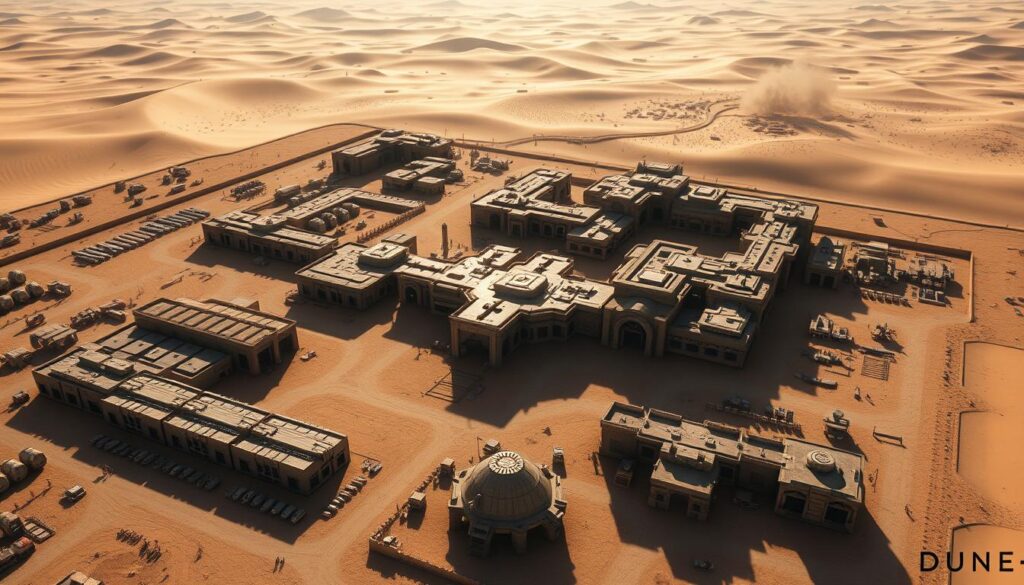
Planning Your Garage and Base Layout
Blueprint previews reveal how structures interact with existing facilities. Position vehicle entry points away from high-traffic zones to prevent bottlenecks. One player shared:
“Leave three foundation tiles clear around bays for smooth turns – sandskimmers need space!”
Power allocation demands attention. Link generators directly to security systems and lighting. Separate circuits for crafting stations prevent overloads during sandstorms. Always leave expansion room – clustered layouts limit upgrades later.
Managing Permissions, Storage, and Resources
The Sub-Fief Console acts as your digital gatekeeper. Assign access tiers to allies while locking sensitive areas. Create specialized storage groups for vehicle parts using circuit tagging – this keeps repair materials organized and accessible.
Balance defense needs with workflow efficiency. Place protective walls without blocking workshop access. Dedicated containers for fuel cells and spare parts reduce scavenging time. Smart organization earns you credit with faction members needing quick repairs.
Finalize designs through multiple blueprint tests. Adjust lighting angles and workstation placements until operations feel intuitive. This method turns chaotic construction into a satisfying game of spatial problem-solving, capturing the creative spirit of Dune: Awakening.
Optimizing Resources and Privacy for Your Base
Survivors who master location selection and spatial design gain significant advantages in hostile territories. Choosing where to establish operations impacts everything from material gathering to defense capabilities. Let’s explore methods to balance accessibility with security while maintaining efficient workflows.
Selecting the Ideal Location for Maximum Resource Access
Flat terrain proves essential for stable foundations and smooth vehicle movement. Prioritize areas near Salvaged Metal deposits and Dew Flowers – these materials fuel construction and sustain operations. Three factors determine optimal placement:
- Resource density within 150 meters
- Natural barriers against sandstorms
- Proximity to faction trade routes
The Solido Replicator offers relocation flexibility. For 20 Salvaged Metal, players can scan and move entire compounds when better opportunities emerge. One survivor noted:
“We relocated twice before finding a canyon with metal veins and natural rock cover – game-changing!”
Enhancing Privacy and Design Efficiency
Strategic layouts prevent unauthorized access while streamlining daily tasks. Implement these measures:
| Privacy Feature | Efficiency Boost |
|---|---|
| Locked entryways | Reduces theft incidents |
| Separate storage zones | Cuts material search time |
| Modular walls | Allows quick reconfiguration |
Align pathways between workshops and storage to minimize backtracking. Grant credit access only to trusted allies through permission settings. This approach maintains security without sacrificing cooperative play opportunities.
Conclusion
Mastering Arrakis’ challenges becomes rewarding when your base evolves into a well-oiled machine. The Solido Replicator lets you relocate operations without losing progress – scan existing structures, then rebuild smarter layouts elsewhere. Always dismantle old facilities to reclaim materials and deny rivals free loot.
Great designs balance practicality with personal flair. Test different wall configurations and lighting setups until workflows feel natural. Share your innovations with faction members to inspire collaborative projects.
Remember: every improvement strengthens survival odds. Modular layouts allow seamless upgrades as you unlock advanced schematics. Those sealed storage bays and efficient workshops? They’re proof you’ve tamed the desert’s chaos.
Keep refining your approach. Dune: Awakening rewards players who adapt their strategies while maintaining core defensive principles. Your growing expertise will transform barren sands into thriving hubs of creativity and security.