Welcome to the survival genre reimagined. Whether you’re new to multiplayer adventures or a seasoned strategist, your journey across Arrakis begins with one critical choice: finding the right server. This decision shapes everything from alliances to resource battles in a world where sandstorms and rival factions test your skills.
Funcom’s upcoming release blends rich storytelling with cutting-edge technology. Built on Unreal Engine 5, the game connects vast desert landscapes through innovative server architecture. Players navigate shared social hubs and dangerous Deep Desert zones, where cooperation often means survival. The June 2025 launch promises PC gamers first access, with console versions arriving later.
Specialized hosting services like GPORTAL enhance gameplay with unique server configurations. These setups allow seamless transitions between competitive battlegrounds and collaborative base-building areas. Your server choice determines whether you’ll dominate spice trades or become another cautionary tale in the shifting sands.
Key Takeaways
- Server selection directly impacts gameplay style and social interactions
- Advanced multiplayer features connect diverse gameplay zones seamlessly
- PC release arrives June 2025 with console versions following afterward
- Custom hosting options optimize performance for large-scale battles
- Survival mechanics reward strategic planning and teamwork
Understanding the Game and Server Architecture
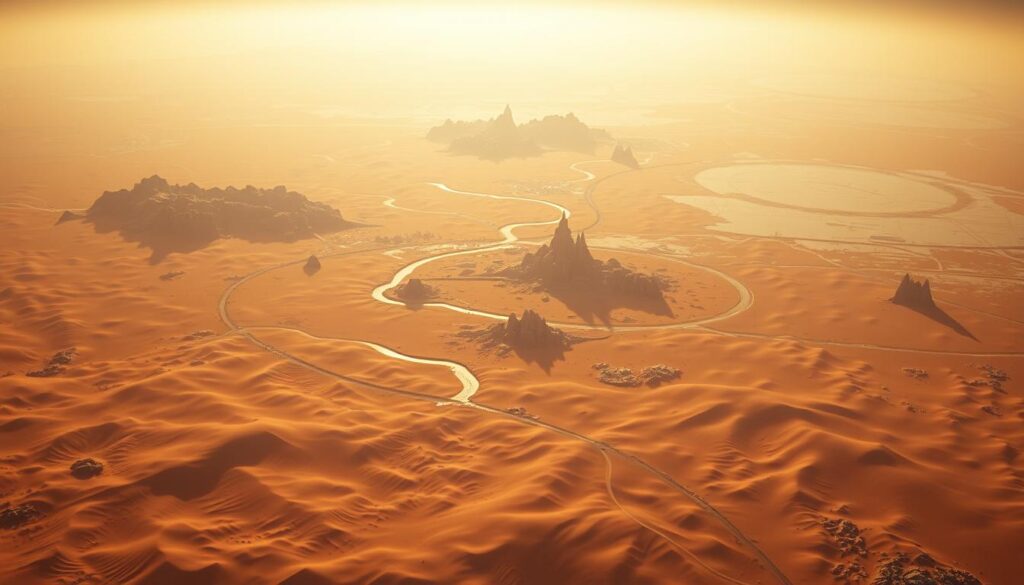
The heart of this survival experience lies in its layered world design. Players navigate three distinct zones, each offering unique challenges and opportunities. This structure blends personal storytelling with massive multiplayer dynamics.
Exploring the Unique Hagga Basin and Deep Desert Structure
Your journey begins in the Hagga Basin, a protected zone for 40 players. Here, you’ll master survival basics while building permanent bases. Resource management becomes crucial as you prepare for expeditions beyond safe areas.
The Deep Desert contrasts sharply, hosting 500-900 players across interconnected zones. This volatile region demands teamwork during spice raids and sandworm encounters. Strategic alliances often determine who controls valuable territories.
| Feature | Hagga Basin | Deep Desert |
|---|---|---|
| Player Capacity | 40 per instance | 500-900 total |
| Primary Focus | Base building | Large-scale conflicts |
| Environment | Protected dunes | Unstable sands |
| Key Activities | Resource gathering | Spice warfare |
How Social Hubs and Private Options Enhance Gameplay
Neutral meeting points let players from different basins trade blueprints and form guilds. These spaces balance intense survival gameplay with community-building moments. You might recruit allies here before venturing into dangerous territories.
Private server configurations maintain this social web while allowing customized rulesets. Hosting services enable smaller groups to experience political intrigue without massive player counts. The architecture ensures seamless travel between personal and shared spaces.
Choosing the Right Game Server for Your Dune Experience
Your desert adventure thrives or falters based on one critical decision: server configuration. Four distinct world types shape alliances, conflicts, and survival strategies across shifting sands.
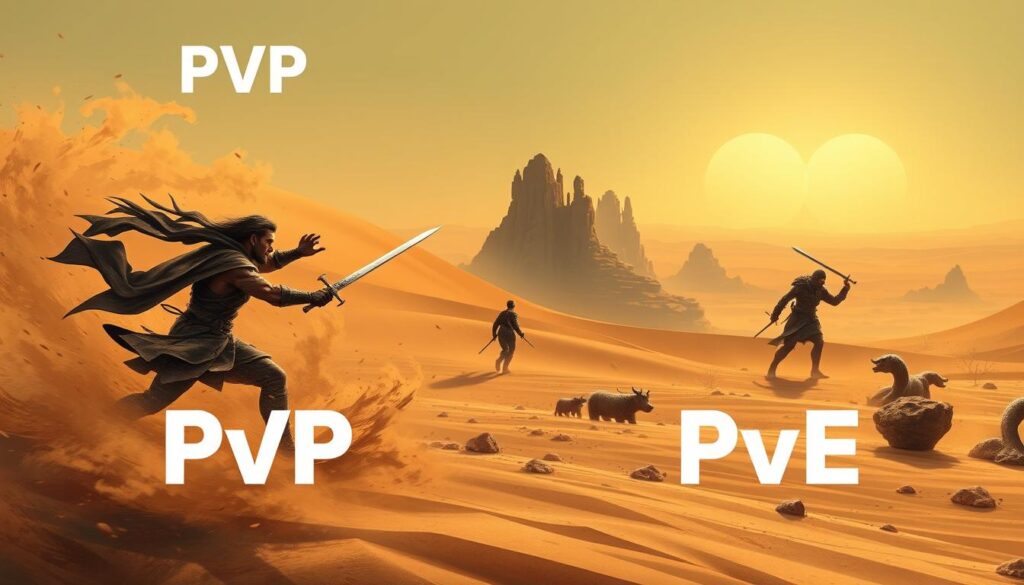
Battle or Build: PvP vs PvE Dynamics
Hardcore worlds test seasoned veterans with constant combat. These zones disable security areas and activate punishing sandstorms. Every spice harvest becomes a potential ambush site.
PvE-focused players find refuge in guarded basins. Cooperative base-building and environmental challenges dominate here. Shipwreck salvaging offers limited PvP opportunities through Right of Salvage mechanics.
Tailoring Your Experience: Weather and Warfare
Security zones determine safe havens for planning expeditions. PvPvE servers balance these protected areas with open combat regions. Tax systems vary—some deduct resources automatically, while roleplay worlds disable them for narrative freedom.
| World Type | Combat Style | Key Features |
|---|---|---|
| Hardcore | Full PvP | Active sandstorms, no safe zones |
| PvPvE | Mixed | Developer-designed balance |
| Roleplay | PvE Focus | Story-driven taxation |
| Free Build | Custom | Adjustable rules |
Dynamic sandstorms reshape strategies across all modes. These events obscure vision during raids or force shelter-seeking in cooperative play. Your chosen environment dictates whether you’ll dominate through combat or outthink rivals through diplomacy.
dune awakening servers: Key Features and Gameplay Insights
The evolving landscape of multiplayer survival games reaches new heights with innovative combat and community-driven ecosystems. Whether you thrive in chaotic battles or strategic alliances, the game’s mechanics reward adaptability and foresight.
Combat Dynamics and Shaping the Player Experience
Holtzman shields redefine combat strategies, blocking rapid attacks while leaving players vulnerable to methodical strikes. This creates tense standoffs where timing matters more than reflexes. Many gamers avoid high-value material zones due to aerial ambushes, sparking debates about balance adjustments.
Performance, Scalability, and Community Considerations
Massive 900-player zones demand robust server infrastructure, especially during sandstorms that disrupt defenses. While base destruction remains limited, resource control determines dominance in endgame territories. The community’s call for PvE-focused options grows louder as spice-driven rivalries intensify.
Death penalties strike a careful balance—losing supplies stings, but total loss only occurs in sandworm encounters. This design encourages risk-taking without punishing newcomers harshly. As players master shield mechanics and desert navigation, they carve unique paths through Arrakis’ ever-shifting challenges.