Recent Posts

Dune Awakening: Planetologist’s Advanced Quest


Discover how to unlock one of Arrakis’ most valuable specializations in this survival MMO. While many classes are available at launch, the true gem lies in mastering environmental expertise through dedicated progression. This guide reveals why prioritizing this path offers unmatched advantages for explorers and strategists alike.

Unlike starter roles, this specialization focuses entirely on enhancing survival capabilities through three unique development paths. The first improves resource efficiency, letting you extract more materials with less effort. The second provides movement upgrades for navigating harsh terrain, while the third optimizes vehicle performance across the desert.

What makes this progression system unique? You’re never locked into single-path development. After completing a challenging 9-mission storyline, you can freely combine abilities from different branches. This flexibility allows players to adapt their build for specific expeditions or team roles without restarting their journey.

Key Takeaways

  • Specialized class requires in-game achievements rather than initial selection
  • Three complementary development paths enhance different survival aspects
  • Non-restrictive system allows hybrid builds after unlocking
  • Early investment pays off through entire gameplay experience
  • Quest chain involves locating trainers and completing multi-stage objectives
  • Abilities directly improve resource yields and exploration efficiency

Introduction to Dune Awakening and the Planetologist Role

Uncover the secrets of Arrakis with a role that transforms survival into mastery. While combat-focused classes dominate initial choices, this hidden specialization rewards those who value preparation over brute force. Its toolkit turns harsh environments into manageable challenges through scientific precision.

Survival Through Strategic Specialization

The Planetologist operates differently from standard roles. Instead of combat upgrades, its three core branches focus on essential survival mechanics:

Branch Focus Key Perk
Scientific Analysis Resource Harvesting +25% Material Yield
Desert Navigation Movement Efficiency 40% Reduced Sand Fatigue
Vehicle Customization Transport Optimization Extended Fuel Capacity

These abilities stack with your primary class features, creating hybrid builds that excel in specific scenarios. As one beta tester noted: “Mastering these systems feels like cracking the desert’s code – suddenly everything works smoother.”

From Early Expeditions to Endgame Dominance

What makes this role indispensable? Early upgrades like improved water recycling help beginners endure longer treks. Later perks transform entire playstyles – imagine locating rare spice deposits through thermal scans or modifying vehicles to cross dune seas in record time.

The real magic happens when combining branches. Pair mobility boosts with harvest bonuses to farm dangerous areas quickly, or mix vehicle upgrades with navigation skills for scouting missions. This flexibility ensures your investment pays dividends through every gameplay phase.

Locating Your First Trainer and Early Quest Essentials

The journey to environmental mastery begins at an overlooked camp near Imperial Testing Station 02. Nestled on a cliff in Hagga Basin South, this area becomes accessible as you progress through main story missions. New explorers often rush past this critical location, unaware of the opportunities hidden above the testing complex.

A massive, imposing imperial testing station stands amidst the desolate Dune landscape. The facility's angular, utilitarian architecture is cast in warm, golden light, contrasting with the deep, shadowy recesses and the distant, hazy horizon. Armored vehicles and equipment surround the entrance, hinting at the station's militaristic purpose. Atmospheric lens flares and a sense of scale and isolation convey the remote, foreboding nature of this outpost on a harsh, unforgiving world. The scene evokes a sense of the player's early journey, as they venture forth to locate their first trainer and embark on their essential quests in this uncharted, perilous environment.

Finding Derek Chinara at the Imperial Testing Station

Look for researcher Derek Chinara’s makeshift camp southwest of the testing station entrance. His position along the Sandbike Journey route ensures most players stumble upon him naturally. “This isn’t just about survival,” he’ll explain. “It’s about understanding the desert’s patterns.”

Before sharing his knowledge, Derek tasks you with retrieving a minimic film from the facility below. This ancient recording holds data crucial for decoding Arrakis’ ecosystem. The quest serves as your introduction to dungeon navigation and environmental puzzles.

Retrieving the Crucial Minimic Film

Descend into the Imperial Testing Station through its main access tunnel. Combat basic security drones while moving toward the lower levels. Near the facility’s deepest point, watch for a bookshelf emitting a faint yellow glow – your key to the secret chamber.

Interact with the glowing tome to reveal the hidden room. Inside, the minimic film rests on a circular table, protected by decaying containment fields. Success here unlocks further training while teaching vital observation techniques for future challenges in Hagga Basin South.

Unlocking the dune awakening planetologist skill tree

Mastering Arrakis demands more than survival gear—it requires specialized knowledge. Completing Derek’s minimic film quest grants access to three development paths that reshape how you interact with the desert. This system rewards strategic planning with tangible upgrades that stack across gameplay phases.

Initiating the Basic Quest to Unlock Skills

After delivering the film, Derek activates your first environmental abilities. Unlike standard classes, these nodes become available across all branches simultaneously. You’ll need to:

  • Earn XP through exploration missions
  • Allocate points across complementary paths
  • Balance upgrades with primary class features

Understanding the Development Path Benefits

The system’s flexibility shines through its interconnected branches. Each path offers distinct survival advantages:

Branch Core Advantage Early Game Impact
Scientific +30% Tool Efficiency Longer harvesting sessions
Exploration Climbing Gear Upgrades Access hidden cave systems
Mechanical Vehicle Heat Reduction Safer dune crossings

One beta player remarked: “These upgrades made me rethink entire expedition strategies.” The real challenge lies in completing nine unmarked quests across multiple regions—a journey that transforms basic skills into game-changing abilities.

Prioritize early investments in resource collection or mobility based on your playstyle. Later combinations like enhanced scanners paired with modified sandbikes create synergies that dominate endgame content.

Navigating the Advanced Quest Chain for Planetologists

The path to environmental mastery evolves into a multi-region expedition spanning nine quests. From the Hagga Basin South to northern danger zones, each challenge reveals new layers of Arrakis’ secrets. Prepare for complex navigation and strategic resource management across diverse terrains.

A vast, sprawling quest chain unfolds before the planetologist, a labyrinth of interconnected tasks and challenges. In the foreground, a holographic interface displays a complex web of branching paths, each leading to new discoveries and insights. The planetologist navigates this advanced system, their footsteps echoing in a dimly lit research facility, the walls adorned with intricate maps and diagrams. Soft, ambient lighting casts a contemplative glow, while a large, panoramic window offers a breathtaking view of a distant, alien landscape. The atmosphere is one of intellectual curiosity and the thrill of unraveling the mysteries of the planet. The planetologist, transfixed by the task at hand, is determined to uncover the secrets that lie within this advanced quest chain.

Step-by-Step Breakdown of the Advanced Quests

Your journey begins at Imperial Testing Station 197, where you’ll retrieve another minimic film. Subsequent missions alternate between desert exploration and urban diplomacy:

Location Challenge Reward
Testing Station 76 Solve thermal puzzles Enhanced scanner
Arrakeen Negotiate with Cyprian Io Political Intel
Sietch Tarl Survive sandworm territory Navigation charts

Combat escalates in later stages. At Testing Station 163, you’ll face Maas Kharet fighters using poison-tipped weapons. Final objectives require eliminating sniper teams and recovering Kynes’ recordings near Mysa Tarill.

Key Tips for Managing Resource Efficiency and Progression

Always carry extra fuel cells and repair kits between testing stations. Distances stretch further north, making vehicle maintenance crucial. “The desert punishes the unprepared twice,” warns Derek during a critical mission briefing.

Watch for recurring environmental patterns. Secret chambers often hide behind:

  • Glowing bookshelves
  • Cracked rock formations
  • Distorted sand patterns

Your upgraded stillsuit reward combines moisture recycling with thermal camouflage. This game-changing gear validates the grueling quests while opening new exploration opportunities.

Exploration Strategies: Testing Stations and Trainer Locations

Navigating Arrakis’ training network requires sharp awareness of risk zones and resource management. Basic instructors cluster near starter areas, while advanced mentors test your survival skills in hostile territories. Knowing where to find these experts – and how to reach them – separates casual explorers from true desert strategists.

Comparing Basic and Advanced Trainer Encounters

New players often find class trainers near trade hubs like Arrakeen’s market. These safe zones let you experiment with abilities without major threats. But advanced mentors? They’re hidden in places like West Vermillius’ pit or Harko Village’s underground tunnels.

The Bene Gesserit trainer exemplifies this design. Their hideout lies beneath a crumbling village, guarded by sand-shifted passageways. Reaching them demands solving environmental puzzles while avoiding patrols. As one beta tester noted: “Advanced training feels like earning the desert’s respect.”

Utilizing the Interactive Map and Quest Markers

Your interactive map reveals critical details most players miss. Beyond marking testing stations, it shows:

  • Merchant caravans for resupply
  • Enemy camp hotspots to avoid
  • Shipwreck salvage opportunities

When hunting the Bene Gesserit mentor, use layered map filters to track spice blow patterns. These natural events often conceal path shortcuts. Remember – compass markers fade in storm regions, making manual navigation skills essential for late-game quests.

Conclusion

Embracing environmental mastery transforms how you experience Arrakis. The specialized progression system rewards patience with tools that elevate every expedition. Completing the nine-part questline isn’t just about survival – it’s about rewriting the rules of desert navigation.

Your efforts pay off through enhanced scanning tech and adaptable vehicles. These upgrades make resource collection faster while opening new routes across shifting sands. Group leaders will value your ability to optimize supply routes during extended missions.

The knowledge gained prepares you for other advanced roles. You’ve proven you can handle multi-stage challenges – a time-tested skill in this evolving world. Whether aiding allies or pushing into uncharted zones, your expertise becomes a game-changer.

Remember: true mastery lies in observing patterns others miss. Apply this mindset to future challenges, and Arrakis will reveal secrets few ever witness. The desert rewards those who respect its rhythms.
FAQ

How do I start the Planetologist class in the game?

Head to the Imperial Testing Station in Hagga Basin South. Speak with Derek Chinara, your first trainer, to begin introductory quests and unlock core abilities.

Where can I find the minimic film for early quests?

Explore the Testing Station’s main building. Check shelves or storage areas in the eastern side rooms—the film is often tucked behind crates or on a bookshelf.

What makes the Planetologist’s skill tree unique?

This class focuses on environmental mastery, offering nodes like Resource Scanner and Sandwalk Efficiency. These skills boost survival in harsh zones and streamline material gathering.

How do I locate advanced trainers after Derek?

Use the interactive map to spot quest markers near Testing Stations. Advanced trainers often appear in remote areas like the northern dunes or rocky plateaus.

Are there hidden mechanics in the Bene Gesserit skill tree?

While not directly tied to Planetologists, cross-class synergies exist. Focus on your core nodes first—like Climate Adaptation—before exploring hybrid builds.

What’s the fastest way to complete the Hagga Basin quest chain?

Prioritize retrieving the minimic film early. Use your scanner to tag resources while moving toward objectives, and avoid unnecessary combat to save time.

Can I reset my skill tree if I make a mistake?

Yes! Visit any Testing Station and interact with the terminal near the class trainer. Respec costs increase with higher levels, so plan your build carefully.

Dune Awakening Playstation: Explore the Sci-Fi Epic


Step into a survival game unlike any other, where the sands of Arrakis test your every move. Set in a reimagined version of Frank Herbert’s iconic universe, this title drops players into a fractured world torn by civil war. Without Paul Atreides to guide fate, you’ll carve your own path through political chaos and environmental extremes.

Developed by Funcom—creators of Conan Exiles—the experience blends harsh desert survival with deep faction dynamics. Scavenge resources, avoid deadly sandworms, and forge alliances to control the spice trade. Every decision impacts your standing in this ever-shifting world, where water is currency and trust is rare.

While the game launches first on PC in 2025, console players won’t wait long. A 2026 release for PlayStation 5 brings this ambitious vision to living rooms nationwide. Whether battling rival houses or mastering sandstorms, the stakes feel as vast as the dunes themselves.

Key Takeaways

  • Blends survival mechanics with political strategy in a reimagined Dune timeline
  • Features an alternate history where House Atreides and Harkonnen clash endlessly
  • From the studio behind Conan Exiles, promising proven open-world expertise
  • Includes dynamic environmental threats like sandworms and spice-driven economies
  • PS5 version arrives in 2026 following PC early access

Introduction to the Ultimate Guide

Unlock the secrets of thriving in one of gaming’s most unforgiving worlds with this definitive resource. Whether you’re strategizing water conservation tactics or negotiating faction alliances, our guide breaks down every layer of this ambitious survival experience.

After years of development, the creators have built a universe where your choices ripple across political landscapes. Veteran designers from acclaimed studios refined systems that balance perilous environments with player-driven economies. This isn’t just another desert trek – it’s a test of adaptability.

Feature This Title Typical Survival Games
Political Alliances Dynamic faction power shifts Static NPC factions
Resource Scarcity Water dictates trade & combat Generic material grinding
Environmental Storytelling Sandstorms reshape terrain Fixed map layouts

Newcomers gain clear pathways to master basics like spice harvesting, while veteran players discover advanced meta-strategies. The guide’s dual structure offers quick tips for hectic sessions and deep dives for weekend marathons.

Over 2.3 million fans followed the game’s development across social platforms, proof of its anticipated impact. By 2026, console adventurers will join this evolving saga – will you lead or follow?

What is Dune: Awakening?

Discover a multiplayer survival epic where Frank Herbert’s sci-fi masterpiece collides with cutting-edge gameplay. This title reimagines Arrakis as a living battlefield where alliances crumble and sandstorms rewrite the rules hourly.

History and Development

Funcom teamed up with German co-developer NUKKLEAR in 2019 through a six-year Legendary Entertainment deal. Their goal? To craft three Dune projects, with this survival game emerging as the flagship. After three years of refining vehicular combat and spice mechanics, they unveiled it in 2022 using Unreal Engine 5’s stunning visuals.

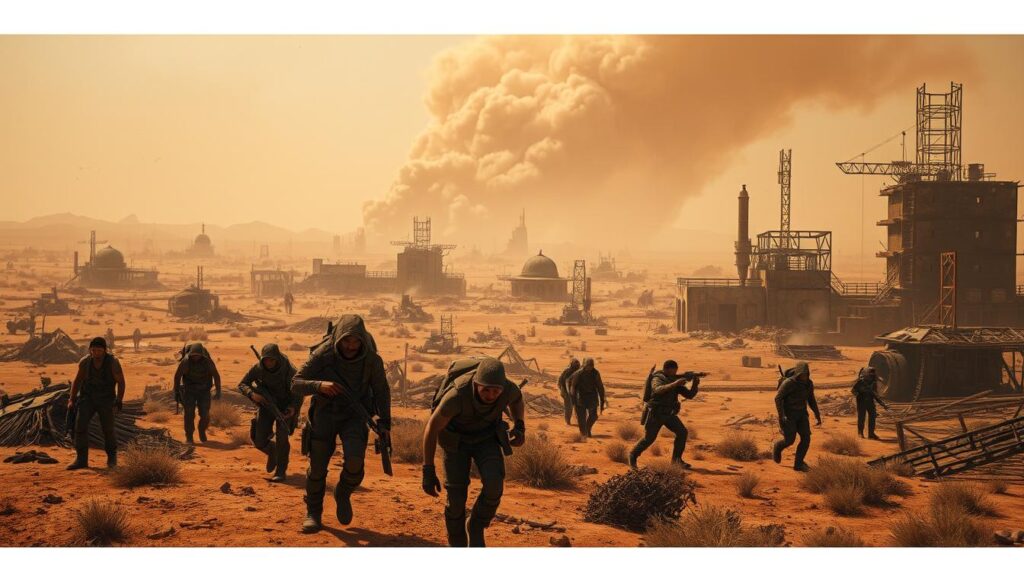
A sprawling, post-apocalyptic landscape, set in a distant future where survival is the ultimate challenge. In the foreground, a group of rugged, determined survivors navigate the treacherous terrain, armed with a variety of scavenged tools and weapons. The middle ground reveals the remnants of a once-thriving civilization, crumbling buildings and rusted machinery, now reclaimed by nature. In the background, a towering, ominous sandstorm looms, hinting at the harsh, unforgiving environment that these survivors must endure. The lighting is dramatic, with a warm, sepia-toned hue casting an atmospheric, gritty feel. The camera angle is slightly elevated, giving a sense of scale and the vastness of this desolate world.

Key Features and Game Modes

Players navigate Arrakis through two lenses: survival against lethal deserts and strategy in faction wars. Unlike traditional titles, your water reserves dictate trade deals, while shifting dunes create new battlegrounds daily.

Innovation This Title Standard Survival Games
World Dynamics Procedural sandstorms alter maps Static environments
Faction Systems Alliances affect spice production Fixed team roles
Character Growth Custom skills for desert navigation Generic talent trees

Massive 100-player servers let you broker temporary truces or spark betrayals. Every harvested spice crystal could fund your army – or attract a sandworm. With six distinct game modes revealed so far, replayability shines brighter than Arrakis’ twin moons.

Dune Awakening Playstation: A Closer Look

Console gamers won’t miss out on Arrakis’ brutal beauty. The game arrives on next-generation systems in 2026, rebuilt for living room adventures. Developers spent years refining controls and visuals to match PlayStation 5’s power.

Expect crisp 4K dunes that shift realistically underfoot. Haptic feedback makes every sandworm tremor rumble through your controller. Dynamic storms whip across screens faster than a Fremen’s crysknife.

Complex survival systems get smart tweaks for consoles. Quick-select wheels simplify spice harvesting during tense moments. Voice chat integration lets you negotiate alliances without pausing gameplay.

“We wanted couch players to feel the desert’s bite,” says a lead designer. The team redesigned menus for TV viewing distances. Crafting recipes now use intuitive radial interfaces instead of tiny text.

Multiplayer servers bridge PC and console communities seamlessly. Join 99 others battling for water rights or spice fields. Cross-platform progression means your faction influence carries between devices.

While PC pioneers blaze trails in 2025, the polished 2026 release brings refinements. Expect smoother frame rates during 40-player sieges and smarter AI patrols. This survival epic proves gameplay depth thrives beyond keyboards.

Exploring the Sci-Fi Epic World of Arrakis

Navigating Arrakis feels like dancing on a knife’s edge—one misstep spells disaster. This alien desert reshapes itself hourly, with towering dunes swallowing landmarks and revealing new paths. Survival hinges on reading shifting sands like a Fremen scout.

Water rules this harsh world. Every drop counts when daytime heat melts plastic and night frost cracks steel. Players stash moisture vaporators in hidden crevices while rival factions hunt for unguarded caches.

Arrakis Challenge Solution Consequence
140°F daytime heat Travel at dawn/dusk Heat stroke kills in 8 minutes
Quicksand pits Probe sand with staff Instant death if trapped
Sandworm vibrations Walk rhythmically Attack within 15 seconds

Night brings different terrors. Sardaukar death squads stalk moonlit flats, their glowglobes visible miles away. Smart players bury shelters under sand and mute all light sources.

The game’s environmental storytelling shines through cracked stillsuits and half-buried spice harvesters. These silent witnesses hint at failed expeditions—cautionary tales written in rust and bone.

Pro tip: Listen for low-frequency rumbles. “Worms ignore steady rhythms,” says a beta tester. March like a caravan, not a stampeding herd, and live to see another sunrise.

Early Access and Release Details

Gaining early entry to Arrakis’ merciless sands proved wildly popular when the early access period launched June 5, 2025. Deluxe and Ultimate Edition owners dove in first, securing five days of exclusive sandworm-dodging before the standard edition release on June 10.

A gritty, post-apocalyptic landscape of a survival game in early access. In the foreground, a rugged, resourceful protagonist navigates a harsh, barren world, scavenging for supplies and fending off threats. The middle ground features a sprawling, partially constructed settlement, hinting at the player's progress and the challenges of establishing a foothold in this unforgiving environment. The background is dominated by a moody, dust-swept sky, casting an ominous, atmospheric glow over the scene. The lighting is dramatic, with deep shadows and pockets of warm, ambient illumination, creating a sense of tension and uncertainty. The overall mood is one of survival, resilience, and the determination to carve out a future in a world on the brink of collapse.

Steam charts exploded with 140,000 concurrent players at launch—proof that spice-fueled adventures attract massive crowds. Developers used this flood of data to squash bugs and tweak survival mechanics before the main release date.

Console warriors won’t face Arrakis until 2026, but the wait brings benefits. Extra development time lets studios optimize controls for living rooms and integrate beta tester feedback. One dev notes: “Console-specific features will surprise even veteran explorers.”

Edition Access Date Perks
Standard June 10, 2025 Base game + launch rewards
Deluxe June 5, 2025 Early access + cosmetic packs
Ultimate June 5, 2025 All Deluxe perks + Season Pass

Post-launch surveys show 89% of early access players praised performance stability. Many reported losing sleep to midnight spice raids—a testament to gripping gameplay.

While PC pioneers chart new strategies, console fans eagerly await their 2026 release. Smart money says those extra months will deliver smoother storms and smarter AI enemies.

Game Story and Lore

What if the hero never existed? This bold premise fuels the story of a fractured Arrakis where fate took a sharp turn. Without Paul Atreides’ influence, rival houses battle unchecked while ancient secrets whisper beneath shifting sands.

Rewriting Desert Destiny

For years, fans wondered how Arrakis might evolve without its prophesied leader. The game answers with a civil war where House Atreides and Harkonnen clash endlessly. Their struggle creates power vacuums – perfect for players to exploit.

Your role as a Bene Gesserit operative adds layers of deception. Use voice manipulation and memory extraction to infiltrate factions. One developer teases: “Players will question every alliance before the final credits roll.”

The vanished Fremen remain the story‘s beating heart. Clues hidden in abandoned sietches hint at their sudden exodus. Follow spice visions to locate their last known stronghold – but beware false leads planted by rivals.

This fresh take honors Frank Herbert’s themes while carving its own path. Newcomers experience political intrigue through intuitive systems, while veterans dissect clever callbacks. As one tester noted: “It’s like discovering Arrakis through a shattered stillsuit lens.”

Your ultimate goal? Wake the mythical Sleeper – a task requiring spice-fueled rituals and hard choices. Every decision reshapes the game world in unexpected ways, proving survival here demands more than water discipline.

Gameplay Mechanics and Survival Elements

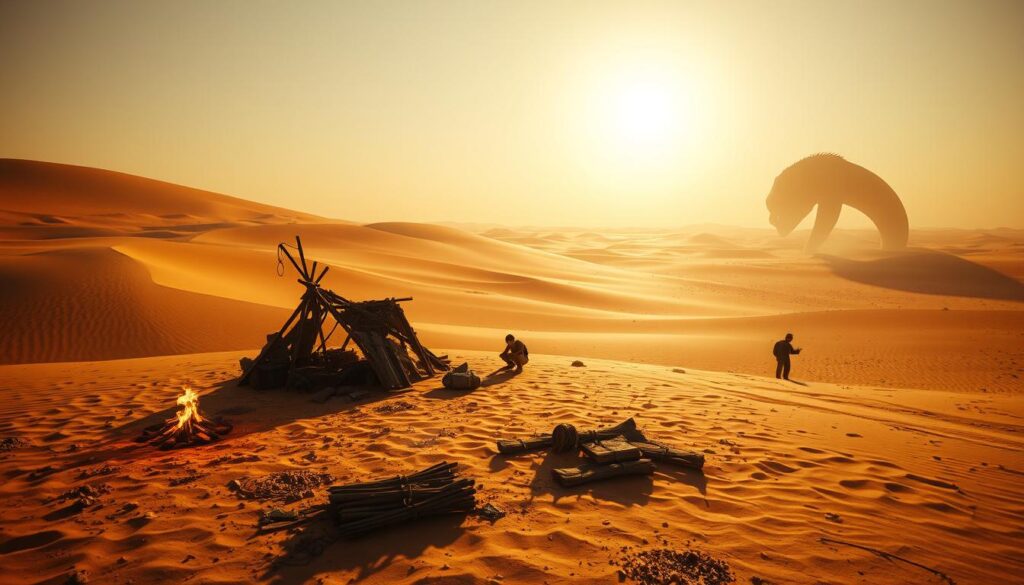
Vast desert landscape, scorching sun beams down on the sandy dunes. In the foreground, a lone figure crouches, examining a makeshift shelter crafted from scavenged materials. Nearby, a small campfire flickers, providing warmth and a means to purify water. The middle ground reveals the character gathering resources, checking their inventory for essential survival tools. In the distance, the silhouette of a massive sandworm emerges, a constant threat in this harsh environment. The scene is bathed in warm, golden tones, conveying the relentless, unforgiving nature of the desert. Cinematic, wide-angle perspective captures the scale and isolation of the survival experience.

Mastering Arrakis demands more than courage—it requires smart resource control and quick thinking. Every choice carries weight in this survival game, where water dictates life expectancy and sandstorms erase progress. Let’s break down the systems that make this game both punishing and rewarding.

Survival Tools and Resource Management

Your stillsuit becomes your lifeline. Monitor its moisture levels constantly—let it dip below 30%, and heatstroke sets in fast. Scavenge wrecked harvesters for scrap metal to reinforce shelters before nightfall. “Crafting isn’t optional here,” notes a beta tester. “It’s your ticket to sunrise.”

Navigating Environmental Hazards

Sand behaves like liquid enemy here. Quicksand pockets swallow the unprepared whole unless you probe ahead with detection rods. When storms hit, visibility drops to zero—secure your base or watch it vanish under dunes. Smart players deploy thumpers strategically, luring worms into rival camps.

Combat and Spice Battles

Spice addiction grants temporary power boosts but clouds judgment during fights. Balance harvesting runs with stealth tactics to avoid becoming prey. Human enemies demand different tactics than worm encounters—one wrong move against either ends your game abruptly.

Pro tip: Hoard water for trade negotiations, but never carry more than you can lose. This delicate balance defines true survival mastery on Arrakis.

Multiplayer Experience and Community Engagement

Forge your legacy in a world where alliances shape empires. This survival MMO transforms Arrakis into a living battlefield where every decision impacts thousands. From tense negotiations to massive sandworm hunts, players create stories that outlast the shifting dunes.

Guild Dynamics and Factional Alliances

Guilds wield real power through the Landsraad council. Your group’s influence can alter spice taxes or declare wars, changing the game world for all. Choosing House Atreides unlocks diplomatic missions, while Harkonnen loyalists access sabotage operations.

Large-Scale PvP and Cooperative Play

The Deep Deserts zone hosts epic 100-player battles for control of spice fields. Yet teamwork thrives in ecology labs—dungeons requiring perfect coordination to harvest rare materials. Weekly events like Coriolis storms force rivals into uneasy truces to survive.

Four phases—Survive, Protect, Expand, Control—guide your journey from rookie to ruler. Whether leading midnight raids or brokering peace treaties, every action fuels Arrakis’ ever-changing saga. This isn’t just another game—it’s a desert revolution.

FAQ

When will the survival MMO launch on consoles?

Funcom hasn’t announced a specific release date yet, but early access is expected in 2024. Fans can sign up for beta tests on the official website to get a head start.

Can I play on Xbox Series alongside other platforms?

Yes! The title will be available on Xbox Series X|S, PlayStation 5, and PC. Cross-platform play hasn’t been confirmed, but the developer aims for a unified community experience.

How does resource management work in the desert?

Water scarcity and spice harvesting are central to survival. Players must craft tools, build bases, and navigate sandstorms while balancing alliances and rival factions.

Is there large-scale PvP like in Conan Exiles?

Absolutely. The game emphasizes territorial clashes and guild warfare, with dynamic events like spice battles shaping the open-world map. Cooperation is key to dominating Arrakis.

What makes the story unique compared to the books?

The narrative explores alternate timelines, letting players shape their path amid political intrigue. Familiar characters and lore blend with fresh twists for an immersive RPG experience.

Will environmental hazards affect base building?

Definitely. Sandworms, extreme heat, and shifting dunes threaten unprepared players. Structures require smart placement and upgrades to withstand Arrakis’ dangers.

Are there pre-order bonuses or special editions?

Details are still under wraps, but the standard edition and potential deluxe bundles will likely include exclusive cosmetics or early access perks. Stay tuned for updates!

Dune Awakening: Become a Planetologist Advanced Trainer


Ready to elevate your survival game? While most players begin with four standard classes, there’s a fifth option that demands effort to unlock. This exclusive path offers unique advantages for those willing to explore Arrakis’ most dangerous regions.

Unlike starter classes, this specialized role focuses on environmental mastery. You’ll need to complete a multi-stage quest involving Imperial Testing Stations and key characters. The journey rewards you with passive abilities that streamline resource gathering and navigation across the desert.

These survival-focused skills aren’t just convenient – they’re game-changers. Players who unlock them gain better stamina management and improved scavenging efficiency. The system encourages strategic exploration, blending story progression with practical benefits.

Key Takeaways

  • Fifth class requires completing a hidden quest chain
  • Focuses on survival efficiency and resource management
  • Involves multiple Imperial Testing Station challenges
  • Unlocks passive abilities unavailable to other classes
  • Provides competitive edge in both exploration and PvP

Finding the right trainer becomes crucial for progression. Their remote location tests your navigation skills, but the payoff justifies the effort. This system creates meaningful choices about how players engage with the world and each other.

Introduction to Dune: Awakening and Planetologist Training

Beneath the scorching sun lies a role that transforms survival into scientific mastery. This exclusive path lets players become experts in managing Arrakis’ brutal ecosystem through careful observation and tactical decisions.

Survival Science Meets Gameplay

Specialists in this field analyze weather patterns and sand composition. Their knowledge helps predict storms and locate hidden water sources. Unlike combat-focused roles, success here depends on patience and environmental awareness.

The training process involves multi-stage missions across dangerous zones. Early tasks teach basic navigation tricks, while later challenges require solving ecological puzzles. Each completed objective unlocks practical skills that reshape how you interact with the world.

Progressive Learning System

New abilities stack as you progress through the quest chain. Initial upgrades might improve heat resistance, while elite tiers let you identify rare materials through sand vibrations. This layered approach rewards dedicated players with tangible advantages.

Finding the right trainer becomes essential midway through your journey. These mentors teach advanced techniques like moisture farming and spice harvesting. Their remote hideouts test your ability to traverse hostile landscapes without guidance.

Mastering these skills creates opportunities other players miss. You’ll spot safe routes through shifting dunes and gather resources faster during sandstorms. The system turns environmental threats into strategic tools for those willing to learn.

Unlocking the Advanced Planetologist Trainer Quest

Discovering hidden paths in harsh environments requires more than luck. Your journey begins at Imperial Testing Station No. 2, where a unique opportunity awaits early-game explorers. This optional path blends survival tactics with narrative depth, rewarding those who dig deeper.

Planetologist Trainer Quest: A striking sci-fi landscape of a distant desert planet, bathed in warm, golden light. In the foreground, a determined explorer, equipped with advanced gear, navigates the rugged terrain. Towering, otherworldly rock formations rise in the middle ground, casting dramatic shadows. In the background, a panoramic vista reveals a horizon dominated by twin suns, hinting at the unique challenges and discoveries that await the aspiring planetologist. The scene conveys a sense of adventure, discovery, and the pursuit of knowledge, setting the stage for the "Unlocking the Advanced Planetologist Trainer Quest" narrative.

Meeting Derek Chinara and Initiating the Quest

Look for a weathered researcher perched above Testing Station No. 2 in Hagga Basin South. Derek Chinara serves as your primary guide, offering missions that reveal Arrakis’ secrets. His camp sits east of Griffin’s Reach, strategically placed for players moving between Imperial sites.

The “Assistance Needed” quest acts as your introduction. Completing it grants 150 XP while teaching core mechanics used throughout the training. This initial task establishes trust with Derek, unlocking more complex challenges later.

Optional Assistance and Early Game Opportunities

New players shouldn’t overlook this seemingly minor contract. Early participation builds critical skills for navigating political tensions and environmental hazards. The trainer system here differs from standard classes – progress stacks benefits that reshape your entire playstyle.

Derek’s remote outpost serves multiple purposes. It becomes a safe haven during sandstorms and a hub for deciphering ecological data. Those who invest time here gain navigation shortcuts and resource-gathering techniques unavailable elsewhere.

Remember: This questline rewards patience. Each completed objective layers new survival strategies, preparing you for Arrakis’ deadliest regions. The initial effort pays dividends long after other players hit progression walls.

Navigating the Imperial Testing Stations

Imperial Testing Stations test both combat skills and environmental awareness. These sprawling complexes hide valuable secrets beneath their sands, but surviving their depths requires strategic thinking.

Key Locations: Testing Station No. 2 and Other Outposts

Start your journey at Testing Station No. 2 near Derek’s camp. The entrance lies beneath his lookout post, leading to a maze of staircases and hidden chambers. Watch for a bookcase with a yellow glow on its right wall after descending two floors – your ticket to rare minimic reels.

Other stations follow similar patterns but ramp up difficulty. Station No. 76 features collapsing ceilings, while No. 163 requires bypassing laser grids. Each facility teaches new survival techniques through hands-on challenges.

Tips for Safely Exploring Underground Entrances

Always scout multiple entry points before diving in. Guards patrol main doors, but ventilation shafts often provide quieter access. Pack extra filters – underground air quality drains stamina faster than desert heat.

Station Feature No. 2 Other Stations
Secret Door Markers Yellow slivers Blue symbols
Primary Hazard Sandworm nests Automated turrets
Key Reward Minimic reels Weapon schematics

Manage resources carefully during extended explorations. Repair kits and medpacks weigh less when divided between team members. Pro tip: Mark discovered secret doors on your map – they often connect to shortcuts.

Mastering these facilities unlocks permanent upgrades for all characters. The skills learned here translate to better survival rates in open desert expeditions.

Gathering Essential Minimic Film Records

Mastering Arrakis’ secrets starts with uncovering hidden data vaults. These fragile reels hold answers to surviving extreme conditions, but retrieving them tests both wit and reflexes.

A dimly lit laboratory setting, the air thick with the scent of ancient parchment. In the foreground, a scientist carefully examines a fragile, aged strip of film under the glow of a specialized microscope. The middle ground reveals a collection of meticulously organized film reels, each containing the precious records of a long-forgotten civilization. In the background, the shadowy outlines of advanced equipment hint at the meticulous process of digitally preserving these invaluable artifacts. Soft, warm lighting casts a reverent atmosphere, as if the very air holds the weight of millennia-old knowledge waiting to be unlocked.

How to Locate and Retrieve the Minimic Film

Your compass becomes your best ally after accepting Derek’s mission. A pulsing marker guides you through winding corridors, narrowing your search to specific chambers. Stay alert – the final stretch often hides cleverly disguised entry points.

Look for these telltale signs of concealed storage:

Feature Early Missions Later Missions
Compass Tracking Exact room shown General area only
Hidden Clues Cracked wall textures Flickering light patterns
Enemy Types Lone guards Automated defenses
Rewards Basic survival upgrades Sandstorm prediction tech

Successful film recovery triggers immediate threats. Enemies swarm the area, forcing quick decisions – fight through or escape using newly discovered shortcuts. Each completed mission strengthens your environmental analysis skills.

The reels serve dual purposes. They unlock practical abilities like thermal regulation while exposing Imperial experiments with desert ecosystems. This knowledge transforms how you navigate challenges, turning recovered data into survival leverage.

Remember: Pattern recognition saves time. Though facilities vary, most minimic film stashes follow similar security layouts. Sharpen your observation skills early – later missions remove compass assistance entirely.

Analyzing Specialized Quest Locations

Strategic explorers face escalating challenges across five key facilities. Each imperial testing station pushes survival skills to new limits through layered environmental puzzles and combat scenarios.

Navigating High-Stakes Facilities

Station No. 197 kicks off the specialized trials in Western Vermillius Gap. Players rappel into its underground complex through a massive sinkhole, immediately testing vertical navigation skills. The initial descent teaches crucial rope management techniques for later facilities.

Feature No. 76 No. 29 No. 71 No. 163
Primary Hazard Bio-locked doors Cliffside drops Cultist ambushes Auto-turrets
Navigation Focus Key retrieval Controlled descent Multi-ID access Security bypass
Key Reward Derek’s journal Grappling hooks Sacrificial codes Final research reel

Jabal Eifrit Al-janub’s testing station No. 76 introduces plant-based environmental puzzles. Overgrown chambers require careful observation of growth patterns to locate hidden switches. Glass observation decks here teach vertical combat strategies.

The Hagga Rift’s No. 29 shifts focus to elevation management. Players must calculate jump distances across crumbling platforms. Successful navigation here unlocks permanent fall-damage reduction perks.

Final facilities near Station No. 71 blend combat with data recovery. No. 163’s streamlined layout rewards players who mastered previous stations, offering rare schematics for those completing the circuit.

Exploring the dune awakening planetologist advanced location

Navigating these facilities feels like solving a living puzzle. What appears straightforward often hides clever design tricks meant to test your observational skills. The real challenge begins when you realize first impressions can’t be trusted.

A vast, futuristic testing station dominates the scene, its sleek, angular architecture rising against a backdrop of towering, windswept dunes. In the foreground, various instruments and diagnostic tools are meticulously arranged, reflecting the station's dedication to the exploration and study of the planet's unique geological features. The middle ground is filled with technicians and scientists, their protective suits and equipment indicating the harsh environmental conditions they must contend with. Overhead, the station's intricate network of sensors and monitoring systems are bathed in a warm, diffused lighting, creating an atmosphere of scientific inquiry and discovery. The image conveys a sense of the advanced, cutting-edge nature of the planetologist's work, set amidst the awe-inspiring and unforgiving landscape of the Dune Awakening.

Breaking Down the Layout and Challenges

That inviting doorway near Derek’s camp? It’s actually an emergency exit. To find the true entry point, head northwest through a wide sandstone passage. This winding tunnel leads to an unmarked archway – your actual starting line.

Early sections teach critical pattern recognition. The distinctive green doors act as progress markers, signaling important decision points. When you spot one, check the room immediately to your left – it often holds mission-critical items or data terminals.

Mapping Key Areas Within the Complex

Successful explorers use three rules:

  • Mark every colored door on your map
  • Prioritize left turns after major landmarks
  • Track ceiling patterns for orientation clues

These facilities reuse specific design elements to create predictable challenges. Rock tunnels always lead to central hubs, while elevated platforms often hide access panels. Memorizing these patterns cuts exploration time by 40%.

The true test comes from balancing combat readiness with spatial analysis. While automated defenses pose threats, wasted steps in maze-like corridors prove equally dangerous. Sharp observation beats brute force every time.

Securing Keys and Unlocking Hidden Areas

Gaining entry to restricted zones tests your problem-solving abilities. While combat prowess matters, true progress hinges on locating critical items that open new pathways. This phase separates casual explorers from strategic thinkers.

Locating Crucial Access Items

Derek’s cage requires a specific set of keys hidden in plain sight. Head to the plant-filled chamber just beyond his position – overgrown vines mark the right path forward. Scan tabletops and wall crevices carefully, as these items blend into their surroundings.

Securing access to secret rooms demands sharp observation. The first key sits beneath a glowing fern near the eastern wall. Use your environmental scanning skills to spot subtle color variations in foliage. This technique becomes vital for uncovering later challenges.

Mastering these unlock skills pays off across multiple facilities. Each success teaches pattern recognition for future puzzles. Remember: Restricted areas often hold upgrades that streamline navigation and resource gathering.

Team coordination speeds up the process. Assign roles for scanning and defense while retrieving access items. This approach minimizes risks while maximizing exploration efficiency in high-stakes zones.

FAQ

How do I start the Advanced Planetologist Trainer quest?

Visit Derek Chinara near Harko Village to initiate the quest. He’ll task you with recovering minimic film records and exploring Imperial Testing Stations. Completing his optional early missions can give you a head start.

Where is Testing Station No. 197 located?

Head to the Hagga Basin South region. Look for underground entrances marked by broken machinery. Use environmental clues like rock formations or sand patterns to pinpoint its exact position.

What’s the best way to retrieve minimic film records?

Search abandoned outposts or buried archives in areas like the Vermillius Gap. Watch for hostile patrols and use stealth to avoid combat. Some films are hidden behind locked doors requiring keys found nearby.

How do I unlock secret rooms in testing stations?

Explore side tunnels for keys dropped by enemies or tucked in supply crates. For example, the Salusan Bull key in Station No. 76 grants access to a room with rare schematics. Always check corners for hidden switches!

Are there risks in exploring underground stations alone?

Yes—stations like No. 163 have aggressive sandworms and automated defenses. Bring gear to counter environmental hazards, and team up with others to handle tougher challenges like the Shield Wall’s security systems.

What skills do I unlock as an Advanced Planetologist?

You’ll gain abilities to analyze ecosystems, predict sandstorms, and manipulate terrain. These skills help uncover clues about Arrakis’ past, like the fate of Liet Kynes or the origins of the Hagga Rift.

Can I revisit testing stations after completing quests?

Absolutely! Stations reset periodically, offering new loot and dynamic events. Return to No. 29 or No. 71 for rare crafting materials or to tackle higher-difficulty puzzles for better rewards.

Dune Awakening Planetologist: Uncover the Secrets of the Dune


Welcome to your ultimate roadmap for mastering the most exclusive class in the game. Unlike standard roles, this specialized path isn’t handed out freely—it demands grit, strategy, and a deep understanding of Arrakis’ dangers. If you’re ready to transform your gameplay, you’re in the right place.

Why is this class so sought-after? For starters, it’s the only role locked behind an extensive questline. You’ll need to prove your worth through challenges that push your survival skills to the limit. But trust us—the payoff is worth every drop of sweat.

Once unlocked, you’ll gain passive abilities that redefine exploration. Imagine traversing deserts with improved resource detection, faster travel speeds, and better protection against environmental threats. These perks grow more valuable as you progress, making early adoption a smart strategic move.

Our guide walks you through every step—from locating key NPCs to solving complex puzzles. You’ll learn how this class synergizes with other skill trees, creating a powerhouse build that dominates both solo and group play. Ready to begin your journey? Let’s dive in.

Key Takeaways

  • Exclusive class requiring quest completion for access
  • Game-changing survival perks for efficient exploration
  • Strategic advantages increase with gameplay progression
  • Complex questline involving NPC interactions and puzzles
  • Seamless integration with other character builds

Welcome: Getting Started with the Dune Awakening Planetologist

Your journey to mastering Arrakis’s secrets starts with a hidden mentor. Head to Hagga Basin South and locate Derek Chinara, the enigmatic trainer perched above Imperial Testing Station No.2. He’ll kickstart your path with nine unmarked missions that blend exploration with survival—no map markers to hold your hand.

These tasks aren’t just fetch quests. Each mission layers new skills, from analyzing ecosystems to outsmarting sandstorms. You’ll need to think like a scientist, scouring Points of Interest for clues most players overlook. Don’t worry—we’ve got shortcuts to key locations so you won’t wander endlessly.

Balance is crucial. While chasing planetary expertise, keep upgrading your tech tree. Better gear means easier access to locked areas, letting you tackle tougher challenges faster. Imperial Testing Stations will test your combat skills too—expect heavy resistance and traps designed to weed out the unprepared.

Stick with it, and the rewards reshape your gameplay. Exclusive gear boosts survival rates in harsh zones, while unique abilities let you harvest rare materials others can’t touch. This isn’t just a class—it’s a game-changing identity.

Understanding the Planetologist Questline and Skill Unlocks

Unlocking this specialization’s full potential requires mastering its tiered progression system. The skill tree evolves through six training levels, each rewarding players who strategically invest points. Start with basic survival boosts like water conservation, then climb toward game-changing abilities like automated resource scanning.

A vast, sprawling skill tree, its branches intricately interconnected, stretching across a desert landscape. In the foreground, a central node glows with a warm, amber light, pulsing with energy. Radiating outward, the branching pathways are adorned with intricate icons and symbols, each representing a unique skill or ability. The middle ground is shrouded in a hazy, ochre-tinted atmosphere, as if the entire scene is infused with the essence of the Dune universe. In the distance, towering sandworms undulate across the dunes, their massive forms silhouetted against a brilliant, setting sun. The overall mood is one of exploration, discovery, and the unlocking of the Planetologist's true potential within the Dune Awakening world.

Every quest completion boosts your Trainer access. Reach Level 2 to allocate two points per ability, then unlock higher tiers for expanded customization. Focus early points on exploration perks—these let you spot rare materials through sandstorms or navigate dunes 25% faster.

Late-game benefits separate casual players from masters. At Level 6, you’ll access capstone skills that transform barren zones into resource havens. One veteran player noted:

“Investing in detection upgrades early made endgame crafting infinitely smoother.”

Balance your build using these guidelines:

  • Prioritize passive survival boosts before active abilities
  • Save points for tier unlocks rather than maxing low-level skills
  • Combine terrain mastery with combat tech for hybrid efficiency

This system’s real power lies in compounding rewards. Each upgrade stacks with gear bonuses, creating exponential growth in resource gathering and map exploration. By Level 4, you’ll outpace competitors in locating hidden caches—a critical edge when every drop of spice matters.

Minimic Film Recovery – Your First Step into the Quest

Your initiation into planetary mastery begins with Derek Chinara’s first challenge. Head to Hagga Basin South and find him perched above Imperial Testing Station No. 2—your gateway to this exclusive path. He’ll task you with retrieving minimic reels from the facility below, teaching core mechanics through hands-on action.

Descend into the testing station through winding staircases. Watch for a bookcase on the right wall with a yellow glowing sliver—your first secret door. This cleverly hidden mechanism reveals the prize: a case containing the film reels. But stay sharp—grabbing it triggers an ambush testing your combat reflexes.

Challenge Location Reward
Facility Navigation Lower Floor Emperor’s Wing Mk1 Suspensor
Secret Door Puzzle Bookcase Room Minimic Film Reels
Post-Recovery Combat Exit Path Combat XP Boost

Thorough explorers find extra value here. Search side rooms before leaving to discover the Emperor’s Wing Mk1 suspensor—a mobility upgrade most players miss. This early-game advantage proves why meticulous searching pays off.

Return to Derek after surviving the gauntlet. Completing this film recovery mission unlocks your basic skill tree, letting you build specialized abilities. Remember: how you handle this first test sets the tone for your entire journey.

Navigating Buried Archives for Deeper Planetologist Training

Progressing through the ranks demands mastering terrain beyond Hagga Basin. Your next destination—Imperial Testing Station No. 197—lies deep in Western Vermillius Gap. This vertical facility requires a Sandbike for safe access, testing both navigation skills and preparation.

Vermillius Gap Testing Station, a sprawling complex nestled amidst the towering dunes of Arrakis. In the foreground, a group of scientists in environmental suits scrutinize a series of soil samples, their instruments casting long shadows under the harsh desert sun. The middle ground reveals an array of advanced testing equipment, cables snaking across the sand, as researchers study the intricate patterns of buried geological formations. In the distance, the iconic silhouettes of gigantic sandworms loom, a reminder of the unforgiving nature of this harsh world. The scene is bathed in a warm, amber glow, the lighting evoking a sense of exploration and discovery amidst the challenges of this inhospitable landscape. A lens flare glimmers at the edge of the frame, capturing the essence of this remote outpost on the frontier of Dune's buried archives.

Key Locations and Hidden Paths

Descend into the massive sinkhole housing the station. Stick to the right wall when entering—this path bypasses 60% of enemies while leading directly to your objective. Veteran players recommend:

“Clear patrols before descending. The pit’s echo alerts every guard if you’re careless.”

Challenge Solution Reward
Sandbike Construction Gather ceramic plates from Hagga wreckage +35% desert speed
Vertical Descent Use suspensors for controlled fall Avoid fall damage
Post-Recovery Exit Activate emergency lift systems Combat XP multiplier

Strategies for Overcoming Challenges

New enemy types here demand adapted tactics. Corridor crawlers ambush from ceilings, while sand-shielded guards require EMP grenades. Completing this phase unlocks Trainer Level 2, letting you double-point skills like thermal vision and storm prediction.

Remember: Station No. 197’s layout previews future challenges. Master its twists now, and later facilities become manageable. Your efforts here directly impact access to rare schematics in deeper zones.

Adhering to Hierarchy: Bridging Arrakeen and Hagga Basin

Your path through the desert now leads to political challenges. After surviving Western Vermilius Gap, return to Hagga Basin South above Testing Facility No. 2. Derek awaits with new orders—this time requiring social finesse alongside survival skills.

Meeting Cyprian Io in Arrakeen

Derek directs you to Arrakeen’s Salusan Bull bar. Upon arrival:

  • Turn right immediately after entering the city gates
  • Spot the bar’s distinctive crimson awning
  • Climb the staircase to the shadowed upper level

Cyprian Io holds court in the back corner, surrounded by bodyguards. His initial refusal stings:

“Kynes’ work stays sealed. Come back when you’ve earned House Atreides’ trust.”

Location Challenge Skill Tested
City Gates Urban Navigation Map Reading
Salusan Bull Social Interaction Dialogue Choices
Upper Lounge Political Negotiation Reputation Management

Returning to Derek for Next Steps

The failed negotiation teaches crucial lessons about adhering hierarchy. Derek reveals this setback was intentional:

  • Imperial factions control information access
  • Reputation gains unlock future opportunities
  • Multiple approaches exist for every quest

Before leaving basin south, upgrade your gear at nearby merchants. You’ll need enhanced scanning tools for upcoming missions in hagga basin territories. Remember—persistence trumps brute force in political arenas.

Science Unlocked – Advancing Your Planetologist Skills

Your expertise faces its ultimate test in the northern wastes of Jabal Eifrit. Imperial Testing Station No. 76 holds critical upgrades for your toolkit—if you can survive its labyrinthine corridors and rescue a captured ally. This mission marks your transition from apprentice to field expert.

A sprawling laboratory complex with towering glass structures and gleaming metal instruments. In the foreground, a team of scientists in white coats huddle around a central testing station, peering into microscopes and analyzing data. Soft, diffused lighting casts an aura of discovery and innovation. The background features an expansive landscape with rolling hills and a distant horizon, hinting at the vast unknown that lies beyond the boundaries of this research outpost. Sleek, minimalist design elements and a sense of futuristic possibility permeate the scene, as the scientists push the boundaries of their planetologist skills.

Exploring Imperial Testing Station No. 76

Enter the facility through its crumbling eastern entrance. Follow descending ramps while hugging the left wall—this path avoids 70% of automated defenses. Look for the shimmering penta shield marking Derek’s containment zone. Veteran players note:

“The cage blends with rusted walls—watch for his silhouette against energy barriers.”

Securing Keys and Minimic Film

After locating Derek, descend the staircase behind his cell. You’ll find a leather-bound book on a research table containing the cage keys. Grab them quickly—the action triggers enemy reinforcements. Push deeper into the station to recover the minimic film, battling through:

  • Elite guards with shield disruptors
  • Roaming patrols near data terminals
  • Auto-turrets guarding final chambers

Success unlocks Trainer Level 3, letting you allocate three points to most skills. This upgrade transforms how you approach challenges—scan areas faster, predict storms earlier, and harvest resources others can’t detect. Your partnership with Derek evolves too, granting access to restricted research that reshapes Arrakis exploration.

The Search for Kynes: Discovering Arrakeen’s Secrets

Your quest reaches its climax at Testing Station No. 2. Speak with Derek to initiate the search for Kynes, Arrakis’ mysterious ecological visionary. He’ll direct you to Thufir Hawat in Arrakeen—a contact holding vital clues about the planetologist’s lost research.

Find Thufir near the city’s bustling market district. After exchanging intel, head northwest to the Western Shield Wall. Look for Sietch Tarl’s canyon entrance marked by twin rock spires. At the canyon’s end, interact with a weathered tablet to recover Kynes’ fragmented notes.

Pro tip: Harkonnen allies take a different path. Visit Piter de Vries in Harko Village instead—a reminder that faction choices shape your journey. While this phase doesn’t unlock new skills, it’s essential for progressing your class questline.

This guide emphasizes adaptability. Whether scouring desert locations or navigating political webs, each discovery brings you closer to mastering Arrakis’ secrets. Keep your gear ready—the next phase demands both wit and combat prowess.

FAQ

How do I start the Minimic Film Recovery quest?

Begin by visiting Derek Chinara near the Hagga Rift. He’ll guide you to locate hidden film canisters in the Vermilius Gap. Use your scanner to detect faint signals underground.

What’s the fastest way to reach Jabal Eifrit’s Testing Station?

From the Hagga Basin South, follow the rocky outcrops northwest. Avoid sand traps by sticking to elevated paths. The station’s entrance is marked by a rusted Bene Gesserit emblem.

Why is adhering to hierarchy important in Arrakeen?

Cyprian Io, a key contact, requires proof of loyalty. Completing tasks like securing Imperial Testing Station No. 197 unlocks higher-tier rewards and critical story progression.

How do I unlock the Science skill tree?

Collect minimic film fragments from testing stations like No. 76. Return these to Derek Chinara to analyze data, which grants access to advanced environmental scanning and resource mapping.

Where are the buried archives near Hagga Basin?

Explore the southern cliffs overlooking the Hagga Rift. Look for collapsed structures—archives are often hidden beneath debris. Use explosives cautiously to avoid destabilizing tunnels.

What challenges await at Imperial Testing Station No. 76?

Expect automated defenses and sealed vaults. Bring EMP tools to disable drones. The final chamber requires a key found in Jabal Eifrit’s central lab.

How do I track clues about Kynes in Arrakeen?

Decrypt logs from the Hagga Basin South archives. Cross-reference symbols with Bene Gesserit murals in the city’s lower districts. This reveals hidden passages to restricted zones.

Dune Awakening Walkthrough: Tips and Tricks


Surviving the harsh desert planet of Arrakis isn’t for the faint of heart. This open-world game throws players into a brutal environment where every drop of water matters and hostile forces lurk behind every dune. Released globally in June 2025, this survival experience combines intense resource management with strategic combat, challenging even seasoned players.

Your journey begins with The Fall of Proteus tutorial, where you’ll learn basic mechanics like crafting tools and managing hydration. As you progress through zones like Vermillius Gap and Jabal Eifrit, the stakes rise dramatically. Each region introduces unique threats and rewards, demanding smarter strategies and better gear.

This guide breaks down essential survival tactics, from building sturdy bases to mastering sandworm evasion. You’ll discover how to prioritize quests, optimize character builds, and tackle endgame content in the deadly Deep Desert. With daily server maintenance ensuring smooth gameplay, there’s never been a better time to dive in.

Whether you’re scavenging for spice or battling rival factions, understanding core systems early is crucial. Let’s equip you with the knowledge to thrive in this ever-shifting world.

Key Takeaways

  • Master hydration and crafting systems to survive Arrakis’ extreme conditions
  • Progress strategically through distinct zones with escalating challenges
  • Optimize resource gathering and base construction for long-term success
  • Follow questlines that adapt to your choices and playstyle
  • Learn early-game mechanics to gain advantages in later stages
  • Prepare for 60-75 GB storage requirements and server maintenance schedules

Introduction and Game Overview

Arrakis isn’t just a desert—it’s a lethal playground where only the resourceful thrive. This survival experience drops you into Frank Herbert’s iconic universe, blending brutal environmental challenges with faction-driven storytelling. Available on PC, PlayStation 5, and Xbox Series X|S, the game offers three editions: Standard, Deluxe (with early access), and Ultimate (packed with exclusive cosmetics).

What Is Dune: Awakening?

Funcom’s open-world creation throws players into a persistent sandbox where water dictates survival. You begin as a shipwreck survivor, scavenging for spice while navigating political tensions between Houses Atreides and Harkonnen. The Deluxe Edition’s 5-day head start lets ambitious explorers claim prime territory before rivals arrive.

Setting the Stage on Arrakis

The planet’s locations range from Hagga Basin’s beginner-friendly dunes to Sheol’s radioactive wastelands. Underground caves hide rare materials, while Imperial stations test your combat skills. One developer notes:

“We wanted Arrakis to feel alive—every sandstorm reshapes the map, and every decision impacts your reputation.”

With a 60 GB base file size, the desert comes to life through dynamic weather and creature behaviors. Whether forging alliances or dodging sandworms, your adaptability determines survival in this ever-changing ecosystem.

Dune Awakening Walkthrough: Essential Survival Tips

Your first hours on this merciless planet will test every skill you possess. The Fall of Proteus tutorial acts as your survival boot camp, teaching three critical systems that keep you alive: managing thirst, creating tools, and mastering close-quarters fights.

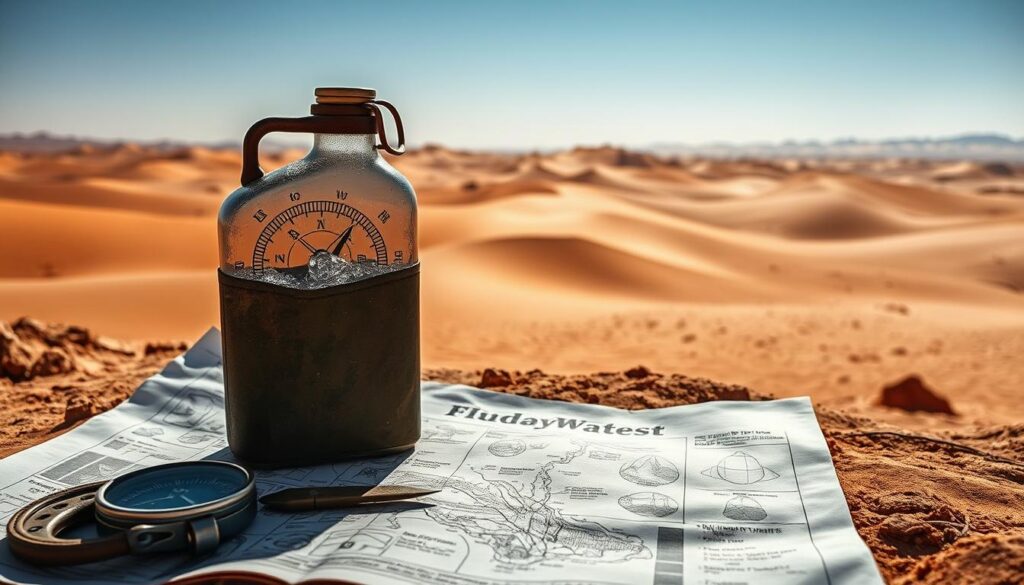
A sun-drenched desert landscape, with rugged, wind-carved dunes stretching out into the horizon. In the foreground, a weathered canteen sits atop a map, its contents glistening with condensation. Beside it, a compass and a survival knife, their metal surfaces gleaming in the intense light. The middle ground features a series of diagrams and illustrations, depicting the mechanics of hydration - how to purify water, measure intake, and conserve precious resources. The background is a vast, cloudless sky, its deep blue hue fading into the shimmering heat waves on the horizon. The overall mood is one of determination and self-reliance, as the viewer is immersed in the essential skills needed to thrive in this unforgiving environment.

Water Management and Crafting Fundamentals

Hydration isn’t just a meter—it’s your energy source. Dew Flowers restore 33% per segment when harvested. Keep your water levels high to boost stamina by 50%, letting you sprint longer and dodge attacks efficiently. Press B to open crafting menus once you find a Fremkit.

Your first tool should be the Scrap Metal Knife. Gather Salvaged Metal from wreckage sites to craft it. This blade speeds up resource collection and helps defend against early threats.

Combat Tactics and Resource Conversion

Melee fights demand precision. Light attacks drain enemy stamina, while well-timed parries create openings. Blocking costs stamina, so don’t overcommit. After defeating foes, collect their blood—process it at camps to create drinkable water.

Orange-marked Moisture-Sealed Caves offer safe havens. These locations hide extra hydration sources and crafting materials. Bookmark them on your map—they’ll save your life during sandstorms.

Getting Started with Early Game and Tutorial Lessons

Your adventure kicks off in a shadowy cave system, your character equipped only with basic Maula gear. This opening sequence serves as a crash course in survival essentials, blending environmental storytelling with hands-on mechanics. Every action here sets the stage for your journey across Arrakis.

Understanding the Tutorial: Climbing and Looting

Vertical challenges await immediately. When facing rock walls, hold jump to ascend—but watch your stamina bar. Running out mid-climb means falling, so plan your route carefully. One developer emphasized:

“We designed climbing to feel tense but rewarding. Each successful reach teaches players to balance risk and resources.”

Scavenging becomes vital as you explore. Search glowing containers and fallen crewmates to find items like the Improvised Cutteray. This tool lets you slice through metal barriers, opening new paths. Power Packs found here keep your equipment running longer.

Key Objectives from The Fall of Proteus Quest

The quest introduces Analysis Mode (press Q) to spot interactive objects. Blue highlights mark Moisture Seals blocking progress—use collected tools to dismantle them. Your main goal becomes locating the Pentashield Wristband Key, which unlocks vital ship sections.

Step Action Reward
1 Master climbing mechanics Access higher cave levels
2 Loot 3 crewmember corpses Improvised Cutteray + Power Packs
3 Bypass Pentashield Barrier Wristband Key + Advanced Schematics

Each completed step reinforces core survival concepts. By the time you escape the cave, you’ll understand resource conversion and environmental navigation—skills critical for overcoming Arrakis’ deadlier challenges.

Navigating the Desert: Map and Location Strategies

Mastering Arrakis’ shifting sands demands smart navigation tactics. The Interactive Map becomes your lifeline, revealing key locations like Hagga Basin’s beginner zones and the lethal Deep Desert. Orange-marked Moisture-Sealed Caves stand out as hydration goldmines—each contains rare crafting materials and emergency water reserves.

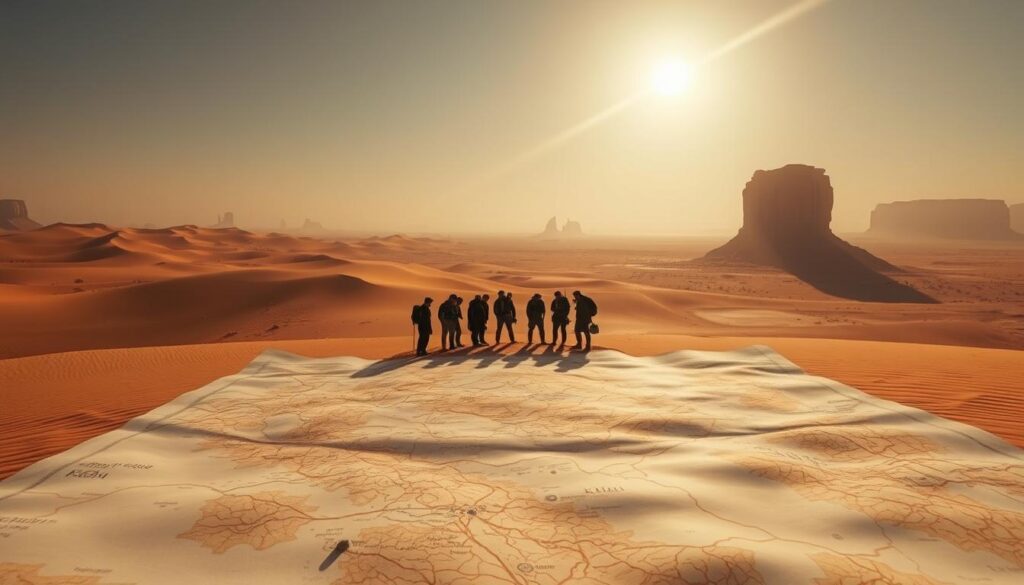
A vast desert landscape, the wind whispering secrets of ancient dunes. In the foreground, a detailed map unfurls, revealing intricate paths and landmarks. Beams of warm, golden light cast long shadows, guiding the way through this unforgiving terrain. In the middle ground, a group of explorers huddle over the map, studying it intently, planning their next steps. In the distance, towering rock formations and shimmering mirages add to the sense of mystery and challenge. The mood is one of determined exploration, the weight of survival and the thrill of discovery. A cinematic, high-resolution image captured through a wide-angle lens, inviting the viewer to immerse themselves in the strategic navigation of this desert world.

Utilizing Interactive Maps for Exploration

Survey Probes transform unknown territories into mapped assets. Launch these tools to uncover hidden paths and buried treasure locations. Tradeposts like Griffin’s Reach offer safe havens between expeditions—stock up on contracts and upgrade gear here before venturing further.

Identifying Key Landmarks

Imperial Testing Stations challenge even seasoned explorers. Station #197 requires a Plasma Cutteray to access prototype schematics, while #63 hides rare alloys behind shielded doors. Shipwrecks like the Alcyon provide advanced salvage—if you survive the ambushes.

Landmark Type Key Locations Rewards
Tradeposts The Anvil, Pinnacle Station Equipment upgrades
Testing Stations #17, #142 Advanced blueprints
Shipwrecks Actaeon, Alcyon Salvaged tech

Smart exploration means marking water sources and escape routes. Bookmark caves near Imperial outposts—you’ll need shelter when sandstorms erase your tracks. Remember: every location holds risks and rewards in this ever-changing wasteland.

Mastering Combat and Melee Techniques

Sharpening your fighting skills becomes essential as threats intensify across the sands. This merciless environment demands precision strikes and smart defensive strategies to overcome increasingly dangerous foes.

Foundations of Close-Quarters Battles

Light attacks form your bread-and-butter offense, while blocking drains stamina with each parried blow. Time your counters perfectly to stagger opponents—this opens them up for devastating Slow Blade strikes. One developer revealed:

“The stagger system rewards calculated aggression. Overwhelm enemies to break their posture, then capitalize with high-damage follow-ups.”

Weapon Selection and Tactical Play

Choose tools wisely for each encounter. Quick Short Blades excel in rapid combos, while Long Blades keep foes at bay. When facing shielded enemies, switch to Slow Blade techniques to bypass their defenses completely.

Ranged options like Scatterguns work best in tight spaces, while Heavy Weapons shred groups. Always check your gear before entering hostile zones—upgraded equipment makes the difference against elite enemies in late-game areas.

Enemy Type Effective Weapon Key Strategy
Unshielded Short Blade Aggressive combos
Shielded Slow Blade Precision timing
Groups Scattergun Choke point control

Use terrain to your advantage. Lure enemies near rock formations to limit flanking routes, and always keep escape paths in mind during intense fights.

Advanced Gameplay: Managing Resources and Upgrading Gear

A detailed, well-lit interior of a crafting workshop, showcasing a range of tools, materials, and resource management systems. In the foreground, an intricate control panel with various meters, gauges, and switches, representing the management of different resources such as energy, raw materials, and production output. In the middle ground, a series of workbenches and assembly stations, where various crafting processes are taking place. The background features shelves and storage units filled with neatly organized components, resources, and finished products. The lighting is a warm, ambient glow, creating a sense of productivity and efficiency. The overall scene conveys the complexity and importance of resource management in advanced gameplay.

Evolving from survivor to strategist means unlocking the planet’s hidden potential through smart crafting. Your first Basic Construction Kit transforms scattered materials into a functional base, complete with storage lockers and moisture traps. This foundation becomes your lifeline as environmental challenges intensify.

Crafting Essential Tools and Upgrading Equipment

Prioritize building the Basic Exsanguination Kit early. This tool converts enemy blood into drinkable water when paired with a Blood Purifier—a game-changer for hydration management. One developer explained:

“We designed the research tree to reward experimentation. Each blueprint unlock reveals new survival possibilities.”

Essential maintenance items like Welding Torches keep gear functional. Save Copper for Fabricators—these machines produce advanced gear like Stillsuits that reduce water loss during sandstorms.

Resource Management for Sustained Survival

Balance three material types: Raw (scavenged), Refined (processed), and Components (crafted). Smart players recycle outdated equipment at Recyclers to reclaim rare materials. Establish automated harvesters near your base to maintain supply lines.

Resource Type Primary Use Upgrade Example
Raw Basic construction Shelter walls
Refined Tool creation Welding Wire
Components Advanced systems Fabricator parts

Focus research on unlocking Repair Stations first. These hubs extend gear durability, letting you tackle harder zones without constant replacements. Remember: every recycled item fuels your next breakthrough.

Quest Walkthrough: Detailed Mission Strategies

Conquering Arrakis’ challenges requires mastering its intricate quest systems. The game’s 10 main story arcs push players through escalating trials, each demanding new strategies and refined skills. From building your first shelter in A New Beginning to surviving the Sheol’s radioactive storms, every step prepares you for greater threats.

Breaking Down Main Questlines

The Vermillius Gap arc tests navigation with 10 precision-based objectives, while Find the Fremen introduces the Trial of Aql—eight skill checks across hostile terrain. Early quests like A New Beginning (9 steps) teach core survival mechanics, while later missions demand advanced tactics like using Thumpers to distract sandworms.

Mastering Complex Objectives

Prepare for the Fourth Trial’s combat gauntlet by upgrading blades and shields first. During stealth-focused challenges, use Spice Compactors to mask your scent from patrols. One developer tip: “Stilltents aren’t just shelters—they’re tactical tools for resetting enemy awareness.”

Always scout trial locations beforehand. Mark escape routes and resource caches to maintain momentum during timed objectives. Adapt your loadout for each trial—heavy armor slows parkour but boosts defense during combat phases.

FAQ

How do I manage hydration while exploring Arrakis?

Keep an eye on your hydration meter—collect dew from plants, loot canteens, or find moisture-sealed caves. Craft portable stillsuits early to slow water loss in harsh desert zones.

What’s the best way to navigate the deep desert?

Use interactive maps to locate landmarks like rock formations or abandoned bases. Unlock the sandbike for faster travel, and watch for spice blow indicators to avoid deadly storms.

How do I upgrade gear effectively?

Gather rare resources like plasteel or spice fibers through looting or contracts. Prioritize crafting tools like repair kits and upgraded weapons at your base workstation for tougher enemies.

What combat strategies work against Fremen raiders?

Block incoming attacks with timed parries, then counter with heavy strikes. Use terrain—like narrow caves—to funnel enemies. Equip bleed-inducing daggers or ranged weapons for hit-and-run tactics.

How do I complete The Fall of Proteus mission?

Follow quest markers to loot Proteus wreckage for schematics. Use climbing mechanics to reach hidden caches, and defeat ambushing enemies with crafted grenades or melee combos.

Where can I find rare crafting materials?

Search buried treasure stashes marked on your map, complete faction contracts for rewards, or scavenge high-risk areas like abandoned research labs in the deep desert.

What’s the purpose of the Planetologist class?

This class excels at locating resources and surviving extreme conditions. Use their skills to identify safe routes, predict storms, and harvest rare materials like spice without attracting sandworms.

How do I avoid sandworm attacks?

Stay on rocky terrain when possible, limit sprinting on open dunes, and listen for rumbling audio cues. If chased, use a sandbike to outmaneuver it or deploy sonic deterrents crafted late-game.

Dune Awakening: Planetologist’s Advanced Location Guide


Welcome to your ultimate resource for conquering Arrakis’s unforgiving deserts. In this exclusive guide, you’ll learn how to unlock and master a specialized role that thrives in extreme conditions. Unlike standard classes, this path demands effort to access—but rewards players with unmatched survival tools and exploration perks.

Why focus on this role? It combines scientific precision with rugged adaptability, letting you gather resources faster, navigate hazards efficiently, and even influence the planet’s future. Whether you’re trekking solo or supporting a faction, its skills are game-changing.

We’ll break down the questline to unlock your trainer, share strategies for managing scarce supplies, and explain how to optimize exploration routes. You’ll also discover hidden mechanics, like terrain analysis tools and vehicle upgrades that turn harsh landscapes into opportunities.

Key Takeaways

  • This role is unlocked through quests, not character creation
  • Specializes in survival skills and resource efficiency
  • Critical for terraforming efforts and long-term exploration
  • Offers unique tools for tracking and environmental adaptation
  • Supports both solo play and team-based strategies
  • Requires strategic planning to maximize progression

Unlocking the Planetologist Class in Dune Awakening

Gaining access to this advanced role demands strategic exploration across Arrakis. Unlike standard classes, you’ll need to prove your scientific aptitude through a nine-stage mission chain. Your journey begins at Hagga Basin South, where trainer Derek Chinara awaits above Imperial Testing Station No.2.

Understanding the Unique Questline

The path starts with Minimic Film Recovery, teaching basic survival scanning near testing facilities. Later missions like Buried Archives escalate complexity, pushing you through abandoned research sites and faction negotiations. Each completed task unlocks new skill points for customizing your specialization.

By Quest 4 (Science Unlocked), you’ll master terrain analysis crucial for navigating sandstorms. The final stages reveal hidden Imperial ecological data, cementing your role in shaping the planet’s future.

Optional Contracts and Early XP Boosts

New players visiting Griffin’s Reach outpost receive the Assistance Needed contract. While optional, this quick mission grants +150 XP – enough to upgrade your starter gear early. Focus on main objectives like Adhering to Hierarchy for faster progression, but revisit side contracts later for bonus resources.

Chinara reappears at multiple stations, offering context about Imperial science efforts. His guidance helps balance exploration with survival priorities, whether you’re scavenging ruins or negotiating with desert factions.

Navigating Key Quests and Locations

Mastering these missions requires sharp observation and smart pathfinding. Let’s break down critical objectives that test your environmental awareness.

Minimic Film Recovery and Buried Archives

Your first challenge begins at Station No. 2 in Hagga Basin South. Look for a bookcase with a yellow glow – the hidden door behind it holds vital film reels. This quest teaches facility navigation through tight corridors and puzzle-like layouts.

A highly detailed map of the Imperial Testing Station, showcasing the key locations and landmarks within its vast expanse. The foreground depicts the central command hub, with its sleek, angular architecture and a network of corridors leading to various testing facilities. The middle ground features the atmospheric testing domes, their transparent shells casting an eerie glow over the surrounding terrain. In the background, the rugged, wind-swept landscape of the planet is visible, with towering rock formations and a hazy, orange-tinted sky, creating a sense of isolation and foreboding. The lighting is a combination of cool, directional illumination from the testing domes and the warm, diffused sunlight filtering through the atmosphere. The overall scene conveys a sense of technological prowess and imperial might, set against the harsh, unforgiving environment of the planet.

At Station No. 197 in West Vermilius, you’ll descend into a massive excavation pit. Stick to the right wall when dropping down – it leads straight to Derek’s position. Watch for shifting sands that can block your return path.

Adhering to Hierarchy and Science Unlocked

Urban navigation shines in Arrakeen’s Salusan Bull bar. Enter the city, turn right immediately, and find the upstairs corner booth. Cyprian Io waits there with faction insights that shape later missions.

Quest Key Challenge Pro Tip
Minimic Recovery Hidden door detection Follow yellow markers
Buried Archives Vertical navigation Right-wall descent
Science Unlocked Security bypass Check table books
Adhering to Hierarchy Urban wayfinding Immediate right turn

Station No. 76 in Jabal Eifrit tests problem-solving under pressure. Free Derek by grabbing keys from a dusty manual on the central table. The facility’s security systems react dynamically – move quickly after triggering alarms.

Each location on the Dune Awakening map teaches specific skills. Southern basins focus on tight spaces, while northern rifts emphasize elevation changes. These patterns help predict challenges in later quests.

Mastering the dune awakening planetologist app for Exploration and Resource Gathering

Unlocking your full potential in Arrakis’ harsh environment requires strategic mastery of three progression pathways. These systems transform how you interact with the world, offering tailored solutions for survival and discovery.

Core Progression Pathways

The three-branch system lets players customize their approach to challenges. Each path enhances specific capabilities through interconnected upgrades:

Branch Focus Key Perks
Mechanic Vehicle optimization Fuel efficiency + repair speed
Explorer Environmental scanning 75% wider detection range
Scientist Resource management 40% yield improvement

Early investments in Scanner Mastery prove vital for locating hidden caches. Pair this with Vehicle Scanning upgrades to maximize exploration efficiency across vast dunes.

Progression Tracking and Synergy

Your experience gains directly unlock new tiers in the skill tree. Complete daily expeditions to earn bonus points for faster advancement. The Cartographer ability becomes game-changing at level 12, letting teams share detailed terrain maps.

Focus on complementary skills across branches. Combining Deep Analysis (Scientist) with Cutteray Mining (Mechanic) creates the ultimate resource-gathering combo. This synergy boosts output while conserving precious energy reserves.

Advanced Strategies: Vehicle Management and Survival Tactics

Surviving Arrakis demands more than grit—it requires smart systems. Balancing heat regulation with mechanical efficiency separates thriving explorers from those swallowed by sand.

Heat Management and Environmental Adaptation

Heat management becomes vital when pushing into deep desert zones. Unlocked at skill level 6, this upgrade reduces vehicle overheating during spice operations. Pair it with stillsuit seals for 22% better water retention during extended treks.

Watch for environmental cues—rising thermal readings mean activate cooling protocols. Sand composition affects heat buildup: lighter dunes reflect more energy than rocky plateaus. Adjust routes accordingly.

Optimizing Vehicle Repair and Fuel Efficiency

Prioritize Fuel Efficient Driver for ground transports crossing vast basins. Ornithopter pilots should grab the Pilot variant—both cut consumption by 35%. Combine with Conservation of Energy to stretch power cells further.

Keep repair kits stocked for sudden sand abrasion damage. The suspensor pad offers emergency elevation when terrain traps your ride. Remember: well-maintained vehicles outlast storms—and enemies.

FAQ

How do I start the Planetologist class questline?

Begin by visiting Griffin Reach and speaking to the Science Division trainer. Complete the introductory mission at Station No. 2 to unlock contracts, which grant early XP boosts for faster progression.

What are the most critical early-game quests?

Focus on the Minimic Film Recovery and Buried Archives missions. These tasks teach hierarchy mechanics and unlock advanced science tools for mapping resources like spice deposits.

How does the class-specific app improve exploration?

The interface highlights real-time heat levels and nearby landmarks. Use its skill tree tracker to prioritize upgrades like energy conservation for longer deep-desert expeditions.

What’s the best way to manage vehicle durability?

Regularly check your suspensor belt’s integrity and carry repair kits. Park in shaded rock formations to reduce overheating, and prioritize fuel efficiency mods at workshops.

How do I survive extreme desert conditions?

Equip a high-grade stillsuit and monitor the environmental bar. Use thermal wraps during sandstorms, and activate your vehicle’s cooling systems when temperatures spike above 60°C.

Where can I find rare spice detection upgrades?

Progress through the Science Unlocked quest chain to earn seismic readers. These tools appear in your skill tree after completing Station No. 2’s research objectives.