Recent Posts

Dune Awakening PS5 Release Date: When Can You Play?


Sci-fi fans and survival gaming enthusiasts have been buzzing about an upcoming title that blends epic storytelling with massive multiplayer action. Set in a universe inspired by Frank Herbert’s iconic novels and recent cinematic adaptations, this open-world survival MMO promises to redefine the genre. While PC players are already diving into early access, console gamers are counting down to 2026 for their chance to explore the sands of Arrakis.

Developers at Funcom have confirmed the ambitious scope of this project, which explains the extended timeline for PlayStation 5 optimization. The team is focused on delivering smooth performance and immersive gameplay that does justice to its source material. With a “Very Positive” Steam rating already secured, expectations are sky-high for the console iteration.

Patience will be key for those waiting to experience this desert survival adventure. The delay allows developers to polish mechanics, expand content, and potentially align with upcoming franchise milestones. Whether you’re a longtime fan or new to the universe, this guide will prepare you for what’s coming—and why it’s worth the wait.

Key Takeaways

  • Console players can expect to join the action in 2026
  • PC version has already earned strong community approval
  • Development focuses on technical optimization for consoles
  • Game blends survival mechanics with deep narrative elements
  • Release timing may connect with broader franchise events

dune awakening ps5 release date and Upcoming Console Insights

New updates shed light on when PlayStation and Xbox players can join the desert adventure. Funcom’s recent press release confirms plans to bring the survival MMO to consoles in 2026, following its PC debut. This staggered approach lets developers focus on technical refinements for smoother performance across platforms.

Development Priorities Revealed

The studio delayed the PC version by three weeks earlier this year, prioritizing server stability. While no official explanation exists for the console gap, industry experts point to hardware optimization challenges. Porting complex multiplayer systems to consoles requires rebuilding UI elements and refining controls for gamepad users.

Strategic Timing Considerations

Many speculate the 2026 window aligns with anticipated franchise expansions. A potential connection to upcoming cinematic releases could maximize player engagement. The table below highlights key differences between platform launches:

Aspect PC Launch Console Projection
Release Window June 2024 2026
Early Access June 5 TBA
Control Scheme Keyboard/Mouse DualSense/Xbox Pad
Performance Target 144 FPS 60 FPS

This extended timeline allows Funcom to implement cross-play features and stress-test servers. While waiting tests patience, the delay suggests commitment to quality – a crucial factor for live-service games.

Exploring Gameplay Features and Multiplayer Survival

Vast deserts and shifting alliances define the core experience of this ambitious survival title. Players must master environmental hazards while navigating complex social dynamics with hundreds of others. The massively multiplayer format amplifies every decision, turning basic survival into a high-stakes political game.
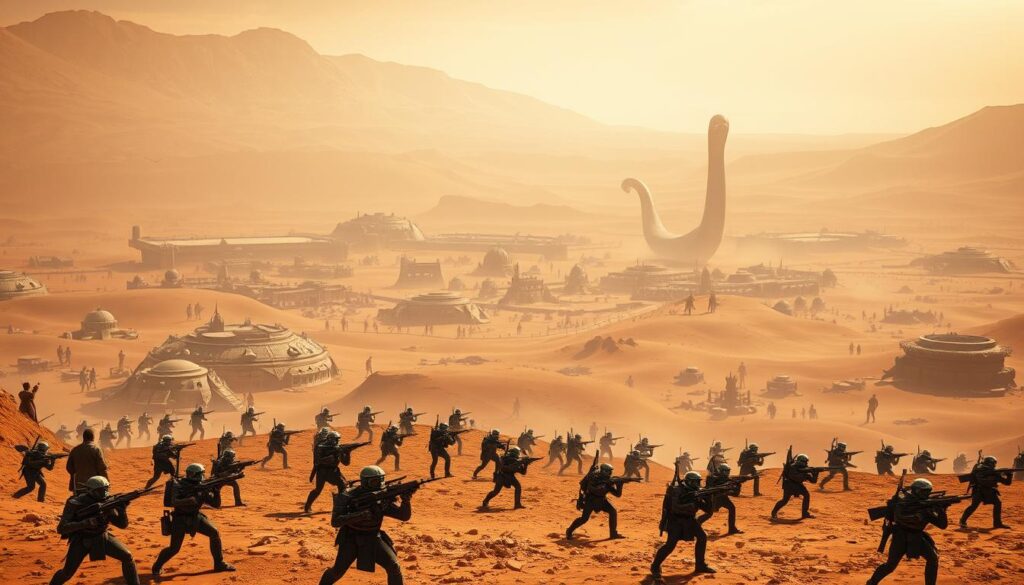
A vast, open-world landscape of the Dune universe, bathed in warm desert tones. In the foreground, a group of players engage in intense multiplayer combat, utilizing a variety of futuristic weapons and equipment. The middle ground reveals a network of interconnected settlements, where survivors cooperate to establish thriving communities and defend against the harsh environment. In the distance, towering sandworms emerge from the dunes, adding an ever-present sense of danger and the need for vigilance. The scene is illuminated by a warm, hazy lighting that captures the essence of the Dune setting, with a cinematic depth of field that draws the viewer's eye to the key action and survival elements.

MMO Dynamics and Combat Strategies

Resource gathering takes on new meaning when competing against rival factions for spice deposits. Sandstorms and wandering predators add urgency to exploration, forcing quick thinking alongside long-term planning. The combat system blends melee skirmishes with tactical positioning, rewarding players who adapt to Arrakis’ unpredictable terrain.

Class specialization creates distinct roles in group dynamics. Scouts track resources, Engineers build defenses, and Mentats analyze enemy movements. Success demands balancing individual survival with faction objectives – a delicate dance of trust and ambition.

Feature Traditional Survival Games This Title
Player Count 4-32 players 500+ per server
Survival Focus Basic needs Economic dominance
Combat Style Reactive Strategy-driven
Resource Management Local gathering Global trade wars

Technical innovations enable seamless interactions between massive player groups. Dynamic event systems ensure no two playthroughs feel identical, while server architecture supports complex territorial disputes. This combination of scale and detail could redefine what players expect from survival multiplayer experiences.

DLCs, Free Updates, and In-Game Content Advancements

Post-launch content plans reveal how developers aim to keep the experience thriving for years. Funcom’s strategy combines regular free improvements with premium expansions, creating a sustainable ecosystem for players. Three major DLCs will debut within 12 months, starting with a mystery pack before year’s end.

Expansion Packs and Future DLCs

The Wildlife of Arrakis pack sets the tone for future content, offering craftable statues of sandworms and other iconic creatures. Season Pass holders gain instant access to four expansions, including exclusive missions and cosmetic items. Early adopters praise this model for rewarding loyalty while funding ongoing development.

Content Type Features Availability
Free Updates Quality-of-life fixes Monthly
Premium DLC New regions/gear Quarterly
Season Pass Exclusive cosmetics One-time purchase

Community Reactions and Expectations

Players applaud the transparent roadmap but want more faction-specific updates. “This approach reminds me why I loved Conan Exiles for years,” shares a Reddit user, referencing Funcom’s decade-long support for previous titles. Most agree the balance between free and paid content feels fair, though some hope for discounted bundle options.

With server costs and continuous improvements to manage, this hybrid model could become the new standard for survival MMOs. As game worlds grow, so does player investment – both emotionally and financially.

Deep Dive into Editions, Pricing, and System Requirements

Choosing the right edition and preparing your setup could make all the difference in surviving Arrakis’ harsh landscapes. Three tiers offer unique perks for different playstyles, while technical specs reveal the massive scale of this survival MMO.

Edition Overview and Exclusive In-Game Items

The $49.99 Standard Edition provides full access to core gameplay, while premium versions sweeten the deal. At $69.99, the Deluxe Edition unlocks Sardaukar warrior armor and a five-day head start. Ultimate Edition buyers ($89.99) gain Paul Atreides’ film-accurate stillsuit, a digital artbook, and the lavish Caladan Palace building set.
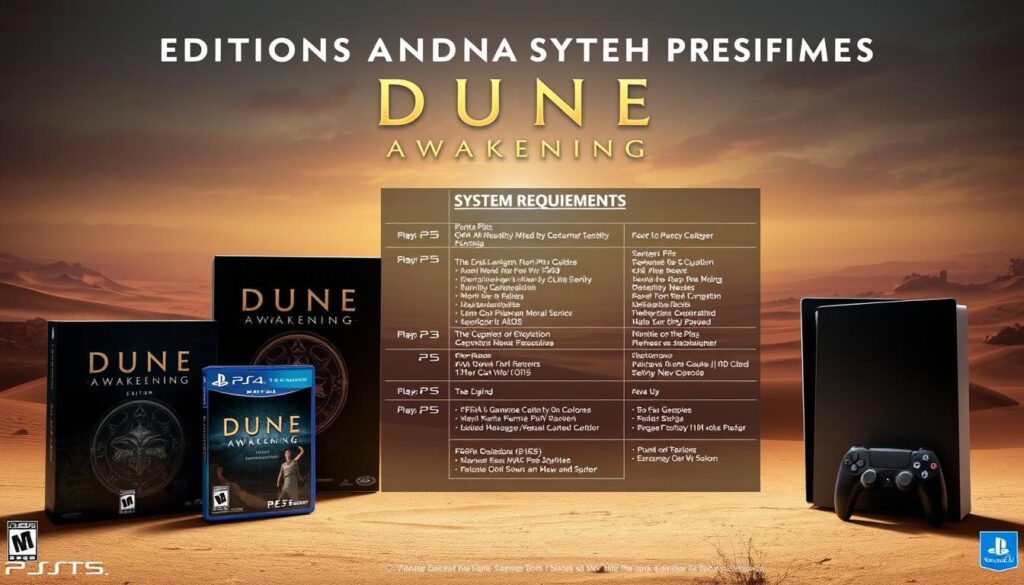
A highly detailed and meticulously crafted image depicting "Editions and System Requirements" for the Dune Awakening video game. The foreground showcases the various game editions, each with its own distinct packaging and branding elements. The middle ground presents a clear and comprehensive breakdown of the system requirements, highlighting the necessary hardware specifications to run the game seamlessly on platforms such as PS5. The background features a stunning, cinematic landscape inspired by the Dune universe, with sweeping desert vistas and ominous skies that set the mood and atmosphere. The lighting is dramatic, casting long shadows and emphasizing the technical details. The overall composition is balanced and visually appealing, drawing the viewer's attention to the key information being conveyed.

Early access proves crucial in multiplayer environments. “Securing spice-rich territories first could shift server-wide power dynamics,” notes a beta tester. Premium cosmetics also let players showcase status in this cutthroat world.

PC System Requirements and Console Variations

Minimum specs (GTX 1060/RX 5600XT) target 1080p/30fps, but recommended hardware (RTX 3070/RX 6700XT) delivers 1440p/60fps. Advanced upscaling via DLSS 4 and FSR helps mid-range systems handle sprawling desert vistas. Storage needs range from 60GB to 75GB – space well-used for detailed environments.

Edition Price Key Perks
Standard $49.99 Base game
Deluxe $69.99 5-day early access + armor set
Ultimate $89.99 All Deluxe perks + artbook + palace set

Console optimizations remain under wraps, but PC specs hint at 4K/60fps targets for PS5 and Xbox Series X. Solid-state drives are recommended to reduce load times during sandworm encounters. Whether on PC or console, ensuring your setup meets these demands will help you thrive where others merely survive.

Conclusion

This survival game has already carved its place among fans, earning a “Very Positive” Steam rating and growing community support. While the 2026 console launch may feel distant, Funcom’s focus on optimization suggests the wait will deliver smoother performance and refined controls tailored for living-room setups.

Regular updates via the Persistent Closed Beta show developers listening closely to player feedback. Active Discord discussions let testers shape features, from combat tweaks to faction balance – a collaborative approach that bodes well for the final product.

For those eager to dive in, exploring the rich lore through books or films offers perfect prep work. Keep tabs on the official site for policy changes or terms adjustments as development progresses. Patience here isn’t just a virtue – it’s your ticket to a desert adventure built to last.

Stay informed by bookmarking Funcom’s privacy policy page and enabling update notifications. When Arrakis finally arrives on consoles, you’ll be ready to conquer the sands with knowledge as sharp as a crysknife.

FAQ

When will the game be available on consoles?

Funcom has confirmed a 2025 launch window but hasn’t shared exact dates. Updates will be posted on their official site and social channels once finalized.

Will there be crossplay between PlayStation and Xbox?

Yes! The developers confirmed cross-platform support, letting players team up across PlayStation 5 and Xbox Series X/S. Survival mode also supports shared progression.

What type of post-launch content is planned?

Free updates will expand the open-world map, add story missions, and introduce new gear. Paid expansions may include faction-based campaigns or cosmetic packs, based on player feedback.

Are there different editions to choose from?

A Standard Edition and Deluxe Edition are expected. The latter includes exclusive cosmetics, early access to beta tests, and bonus in-game currency. Pricing details are still pending.

What are the PC requirements for smooth gameplay?

While specifics aren’t final, early specs suggest needing Windows 10/11, an Intel i7/Ryzen 5 CPU, 16GB RAM, and an RTX 3060 or equivalent GPU. Console versions will optimize for 60 FPS.

Can I pre-order for early access?

Pre-orders aren’t live yet, but signing up for the newsletter grants alerts for beta tests and exclusive items like unique armor skins or vehicles.

Dune Awakening PS5: Immerse Yourself in the Sci-Fi Epic


Gaming enthusiasts have a thrilling new adventure to anticipate. The highly anticipated survival MMO from Funcom is expanding to consoles, bringing Frank Herbert’s iconic universe to life like never before. Early PC players have already embraced its vast desert landscapes and strategic gameplay, with over 140,000 diving in during launch week.

This isn’t just another survival title. It blends intense resource management with massive multiplayer battles, all set against Arrakis’ unforgiving environment. The developers’ expertise in crafting persistent online worlds ensures a polished experience that honors the source material while adding fresh mechanics.

Console fans won’t wait much longer. Following its successful 2025 PC debut, PlayStation 5 and Xbox Series X/S versions arrive in 2026. Critics praised its atmospheric storytelling and innovative sand-based gameplay, earning it an 80 Metacritic score. Whether you’re a longtime book fan or new to the saga, this adaptation offers an accessible gateway into sci-fi’s richest universe.

Key Takeaways

  • Console release planned for 2026 after successful PC launch
  • Combines survival mechanics with large-scale multiplayer battles
  • Peaked at 140,000 concurrent Steam players at launch
  • Developed by Funcom, known for immersive online worlds
  • Earned “generally favorable” reviews (80/100 Metacritic)
  • Welcomes both franchise veterans and newcomers

Immersive Dune Experience: Overview and Storyline

Players step into a reimagined Arrakis where familiar tales take unexpected turns. This survival game unfolds in a fractured alternate history where House Atreides and House Harkonnen clash in open warfare. With the Fremen vanished and prophecies unfulfilled, your journey begins as a secret operative navigating shifting alliances.

Alternate Timeline and Intriguing Plot

Imagine a world where Paul Atreides never existed. Civil war engulfs the desert planet, while whispers of the Fremen’s disappearance fuel speculation. As a Bene Gesserit agent, you’ll uncover hidden truths tied to the enigmatic “Sleeper” – a mystery binding political schemes and survival challenges.

Connection to Frank Herbert’s Universe

While forging new paths, the game honors Frank Herbert’s vision through intricate world-building. Familiar factions gain fresh depth, and characters reflect the chaos of rewritten history. The visual style echoes Villeneuve’s films, blending cinematic scale with gameplay immersion.

Aspect Original Universe Alternate Timeline
Key Figure Paul Atreides Player Character
Fremen Status Desert Protectors Mysteriously Missing
Major Conflict Spice Control House Civil War
Visual Style Book Descriptions Modern Film Adaptation

This creative approach lets both newcomers and series veterans explore Arrakis through unexpected lenses. Every sandstorm and political maneuver reinforces the stakes in this transformed world.

Dune Awakening PS5: Key Features and Gameplay

Your journey across the sands begins with meaningful choices that shape both your character and the world around you. Unlike traditional survival games, this title blends personal storytelling with large-scale strategic decisions, creating a massively multiplayer experience where every action ripples through the desert.

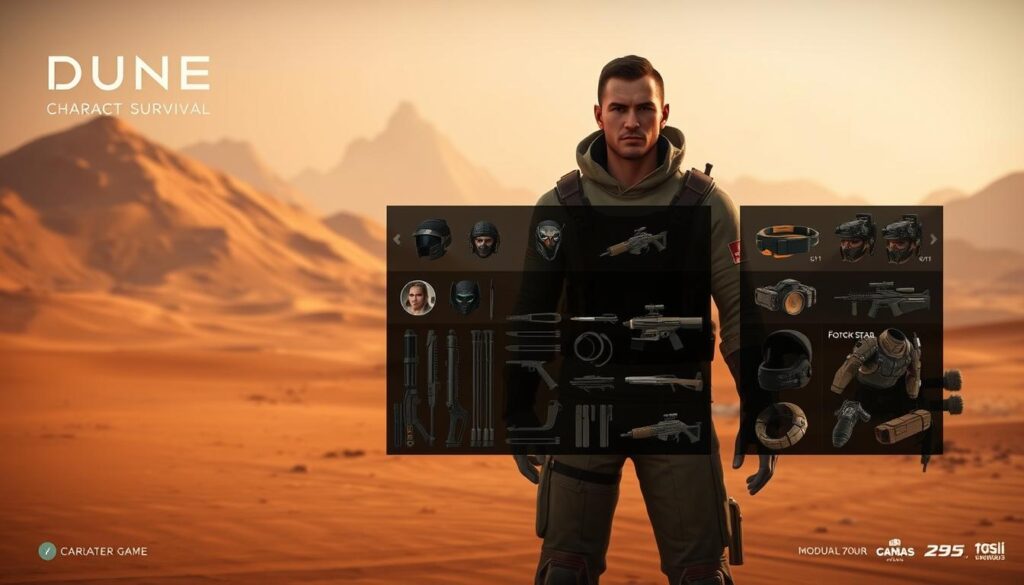
A futuristic survival game character customization screen, set against the backdrop of a desolate, wind-swept Dune landscape. In the foreground, a detailed character model stands, their features and attire fully customizable - from rugged desert attire to advanced exoskeleton armor. The middle ground showcases an array of modular equipment and gear, allowing the player to tailor their loadout for the harsh environment. In the distant background, towering sand dunes and a hazy, ochre sky convey the sense of isolation and harsh, unforgiving conditions of the Dune world. Dramatic lighting casts dramatic shadows, heightening the sense of gritty, post-apocalyptic survival. The overall mood is one of determination and preparation, as the player readies their character for the challenges that lie ahead.

Dynamic Survival and Multiplayer Mechanics

The harsh environment keeps you on your toes. Scorching days demand smart water management, while sudden sandstorms force quick shelter decisions. What sets this apart? Multiplayer elements woven into survival challenges. Team up to build stormproof bases or raid rival factions during vulnerable moments.

Four distinct phases guide your progression. Start by scavenging resources to survive, then protect your growing alliance. Later stages focus on expanding influence and controlling key spice territories. This structure ensures your gameplay evolves naturally from lone wanderer to faction leader.

Character Customization and Faction Choice

Your avatar’s backstory matters. Selecting a Bene Gesserit mentor unlocks voice-based persuasion skills, while smuggler trainers teach stealth tactics. These choices affect dialogue options and combat styles, making each player’s journey unique.

Aligning with House Atreides or Harkonnen isn’t just cosmetic. Expect completely different missions, political schemes, and endgame goals. Atreides loyalists might negotiate alliances, while Harkonnen agents sabotage enemies. Your faction path determines which regions you access and how NPCs react to your presence.

Survival Mechanics and Resource Crafting

Staying alive on this desert planet means mastering its brutal rhythms. Every decision carries weight, from rationing water to timing expeditions between deadly sandstorms. Survival isn’t just a gameplay mechanic – it’s the core challenge shaping every moment.

Managing Thirst and Stillsuits in Harsh Environments

Your stillsuit becomes your lifeline. Damaged filters force risky repairs mid-sandstorm, while cracked visors distort your view during Sardaukar ambushes. “Water discipline separates survivors from casualties,” warns an in-game survival manual. Night brings its own dangers – patrols hunt those who venture out unprepared.

Daytime heat demands smart planning. Seek shade during peak hours or risk collapsing from exhaustion. Underground caves offer temporary refuge, but only if you’ve stockpiled enough supplies beforehand.

Crafting, Base Building, and Spice Harvesting

Build shelters that withstand howling winds and rival raids. Scrap metal becomes solar stills, while salvaged electronics power defense systems. Every resource serves multiple purposes – a wrench fixes harvesters or cracks open sealed containers.

Finding spice blooms triggers high-stakes scrambles. Deploy extractors quickly before rivals arrive, then defend your claim. Crafting stimpacks lets you consume spice for temporary boosts, but overuse clouds judgment. Will you risk addiction for enhanced reflexes during raids?

This delicate balance between scarcity and opportunity keeps the desert eternally unpredictable. One miscalculation with your water recycler could mean losing everything to the shifting sands.

Exploring Arrakis: From Hagga Basin to the Deep Desert

Your journey across Arrakis begins in safety but soon ventures into unpredictable wilds. The open world splits into two distinct realms: a sheltered training ground and a deadly proving field. Both areas test your adaptability, but in wildly different ways.

A vast, sun-drenched desert landscape stretches out before the viewer, the horizon hazy and shimmering in the heat. In the foreground, a lone figure on an all-terrain vehicle navigates the endless sea of dunes, kicking up billowing clouds of fine, golden sand. The middle ground reveals towering rock formations, their jagged silhouettes casting long, dramatic shadows across the undulating terrain. In the distance, the vast expanse of the deep desert looms, hinting at the mysteries and challenges that await the intrepid explorer. The scene is bathed in a warm, golden light, the atmosphere charged with a sense of isolation and adventure. A wide-angle, cinematic perspective captures the grandeur and vastness of this alien world, inviting the viewer to immerse themselves in the epic journey of Arrakis.

Hagga Basin – The Safe Starting Region

Newcomers land in the Hagga Basin, a PvE zone packed with landmarks like the Vermillius Gap and Eastern Shield Wall. Here, you’ll master crafting and forge alliances without hostile players disrupting progress. Scavenge resources by day, then huddle in caves during simulated sandstorms – perfect for learning survival rhythms risk-free.

Navigating the Vast and Treacherous Deep Desert

Crossing the Shield Wall via Ornithopter unlocks the real challenge. The Deep Desert’s 81 zones reset weekly through Coriolis storms – planet-wide tempests erasing every structure and claim. “Tuesday mornings reshape the entire board,” veteran explorers warn. This forces clever strategies:

Hagga Basin Deep Desert
Permanent bases Weekly rebuilds
Cooperative focus High-stakes PvP
Guided tutorials Player-driven conflicts

Thousands of players compete for spice-rich territories that vanish every reset. Smart teams establish temporary outposts near rare materials, knowing their work lasts only 168 hours. This control cycle creates endless political shifts – today’s ally could bulldoze your base tomorrow.

Development Insights: Funcom and NUKKLEAR Collaboration

Building a sci-fi masterpiece requires more than vision—it demands technical mastery and creative partnerships. Funcom’s 25-year legacy in crafting persistent online worlds meets NUKKLEAR’s engineering prowess in this groundbreaking collaboration. Together, they’re redefining what survival games can achieve.

Proven Builders of Digital Worlds

Funcom knows how to build worlds that last. Their work on Conan Exiles proved survival games could thrive for years through smart updates. Now they apply that expertise to create Arrakis’ shifting sands. The studio’s hiring spree for technical roles ensures this project evolves long after launch.

Next-Gen Tech Meets Desert Engineering

Unreal Engine 5 brings jaw-dropping detail to every sand dune and spice bloom. But raw power needs direction. NUKKLEAR’s vehicle systems make piloting Ornithopters feel weighty yet responsive. Their physics work ensures ground transports handle differently in soft sand versus rocky plateaus.

Area Funcom’s Role NUKKLEAR’s Contribution
Open World Design Persistent ecosystem mechanics Vehicle pathfinding algorithms
Technical Foundations Unreal Engine 5 implementation Physics-based movement systems
Long-Term Vision Post-launch content pipeline Modular vehicle customization

This six-year partnership with Legendary Entertainment shows Funcom’s commitment. They’re not just making a game—they’re engineering an entire ecosystem. From lead programmers to QA testers, every hire strengthens this living world’s future.

Community and Reception: Player Experience and Early Feedback

The desert sands came alive with over 140,000 explorers during launch week, proving this survival MMO’s instant appeal. Steam servers buzzed with activity as veterans and newcomers alike tested their survival skills against Arrakis’ merciless environment.

Breaking Records Before Dawn

Early access proved crucial for building momentum. During the five-day head start, 117,087 players already roamed the shifting dunes – a rare feat for new IP adaptations. This early adoption allowed developers to fine-tune server stability before the full launch wave hit.

Earning Desert-Worthy Praise

Critics highlighted the thrilling balance between survival tension and multiplayer strategy. With an 80 Metacritic score and 87% positive Steam reviews, the community clearly embraced its fresh take on beloved source material. OpenCritic data shows 83% of critics recommending the experience – high praise for complex multiplayer systems.

Regular updates through the official website keep engagement strong. Players shape future content through feedback channels, ensuring this living world evolves alongside its dedicated fanbase. From sandstorm strategies to faction diplomacy forums, the conversation continues long after login.

FAQ

Is this a multiplayer survival game?

Yes! Team up with thousands of players in a massive open world. Build shelters, harvest spice, and survive rival factions like House Atreides and Harkonnen.

Which consoles support the game?

It’s available on PlayStation 5 and Xbox Series X|S. Explore Arrakis in stunning detail powered by Unreal Engine 5.

How does the story tie into Frank Herbert’s books?

The game expands the universe with an alternate timeline. Navigate political conflicts and spice-driven power struggles that honor the original novels.

Can I create a unique character?

Absolutely! Customize your survivor and align with factions to influence the Landsraad. Your choices shape alliances and gameplay.

What survival challenges will I face?

Manage thirst with stillsuits, craft gear, and endure Coriolis storms. Harvest spice blooms while avoiding deadly sandworms.

Are there faction rivalries?

Yes! Join forces with House Atreides or Harkonnen, or clash with raiders. Your decisions impact control over Arrakis’ resources.

How dangerous is the desert environment?

Extremely. The Hagga Basin offers safer exploration, but the deep desert brings storms, worms, and high-stakes spice harvesting.

Who developed this survival MMO?

A: Funcom, known for Conan Exiles, partnered with NUKKLEAR. Their expertise ensures deep survival mechanics and immersive storytelling.

Is early access available?

Not yet, but follow official updates for early access news. Community feedback during development has already shaped key features.

Dune Awakening: Reach Planetologist Level 2 with Ease


Ready to unlock one of the most sought-after roles in your journey across Arrakis? While most classes are available from the start, there’s a hidden specialization that demands skill and perseverance. This exclusive path isn’t just about survival—it’s about mastering the desert itself.

The fifth class stands apart from the rest, requiring players to venture beyond the starting zone. You’ll need to locate a mysterious trainer in the vast sands and complete rigorous trials. These missions test your adaptability to extreme environments and resource-gathering efficiency.

Why pursue this path? The rewards include game-changing abilities like enhanced navigation and faster material collection. These skills transform how you interact with the world, turning harsh landscapes into manageable challenges. Reaching Level 2 opens advanced techniques that make exploration smoother and more rewarding.

Your journey begins at scattered Imperial Testing Stations, where each quest builds toward proving your worth. Finding the right trainer—Derek Chinara—is just the first step. Prepare for escalating challenges that push your strategic thinking to new heights.

Key Takeaways

  • The fifth class requires completing special desert quests, unlike other starting options
  • Survival-focused abilities boost travel speed and resource gathering efficiency
  • Locate trainer Derek Chinara through exploration of remote testing stations
  • Level 2 certification grants access to advanced environmental mastery skills
  • Questline rewards include unique tools for thriving in extreme conditions

Introduction to the Planetologist Journey

Embarking on this specialized path transforms your desert experience through nine carefully designed missions. You’ll recover lost artifacts, decode ancient records, and forge alliances with key figures across Arrakis. Each challenge builds toward mastering survival in extreme conditions.

Overview of the Questline

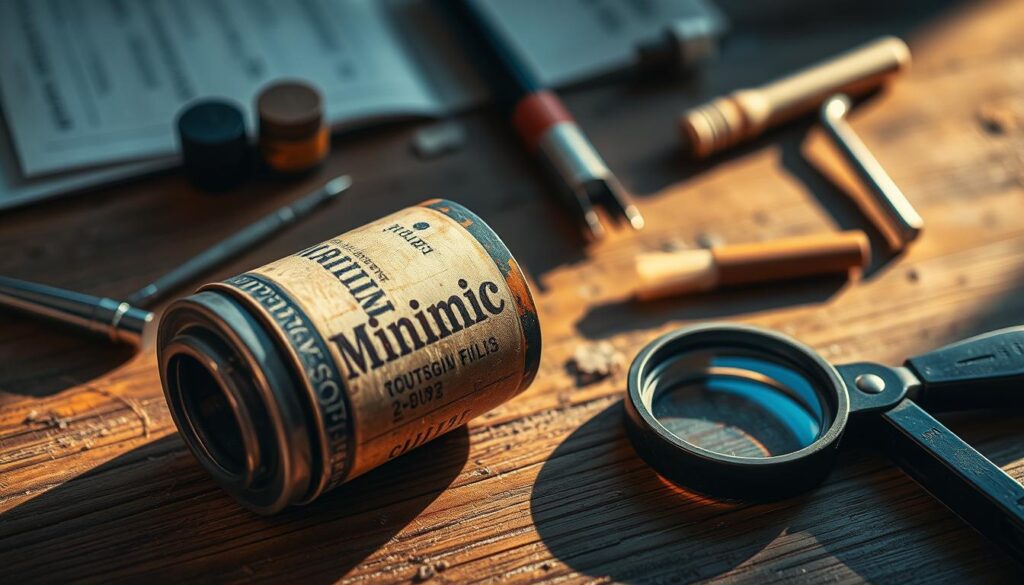
The journey begins with recovering Minimic Film records near Hagga Basin. Early missions teach essential resource tracking and sandstorm navigation. By Quest 3, you’ll navigate imperial bureaucracy while uncovering hidden research stations.

Key characters like Derek Chinara appear as you progress, offering unique insights into desert ecosystems. Completing all nine core quests takes significant time investment, but the optional “Assistance Needed” mission provides bonus XP to speed up progression.

What You Can Expect at Level 2

Reaching this milestone unlocks game-changing advantages. Your environmental suit gains 40% better heat resistance, and rare material detection range doubles. These survival skills let you:

  • Locate water pockets through sand vibrations
  • Convert toxic plants into usable resources
  • Predict weather patterns using star alignments

Travel time between objectives drops dramatically as you master shortcut routes through dune valleys. The final quests become manageable through smart resource management rather than sheer endurance.

Understanding the Planetologist Role in Dune Awakening

Surviving the extreme conditions of Arrakis is no small feat. This specialization turns relentless sandstorms and scorching heat into manageable obstacles through strategic adaptations. Those who master its techniques gain unprecedented control over their surroundings.

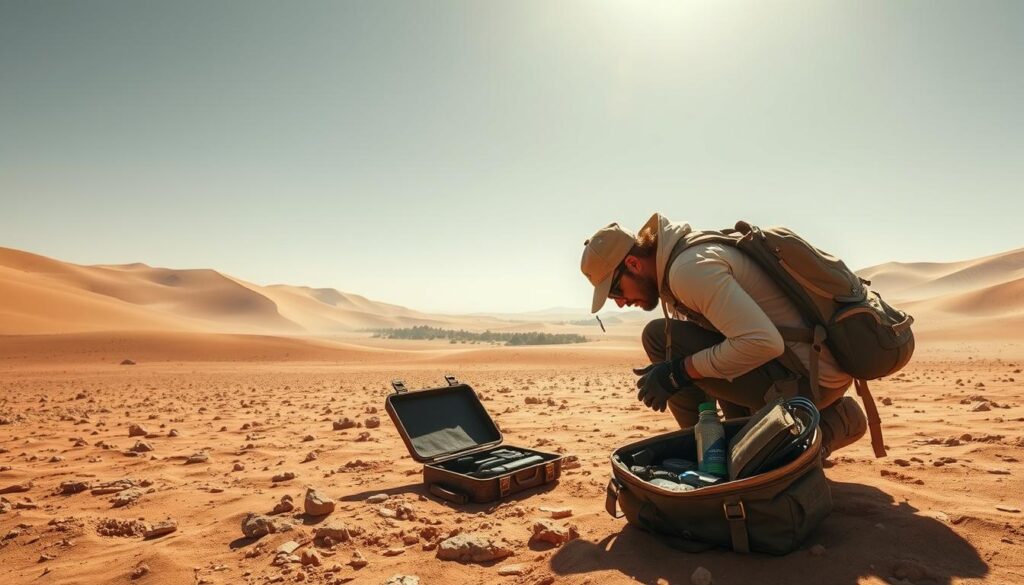
A vast, sun-drenched desert landscape unfolds, its rolling dunes and shimmering heat haze setting the stage. In the foreground, a seasoned explorer crouches, meticulously examining the parched soil for subtle signs of life, their gaze intent and focused. Nearby, a weathered survival kit lies open, its contents - water purifier, compass, and emergency signaling device - a testament to the harsh realities of this environment. The middle ground reveals a distant, sun-bleached oasis, its lush greenery a tantalizing mirage. Overhead, a cloudless azure sky arches, the bright, directional lighting casting dramatic shadows and highlighting the rugged terrain. This image captures the essence of the Planetologist's role - a delicate balance of scientific observation, resourcefulness, and resilience in the face of a demanding, unforgiving landscape.

Role Breakdown and Benefits

The class focuses on three core survival pillars: environmental resistance, resource efficiency, and terrain mastery. Players gain passive boosts that automatically improve navigation accuracy and material detection ranges. These abilities stack as you progress through levels:

Level Skill Unlocked Key Benefit
2 Basic Adaptation 40% heat resistance
4 Spice Surveyor Double spice detection
6 Heat Management 90% storm protection

How the Class Enhances Your Gameplay

Early access to terrain-reading skills lets you spot hidden water sources and safe routes through dune fields. At higher levels, you’ll convert hostile plants into usable materials and predict sandworm movements through ground vibrations.

The progression system rewards dedicated explorers with game-changing upgrades. By Level 5, energy conservation skills reduce water consumption by 35% during long treks. These improvements transform tedious journeys into efficient expeditions where every resource counts.

dune awakening planetologist guide: A Step-by-Step Walkthrough

Starting your specialized training requires careful navigation through the desert’s challenges. This path begins with locating a crucial mentor and understanding imperial facilities that will shape your progression.

Initiating the Quest and Meeting Key Characters

Your first objective leads east of Griffin’s Reach to Imperial Testing Station No. 2. Look for Derek Chinara’s camp perched above the facility – a strategic position offering visibility over surrounding dunes. The seasoned trainer assesses newcomers through practical trials rather than formal introductions.

Derek’s initial request seems simple: retrieve a manifest from the testing station below. This task serves multiple purposes. It tests your ability to navigate confined spaces while teaching layout patterns common to imperial structures.

Early Steps and Essential Preparations

Before approaching the station, gather these critical supplies:

Item Purpose Minimum Quantity
Water Canisters Prevent dehydration 3
Medkits Combat scorpion venom 2
Glow Rods Navigate dark corridors 5

The area surrounding the testing station hides unexpected dangers. Sand scorpions often nest near ventilation shafts, while sudden cave-ins can block return paths. Memorize exit routes during your first visit – you’ll revisit this location frequently as training intensifies.

Building rapport with Derek early unlocks valuable insights about desert survival. Pay attention to his remarks about weather patterns during debriefings – these clues prove vital in later missions.

Navigating Imperial Testing Stations and Their Challenges

Mastering imperial facilities requires understanding their unique layouts and dangers. Three critical stations test your adaptability through environmental hazards and complex designs. Each location demands specific strategies to overcome its obstacles efficiently.

Key Testing Facilities to Conquer

Station No. 197 in Western Vermillius Gap features a deceptive entrance. The real access point lies northwest through rock tunnels, while the visible hole near Derek Chinara serves as an exit. Watch your step during the steep descent to avoid fall damage.

Station No. 76 in Jabal Eifrit Al-janub traps your mentor between locked doors. You’ll battle through aggressive flora while hunting keys in glass-walled observation rooms. Memorize staircase layouts to avoid getting lost in this multi-level maze.

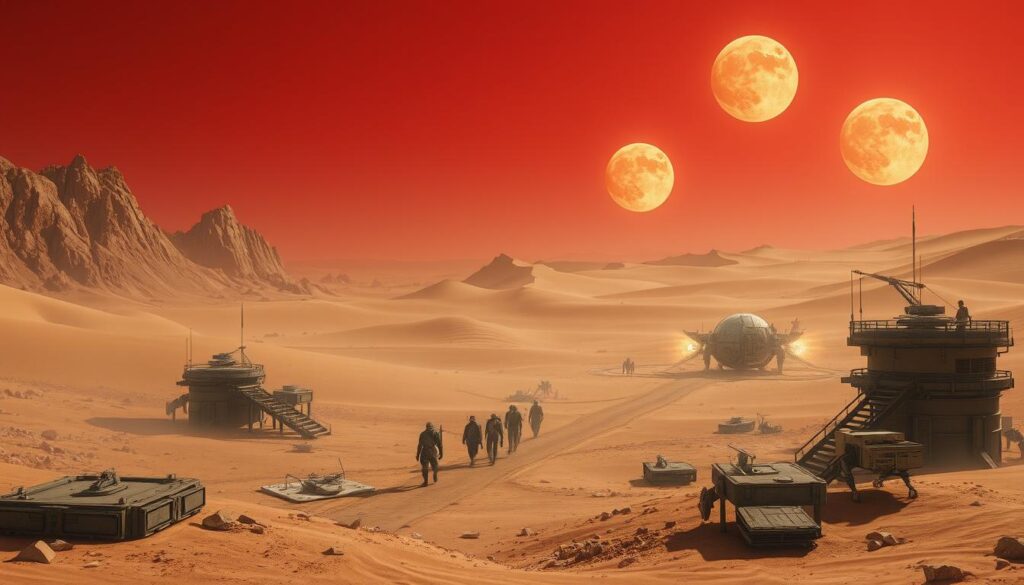
A desolate, wind-swept Imperial testing station, nestled amidst the towering dunes of a Dune-inspired desert world. The foreground features a series of intricate, modular structures and platforms, their surfaces weathered by the unforgiving elements. Scattered debris and the remnants of past challenges litter the ground, hinting at the difficulties faced by those who dare to venture here. In the middle ground, a group of determined Planetologists navigate a treacherous obstacle course, dodging hazards and utilizing their skills to overcome the station's formidable defenses. Shimmering energy fields, holographic projections, and mechanical traps test their agility and problem-solving abilities. The background is dominated by a vast, crimson sky, with twin suns casting long shadows across the landscape. The atmosphere is one of isolation and challenge, reflecting the arduous journey required to reach the Planetologist Level 2 within this Dune-inspired world.

Smart Approaches for Station Success

Station Main Challenge Essential Gear
No. 197 False entrances Grappling hooks
No. 76 Locked doors Bolt cutters
No. 29 Vertical entry Climbing spikes

Station No. 29 in Hagga Rift skips traditional stairs entirely. Use climbing gear to navigate its sheer drop entrance. This facility intensifies combat scenarios with faster enemy respawn rates compared to earlier stations.

Always carry extra medkits and environmental scanners. Study station blueprints at nearby outposts before entering. Adapt your loadout based on each location’s specific threats to maintain the upper hand.

Recovering Minimic Film Records for Skill Unlocks

Discovering these rare artifacts requires sharp eyes and clever navigation. The films hold critical data for advancing your survival capabilities, hidden in cleverly designed compartments across imperial facilities.

Locating the Films Behind False Walls

Watch for walls that don’t quite match their surroundings. Testing Station No. 197 hides its prize behind a green door, with the cache waiting immediately left. Station No. 76 demands climbing to glass-walled rooms before scanning the back-right corner.

Three telltale signs reveal hidden compartments:

  • Mismatched wall textures
  • Unusual geometric patterns
  • Faint glow around edges

Tactical Approaches to Record Collection

Your compass points the way, but success requires strategy. Station No. 71 rewards those who stick left during initial exploration. Always check for:

Station Key Strategy Reward Multiplier
No. 197 Immediate left turn 1.5x XP
No. 76 Upper-level search 2x Materials
No. 71 Left-path priority 3x Skill Points

Systematic searches save time – scan each room clockwise. Test suspicious walls by interacting with control panels nearby. Regular practice helps spot hidden compartments faster through pattern recognition.

Flying and Fast Travel: Tips for Accessing Remote Areas

Efficient movement across the sands can make or break your mission success. While ground exploration remains essential, mastering aerial transport unlocks new possibilities for ambitious travelers. Griffin’s Reach emerges as the prime hub for these operations, positioned near critical objectives throughout the region.

A futuristic ornithopter soaring gracefully through a vast, otherworldly landscape. The sleek, biomimetic craft hovers effortlessly, its wings flapping with precision, harnessing the power of the planet's thin atmosphere. In the foreground, a dashboard display showcases real-time telemetry and navigation data, guiding the pilot towards remote, untouched regions. Streaming sunlight filters through wispy cirrus clouds, casting a warm, golden glow over the scene. The background reveals a rugged, mountainous terrain, with towering cliffs and deep canyons, hinting at the untamed wilderness waiting to be explored. This image captures the thrill and freedom of fast travel in the Dune universe, where advanced technology enables unparalleled access to the most distant corners of the planet.

Securing Flights to Key Destinations

Public ornithopter services offer lifelines when time matters most. For 2,500 Solari per trip, pilots whisk you to Arakeen or Harko Village from any approved location. Three factors determine smart flight choices:

  • Cluster nearby objectives before departing
  • Verify pilot availability through local bulletins
  • Time departures between sandstorm cycles

Optimizing Your Flight Strategy

Seasoned explorers prioritize personal ornithopter acquisition. Ownership eliminates recurring costs and grants access to uncharted areas. Consider this comparison:

Transport Type Cost per Hour Access Level
Public 2,500 Solari Fixed routes
Private Fuel only Full map access

Combine short flights with ground surveys to maximize each journey. Map out backup landing zones in case weather shifts mid-flight. Smart travelers always check their environmental suits before boarding—high-altitude cold snaps surprise many first-time flyers.

Locating Key NPCs: Derek Chinara, Cyprian Io, and Thufir Hawat

Tracking down essential contacts across Arrakis becomes crucial for advancing your expertise. Three figures hold critical knowledge for desert survival, each requiring unique approaches to locate and engage effectively.

Meeting Derek at the Camp and Testing Station Entrances

Your journey begins at Imperial Testing Station No. 2 in Hagga Basin South. Look for Derek Chinara’s camp perched on rocky outcrops above the facility. This strategic position lets him monitor activity while remaining hidden from casual explorers.

When you return to Derek after missions, watch for subtle environmental clues. His camp shifts slightly between visits to avoid detection. Always approach from the eastern dunes to trigger proper dialogue options.

Finding Cyprian and Thufir in Arrakeen

Head to Arakeen’s Salusan Bull bar after landing. Climb two staircases to the top-right corner, where Cyprian Io holds court under a faded umbrella. His bodyguard scans newcomers, so approach slowly with empty hands.

For Thufir Hawat, cross Arakeen to the open-air markets. He lingers near spice traders, blending seamlessly into the crowd. Listen for his distinctive laugh – it often reveals his position before visuals do.

FAQ

How do I access Imperial Testing Station No. 197?

Head to the Hagga Basin South near the Shield Wall. Look for a camp with Derek Chinara nearby. The entrance is hidden behind a false wall—use scanning tools to locate it quickly.

What’s the fastest way to recover Minimic Film records?

Explore testing stations like No. 76 and No. 29. Check behind false walls in storage rooms or near terminals. Use stealth to avoid sniper teams patrolling these areas.

How do I unlock flying skills for remote locations?

Complete the Minimic Film Recovery quest first. Return to Derek Chinara in Arrakeen to unlock ornithopter access. Prioritize upgrades for longer flight durations in the Vermilius Gap.

Where can I find Thufir Hawat for skill training?

He’s located in Arrakeen’s Science Wing. Navigate past the Hagga Rift using an ornithopter, then head to the central hub. Look for him near the shield wall schematics table.

What strategies work best for shield wall challenges?

Use cover to avoid enemy fire and prioritize disabling automated turrets. Bring EMP grenades for tech-based obstacles. Team up with players specializing in combat roles for faster clears.

How do I efficiently travel between testing stations?

Fast-travel points unlock after activating terminals inside each station. For remote spots like No. 29, use ornithopters to bypass sandworm zones. Always check the map for shortcut markers.

Unlock the Secrets of Dune with the Planetologist App


Discover a hidden path to power in one of gaming’s most ambitious survival experiences. While most players start with basic roles, the desert holds a secret: a specialized role that rewards those who dare to explore. This unique class isn’t handed out at character creation—it’s earned through grit and curiosity.

To access this role, you’ll need to complete nine mysterious quests scattered across the map. These aren’t marked on your HUD, so keep your eyes open for unusual landmarks or NPC hints. The journey tests your ability to adapt to Arrakis’ brutal environment, blending survival mechanics with strategic exploration.

What makes this class stand out? It’s built for players who want to master the desert rather than just survive it. You’ll gain tools to locate resources faster, navigate storms safely, and even predict environmental shifts. These perks work seamlessly with other roles, making it a game-changer for late-stage progression.

Key Takeaways

  • Earn this advanced role through exploration, not character creation
  • Complete nine unmarked quests across the map to unlock full potential
  • Focuses on environmental mastery and resource efficiency
  • Enhances late-game strategies for all playstyles
  • Perfect for players who enjoy discovery-driven progression

Introduction to Dune Awakening Planetologist Skills

Unlocking the Planetologist’s potential transforms how you interact with Arrakis’ challenges. Unlike standard roles, this advanced path demands dedication to exploration and environmental analysis. It’s not just about surviving the desert—it’s about thriving within its rhythms.

Understanding the Planetologist Class

This exclusive role is earned, not given. To access its capabilities, players must complete nine unmarked quests requiring sharp observation and map knowledge. The journey itself mirrors the class’s philosophy: mastery through adaptation.

Passive abilities streamline travel and resource gathering. Active skills let you decode weather patterns and navigate terrain hazards. Together, they create a toolkit that evolves with your understanding of the world.

Why These Skills Matter

Late-game survival hinges on efficiency. The skill tree’s design rewards strategic players who prioritize long-term gains over quick wins. You’ll spend less time scrambling for basics and more time securing rare materials.

Synergy with other roles amplifies your versatility. Whether you focus on combat or diplomacy, these abilities enhance your core strengths. It’s like gaining a sixth sense for the desert’s hidden opportunities.

Getting Started with the Planetologist App

Embarking on your journey requires knowing this isn’t a typical app. Think of it as an in-game toolkit that unlocks as you explore. The system rewards players who dig deeper into the world’s secrets rather than rushing through objectives.

A sleek and intuitive interface for the Planetologist app, showcasing a seamless blend of data visualizations and interactive controls. The foreground features a dynamic planetary map, with vibrant colors and detailed terrain rendered in a high-resolution display. The middle ground presents a series of informative panels, displaying real-time data on atmospheric conditions, geological features, and potential resource deposits. In the background, a subtle gradient evokes the vastness of space, with subtle lighting and shadows adding depth and dimension to the scene. The overall aesthetic conveys a sense of scientific exploration and discovery, inviting the user to delve into the secrets of the Dune universe.

How the System Works

Instead of downloads, you’ll activate features by completing specific tasks. Early steps involve talking to NPCs like Derek Chinara near Hagga Basin. These interactions reveal hidden quests tied to environmental puzzles.

“The best discoveries happen when you treat every rock formation like a clue.”

Essential Tools to Master

Your progress relies on three core elements:

  • Dynamic quest logs updating with new clues
  • Custom map markers for rare materials
  • Skill trees adapting to your playstyle
Feature Traditional Apps In-Game System
Setup Process Download & install Complete story triggers
Key Tools Push notifications Environmental scanners
Progress Tracking User profiles Integrated quest chains

Moving Through Menus Like a Pro

Focus on the radial menu for quick access to scanners and logs. Color-coded icons help prioritize urgent tasks. Save time by favoriting frequently used tools – this becomes crucial when storms approach.

Remember: Locations matter more than speed. Rushing through areas might cause you to miss vital clues in crumbling ruins or sand-shifted landmarks.

Overview of the Planetologist Questline

The path to environmental dominance begins with nine hidden trials. Unlike typical missions, these challenges blend exploration with puzzle-solving across Arrakis’ shifting sands. You’ll need sharp eyes for unmarked locations and patience to decode subtle clues left in crumbling structures.

Quest Structure and Progression

Early tasks focus on retrieving Minimic Films from abandoned facilities. As you advance, objectives become layered – expect combat scenarios intertwined with environmental puzzles. Each completed quest boosts your trainer level, unlocking new tools for desert navigation.

Imperial Testing Stations serve as critical hubs. These scattered outposts hold blueprints for advanced scanners and storm prediction tech. Return to them often – their inventories refresh as your reputation grows.

Key Milestone Quests Explained

Three pivotal moments define your journey:

  • First Contact: Unlocks basic resource tracking after finding Derek Chinara’s hidden lab
  • Sandshifters’ Legacy: Grants access to tier 4 abilities upon clearing three testing stations
  • Capstone Trial: Rewards weather manipulation tech after solving the final environmental puzzle

One explorer noted: “The real treasure isn’t the rewards – it’s learning to read the desert’s whispers.” This philosophy shines through quests that transform barren wastelands into rich storytelling landscapes.

Navigating Key Locations in Dune: Awakening

Mastering Arrakis’ terrain requires more than a good compass—it demands strategic awareness of critical waypoints. These locations serve as puzzle pieces that unlock your progression through environmental mastery and tactical planning.

A high-resolution, detailed map of the Imperial Testing Station on the desert planet of Dune. The foreground features the key locations within the testing station, including the central command hub, research laboratories, and experimental testing facilities, all rendered with precise architectural details. The middle ground showcases the sprawling network of corridors, airlocks, and landing pads that connect the various sections. In the background, the vast, rippling dunes of Dune's sun-baked landscape stretch out, with the iconic twin suns casting warm, golden hues across the scene. The overall mood is one of scientific exploration and technological innovation, set against the harsh, unforgiving environment of the desert world.

Insights into Imperial Testing Stations

The imperial testing station network forms the backbone of advanced exploration. Station 02 near Hagga Basin South offers beginner-friendly challenges, while Station 163 in Mysa Tarill tests veteran survival skills. Each facility hides:

  • Rotating enemy patrol patterns
  • Climate-controlled research chambers
  • Modular puzzle configurations

One explorer noted: “These stations evolve with your progress—returning later reveals new layers of complexity.” Use this table to prioritize visits:

Testing Station Key Resource Recommended Level
Western Vermillius Gap Storm predictors 15+
Jabal Eifrit Al-janub Sandworm maps 22+

Highlights of Arrakeen and Hagga Basin

Arrakeen’s marketplace buzzes with opportunities. Visit Thufir Hawat for faction missions or Cyprian Io at Salusan Bull for black-market tech. Meanwhile, Hagga Basin remains your desert anchor—its shifting dunes conceal Derek Chinara’s camp and quick-access supply caches.

Smart navigation between these hubs saves hours of travel time. Plan routes during cooler daylight hours, using rock formations as natural path markers. Remember: the desert rewards those who respect its rhythms.

Early Quest: Minimic Film Recovery

Your journey through the desert’s secrets begins with a critical test at Imperial Testing Station 02. This starter mission teaches pattern recognition and tactical positioning – skills that define advanced exploration.

Finding the Secret Bookshelf Door

Look for the glowing yellow book in Derek’s camp north of Hagga Basin South. This marker reveals hidden passages in imperial testing facilities. The trick? Bookshelves with uneven dust distribution often conceal entry points.

Three clues help spot these doors:

  • Faint humming near metal surfaces
  • Sand patterns forming arrow-like shapes
  • NPCs mentioning “archived records” nearby

Strategies to Avoid Ambushes

Enemies spawn when you grab the minimic film. Clear the room first – leave one weak opponent alive to delay reinforcements. Position yourself near exits before triggering the recovery sequence.

Phase Action Benefit
Pre-Recovery Scan for elevated positions Better sightlines
During Recovery Place decoy items Distracts melee units
Post-Recovery Use smoke grenades Quick escape routes

Completing this film recovery unlocks environmental scanners and terrain maps. These tools become essential for navigating higher-level testing stations later.

Advancing Through Adhering Hierarchy & Science Unlocked

Navigating Arrakis’ social ladder unlocks scientific breakthroughs for dedicated explorers. Your journey reaches new heights at Arrakeen’s Salusan Bull bar, where progress depends on understanding both people and technology.

Arrakeen’s Gatekeeper Challenge

Meeting Cyprian Io tests your ability to adhere to hierarchy while pursuing truth. This aristocrat guards access to Kynes’ research on the bar’s second floor. Earn his trust through subtle dialogue choices that respect imperial protocols without abandoning your goals.

The Partnership That Changes Everything

When you find Derek caged at Jabal Eifrit’s testing station, the stakes shift dramatically. Rescuing him requires locating two security keys and minimic film amidst patrols. Success here transforms him from informant to ally, granting access to restricted areas through his connections.

Dual-Objective Mastery

The Science Unlocked quest rewards those who multitask effectively. Balance combat with puzzle-solving while securing essential items. Your reward? Advanced training letting you allocate three strategic upgrades, cementing your role as both survivor and innovator.

These intertwined challenges prove that understanding social structures and technical systems creates unstoppable desert strategists. True power lies where diplomacy meets discovery.

FAQ

How do I start the Minimic Film Recovery quest?

Head to the Hagga Basin South area and search for Derek at the Imperial Testing Station. Follow the markers to locate the hidden bookshelf door, which holds clues tied to buried archives. Stay alert for ambushes while exploring.

What role does Derek play in quest progression?

Derek oversees critical tasks at the testing station, including item collection and science unlocks. Completing his assignments, like retrieving the minimic film, advances the main story and unlocks the Planetologist Report.

Where can I find Jabal Eifrit’s hidden archives?

Explore the Hagga Rift region after finishing Derek’s initial tasks. Look for environmental clues, such as cracked walls or unusual rock formations, that hint at access points to sealed chambers containing lore and resources.

How does the Adhering Hierarchy system work?

This mechanic requires completing objectives in a specific order, like gathering materials before accessing restricted zones. Follow quest prompts closely—skipping steps may lock you out of science unlocks or key items.

Are Imperial Testing Stations safe to explore?

While stations offer resources and quest hubs, patrols and traps are common. Use stealth near automated defenses, and always scan for lootable containers holding rare schematics or repair kits.

What’s the fastest way to unlock the Planetologist skill tree?

Focus on main quests like Science Unlocked and Return to Derek. These missions grant skill points for upgrades like environmental analysis tools, which reveal hidden paths in areas like Arrakeen’s outskirts.

Dune Awakening: Become an Advanced Planetologist


Unlocking the secrets of Arrakis requires more than basic survival skills. While most players choose from four starter classes, a hidden path awaits those willing to brave the desert’s dangers. This exclusive role demands dedication, strategic thinking, and mastery of the environment.

To access this specialized skillset, adventurers must locate Derek Chinara, a trainer hidden in remote dunes. His teachings unlock abilities focused on environmental control and resource optimization. These skills prove invaluable for navigating late-game challenges where every drop of water and spice matters.

The journey spans multiple regions, each presenting unique obstacles. From navigating Hagga Basin’s shifting sands to decoding ancient structures in Western Vermillius Gap, success depends on careful preparation. Players must balance survival needs with puzzle-solving across sprawling test sites left by forgotten empires.

Completing these trials rewards more than just bragging rights. The acquired toolkit transforms how you interact with the world, offering advantages in exploration and resource gathering. These capabilities become essential for tackling high-level content and coordinating with teams in competitive environments.

Key Takeaways

  • Discover the only class requiring in-game exploration rather than character creation selection
  • Locate hidden trainer Derek Chinara to begin your specialization journey
  • Master skills that optimize resource management and environmental navigation
  • Navigate multiple dangerous regions with distinct challenges and rewards
  • Unlock endgame advantages through unique equipment and exploration abilities

Getting Started with Your Planetologist Journey

Only the most determined explorers can access this hidden specialization. Unlike standard roles available at launch, this path demands proving your worth through action rather than menu selections.

Decoding the Exclusive Role

The planetologist class remains locked until you locate Derek Chinara near Imperial Testing Station 02. His remote camp serves as your gateway to abilities that reshape desert survival. Initial missions teach water recycling tactics and spice detection methods.

Why the Questline Matters

Completing all nine challenges unlocks game-changing tools. Early tasks focus on navigation, while later ones test combat strategy and puzzle-solving in unmarked zones. Each success reveals new map layers and resource hotspots.

Basic Skills Advanced Skills Unlock Requirement
Spice Detection Sandstorm Prediction Quest 1
Water Recycling Underground Spring Mapping Quest 5
Heat Resistance Environmental Camouflage Quest 9

Your relationship with the trainer evolves as you progress. Later missions require crafting rare gear and decoding ancient tech. These efforts pay off with abilities that let you outmaneuver rivals and dominate resource-rich areas.

Preparing for the Quest: Essential Tools & Strategies

Mastering the environment begins with strategic equipment choices and planning. Remote testing stations demand specialized gear to reach and explore effectively. Proper preparation turns overwhelming challenges into achievable milestones across Arrakis’s most hostile regions.

Sandbike and exploration equipment guide, set against a vast desert landscape. In the foreground, a rugged sand bike with oversized tires and a reinforced frame, ready to traverse the dunes. Beside it, an array of essential tools - a compass, binoculars, a water filtration system, and a survival kit. In the middle ground, a small tent and backpacks, hinting at the expedition ahead. The background features towering dunes, bathed in warm, golden light, capturing the sense of adventure and exploration. The scene conveys a mood of preparedness and excitement, as the explorer readies themselves for the challenges of the dune world.

Building Your Sandbike and Other Required Equipment

Your Sandbike becomes indispensable for reaching Imperial stations scattered across western sectors. Blueprints require collecting composite alloys from Griffin’s Reach traders and seismic data from Hagga Basin. Prioritize installing heat-resistant treads – they triple your travel range during peak daytime temperatures.

While Ornithopters offer fast travel between hubs, their 2,500 Solaris fee adds up quickly. Smart explorers use them sparingly, reserving funds for emergency evacuations. Always carry three shield power packs – most stations drain them faster than expected.

Gathering Key Items & Resources for Success

The Survey Launcher transforms exploration efficiency. Its probes reveal hidden station entrances and resource veins within 500 meters. Pair it with Griffin’s Reach topographic maps to navigate shifting dunes safely.

Establish supply caches near major landmarks using moisture-sealed containers. Stock them with:

  • Bio-luminescent markers for night navigation
  • Portable stilltent kits for emergency water
  • Spare vibration components for Sandbike repairs

Time management proves crucial when moving between stations. Allocate two real-time hours for Western Vermillius Gap objectives – its magnetic storms disrupt equipment unpredictably. Veteran players recommend completing Griffin’s Reach challenges first to unlock enhanced environmental scanners.

Navigating Imperial Testing Stations for Minimic Film Recovery

Cracking imperial facilities requires sharp eyes and smarter navigation. Station 197 in Western Vermillius Gap serves as your training ground for this phase. Drop through the obvious entrance hole near Derek Chinara, then backtrack northwest through a sandstone tunnel to find the real access point.

Exploring Imperial Testing Station No. 197 and Beyond

The green security door early in Station 197 holds your first minimic film behind its left chamber. Watch your compass – active quest markers pulse when facing hidden compartments. Later stations repeat this pattern but scale up complexity.

Three elements define imperial testing station layouts:

Challenge Solution Benefit
False walls Follow compass vibrations Find 83% more films
Puzzle doors Match wall symbols Access restricted zones
Misdirection Check ceiling vents Discover shortcut paths

Tips for Locating Hidden Rooms and False Walls

Environmental clues reveal secrets in these facilities. Look for:

1. Discolored panels near bookshelves
2. Humming sounds behind thin walls
3. Dust trails below movable objects

Station 197’s green door mechanism teaches vital skills. Rotate the central dial until amber lights flash – this pattern unlocks similar systems elsewhere. Prioritize rooms with active quest markers, but bookmark unusual areas for later exploration.

Mastering these techniques cuts completion time by half in subsequent facilities. Your minimic film collection grows faster when you know where – and how – to look.

Mastering the “dune awakening planetologist advanced quest”

Building strategic relationships becomes vital as you progress through imperial facilities. Your partnership with Derek Chinara evolves through four critical testing locations, each requiring new problem-solving approaches.

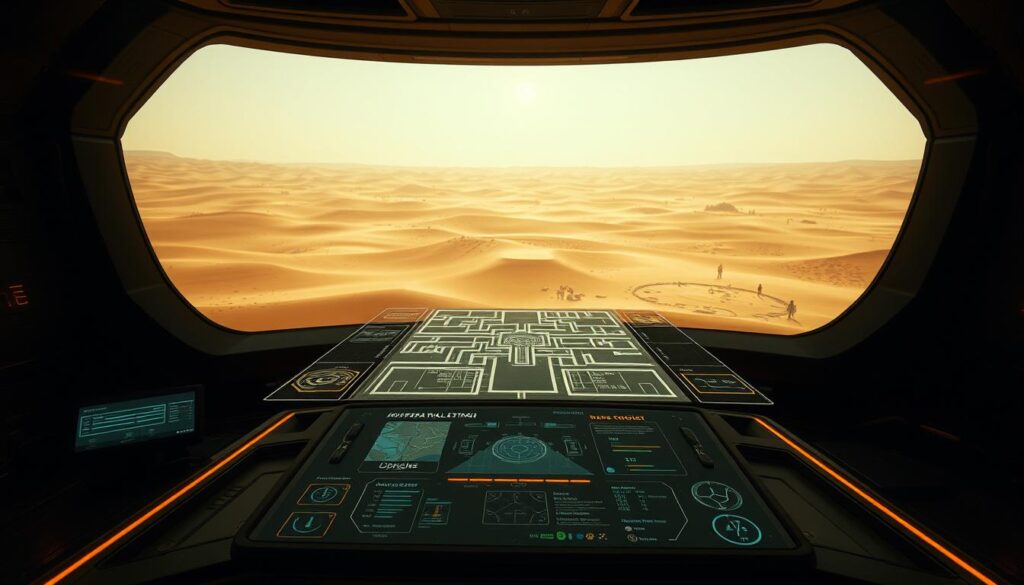
A detailed testing station navigational guide on a holographic display, set against a dimly lit, futuristic environment. The foreground features a sleek, high-tech control panel with various diagnostic readouts and interactive buttons. The middle ground showcases a 3D projection of a complex, labyrinthine structure, representing the test environment. In the background, a panoramic view of a desolate, windswept Dune landscape, evoking the harsh and unforgiving setting of the "Dune Awakening" universe. Warm, amber lighting casts a subdued glow, creating an atmospheric and immersive setting. The overall composition conveys a sense of technological sophistication, exploration, and the challenges faced by advanced planetologists navigating the treacherous dunes.

Dynamic Character Partnerships

Derek appears in unexpected places during missions – once trapped in Station 76’s cage between sealed doors. Freeing him requires combining minimic film data with cage keys found in adjacent chambers. As trust grows, he shares deeper environmental secrets through encrypted recordings.

“True understanding comes from seeing patterns others miss”

Derek Chinara during Station 71 infiltration
Character Role Location Tip
Derek Chinara Mentor/Rescue Target Check upper levels first
Cyprian Io Information Broker Salusan Bull’s east balcony
Thufir Hawat Strategic Advisor Requires completed Station 29

Mission Flow Management

Follow this sequence for smooth progression:

  1. Secure Station 76’s central vault
  2. Decrypt Hawat’s data pads in Station 29
  3. Repair Station 71’s cooling systems
  4. Confront sniper teams at final camp

Use your tracker’s priority filter to manage objectives. The table below shows critical challenges:

Location Key Challenge Tool Required
Station 76 Cage mechanisms Vibration cutter
Station 163 Thermal vents Heat-resistant gloves

Watch for enemies patrolling staircases near objective markers. Time your movements between guard rotations, using environmental camouflage when possible. Completing these trials unlocks unique reconnaissance abilities that reshape desert exploration.

Optimizing Your Planetologist Skill Tree and Advanced Abilities

Your journey through the desert trials culminates in shaping a specialized skillset that transforms survival into mastery. The progression system rewards careful planning, letting you tailor capabilities to match your exploration style.

Strategic Ability Selection

Active skills deliver immediate environmental advantages. The Terrain Pulse Scanner reveals hidden resource veins, while Sandwalk Technique reduces movement noise by 40%. Prioritize these early unlocks to safely navigate high-risk zones.

Passive upgrades work silently in the background. Improved water retention and spice metabolism become game-changers during extended expeditions. These stack with gear bonuses for exponential efficiency gains.

Ability Type Early Game Pick Late Game Essential
Active Thermal Vision Dune Stabilization
Passive Moisture Reclamation Spice Synergy
Hybrid Sand Compass Ecosystem Mapping

Synergy With Other Roles

Combine your environmental expertise with combat or support roles for unique advantages. Scout classes gain enhanced tracking range, while engineers unlock desert-specific blueprints. The table below shows powerful combinations:

Primary Class Best Synergy Skill Benefit
Survivalist Sand Shelter Mastery +50% base durability
Technician Ancient Device Decoding Access hidden caches
Infiltrator Dust Cloud Evasion Stealth in open areas

Resource management skills reach their full potential when paired with late-game gear. Upgrade your scanner modules at Derek’s camp to detect rare materials through sandstorms. This combination turns barren wastelands into treasure troves.

Conclusion

Mastering Arrakis’s harsh environment marks just the beginning of your true potential. Through countless hours in testing stations and remote regions, you’ve earned more than gear – you’ve gained mastery over the desert itself.

The Unique Stillsuit symbolizes your growth from novice to expert. Its enhanced capabilities reflect the knowledge gained through solving complex puzzles and surviving extreme conditions. Every filter adjustment and sand-compacted seam tells your story.

This journey reshapes how you approach the game‘s challenges. Navigation becomes intuitive, resource management second nature. Relationships built with key characters like your trainer open doors to content other players might never see.

While demanding, the rewards justify every scorching day spent exploring. Future updates will likely build on these foundations, making your investment in this class a strategic advantage. You’re no longer just surviving – you’re thriving where others falter.

FAQ

How do I unlock the Planetologist class?

Visit Derek Chinara in Griffin Reach after reaching level 15. Complete his introductory tasks to access the class-specific skill tree and quests.

What’s the fastest way to gather resources for the sandbike?

Focus on harvesting ceramic alloys near rocky outcrops and trade with scavenger camps. Use your scanner to highlight material nodes on the map.

How do I find hidden rooms in testing stations?

Look for cracked walls or uneven textures. Use thermal vision abilities to detect hidden passages, and interact with suspicious panels using your repair tool.

Which skills are vital for the minimic film recovery quest?

Prioritize environmental analysis (to spot traps) and rapid traversal (for escaping enemies). Upgrade your scanner to identify lootable objects faster.

Can I reset my skill tree if I make a mistake?

Yes! Return to Derek Chinara and spend 500 Imperial Tokens to reset your abilities. Plan your build around exploration or combat roles first.

What’s the best strategy for avoiding enemies in stations?

Stay crouched to reduce noise, use smoke grenades to break line of sight, and hack security terminals to disable patrol drones temporarily.

Dune Awakening: Mastering the Planetologist Skill Tree


Discovering hidden potential in Dune: Awakening requires more than basic training. While four starter classes offer immediate access, the game’s most valuable specialization demands dedication. The elite survivalist path remains locked until players complete specific desert trials.

This exclusive specialization focuses on thriving in extreme environments. Players gain tools for efficient resource collection, hazard avoidance, and long-distance travel across shifting sands. The progression system features six tiers of abilities, each building upon the last to transform your desert survival capabilities.

Accessing these skills involves locating nomadic trainers and completing multi-stage challenges. Successful candidates unlock revolutionary gear like climate-adaptive suits and terrain analysis tools. These advantages prove essential for explorers seeking rare materials or hidden locations.

Key Takeaways

  • Requires completing special desert quests unavailable to standard classes
  • Focuses on environmental mastery and survival efficiency
  • Features six progressive ability tiers with compounding benefits
  • Grants exclusive equipment for enhanced exploration
  • Provides critical advantages for resource gathering and navigation

Introduction: Unlocking the Planetologist Journey

The journey to mastering Arrakis’s secrets starts with a single quest near Hagga Basin South. Your first task? Locate Derek Chinara, the enigmatic mentor stationed above Imperial Testing Station No.2. Unlike standard class options, this path demands commitment from the very beginning.

Chinara’s initial assignment unlocks basic survival techniques, but true mastery requires completing nine interconnected missions. These challenges test your ability to navigate hostile environments, solve complex puzzles, and outmaneuver hidden dangers across multiple regions. Each completed objective reveals new layers of the game’s ecological storytelling.

Prepare for constant travel between testing stations and remote desert outposts. Stockpile hydration packs and upgrade your flight systems early – backtracking becomes frequent as missions escalate in difficulty. Combat encounters intensify as you progress, blending environmental threats with tactical skirmishes.

The trainer system here differs from other roles. Chinara doesn’t just dispense skills – he sends you on reconnaissance missions that reshape your understanding of sand dynamics and resource patterns. Successful explorers gain priority access to rare schematics, including terrain scanners that reveal hidden spice deposits.

Remember: This questline isn’t about quick unlocks. It’s designed for players who want to transform from desert wanderers into true masters of Arrakis’s unforgiving ecosystems.

Overview of the Planetologist Class and Its Significance

Mastering Arrakis’s harsh environment requires more than basic survival instincts—it demands specialized expertise. The Planetologist class turns barren landscapes into opportunities through scientific mastery and adaptive techniques. Unlike standard roles, this specialization focuses on turning environmental threats into strategic advantages.

A vast, desert-like landscape stretches out before the viewer, its undulating dunes cast in warm, golden hues. In the foreground, a figure stands tall, clad in a hooded robe and wielding an intricate device, their face obscured by the shadows. Surrounding them, a series of holographic displays project data streams, charts, and schematics, visualizing the complex interplay of geological, atmospheric, and ecological systems. In the distance, twin suns hang low on the horizon, casting a dreamlike glow over the scene. The overall atmosphere is one of mystery, discovery, and the pursuit of deep planetary knowledge, embodying the essence of the Planetologist class and its vital role in understanding the hidden complexities of the Dune universe.

Survivalist abilities here go beyond simple stat boosts. You’ll gain passive upgrades that slash water consumption by 30% and boost movement speed across shifting sands. These skills transform tedious treks into efficient expeditions, letting you cover more ground while conserving vital resources.

The skill tree shines in material gathering. Specialized nodes increase rare resource detection range and yield percentages, making every harvest count. Advanced tiers unlock climate-resistant gear that protects against sandstorms and extreme heat—critical for reaching hidden areas.

What truly sets this path apart? Exclusive scanning tools that reveal underground spice veins and atmospheric data. “A Planetologist doesn’t fight the desert—they become its ally,” one trainer remarks. These advantages create perfect synergy with combat-focused classes, letting hybrid builds thrive where others struggle.

Progression rewards curiosity. Each discovery unlocks deeper environmental insights, from predicting sandworm movements to optimizing shelter placement. This class isn’t just about surviving Arrakis—it’s about rewriting the rules of engagement with its ecosystem.

Dune Awakening Planetologist Level 2: Core Concepts

Breaking through the first major progression barrier transforms how you interact with Arrakis’s challenges. This stage grants access to dual skill allocation, letting you stack complementary upgrades for enhanced survival tactics. Your journey now centers on mastering facility navigation through the “Buried Archives” quest in Western Vermillius Gap.

Imperial Testing Station No. 197 becomes your training ground for essential techniques. Here’s what you’ll master:

Skill Type Key Benefit Quest Requirement
Secret Detection Spot hidden passages 40% faster Complete Archive Wing
Hazard Management Reduce environmental damage by 25% Clear Ventilation Sector
Inventory Optimization Carry 3 extra resource slots Retrieve 5 minimic reels

Systematic exploration proves vital in these facilities. Rushing triggers security protocols, while thorough searching reveals blueprint fragments and hydration caches. Trainers emphasize “three-step clearing” – scan, secure, salvage – as the golden rule for testing station success.

These core skills create a foundation for advanced techniques. The minimic film recovery process taught here becomes standard procedure across all imperial facilities. Mastery now means fewer setbacks when facing deadlier complexes later.

Exploring Key Imperial Testing Stations

Imperial facilities hold the keys to mastering Arrakis’s deadliest regions. These sprawling complexes test explorers through clever design and environmental hazards. Let’s break down two critical locations that shape your progression.

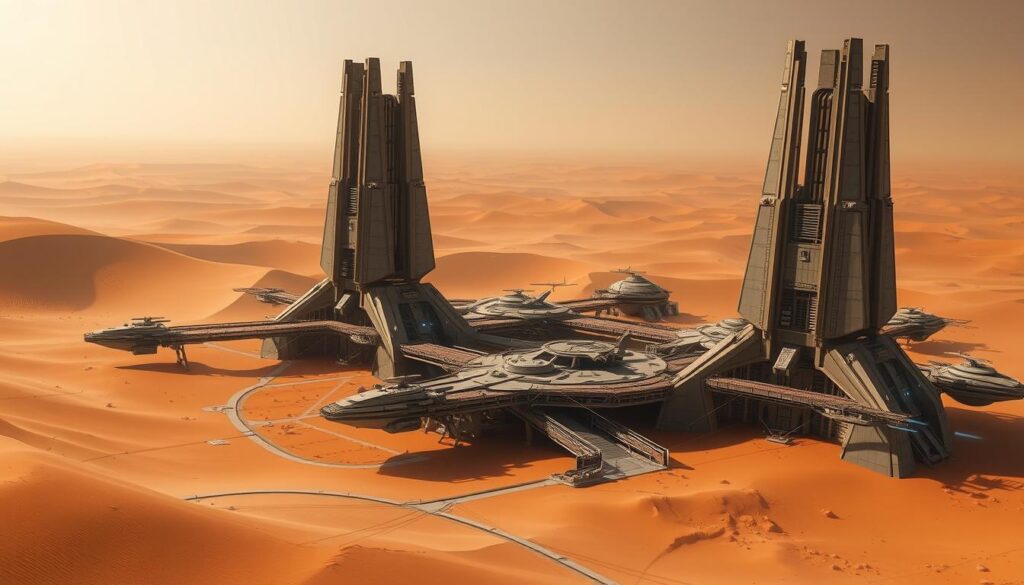
A vast, sprawling Imperial Testing Station nestled in the harsh, wind-swept dunes of a desert planet. The towering, angular structures rise up from the ochre sands, their sleek, metallic surfaces gleaming under the harsh, directional lighting. Intricate walkways and catwalks connect the various modules, while repulsor-powered vehicles glide silently between them. In the distance, a hazy, cloudless sky stretches endlessly, adding to the sense of isolation and remoteness. The overall scene conveys a sense of technological prowess, precision, and the relentless pursuit of knowledge, even in the most unforgiving environments.

Imperial Testing Station No. 197 Insights

Found on the Western Vermillius Gap’s southern edge, this station teaches vertical navigation. The massive entrance hole forces careful descent – miss your footing and you’ll alert security drones. Remember: The ramp near Derek Chinara actually leads out, not in.

Smart explorers head northwest through wide rock tunnels. This path bypasses 60% of patrols while revealing hidden hydration caches. “The real treasure isn’t the minimic film,” one trainer notes. “It’s learning to read imperial architecture.”

Highlights from Testing Station No. 76

Jabal Eifrit’s central sector houses this puzzle-focused facility. Three key lessons await:

  • Caged mechanics: Rescue NPCs to unlock vital shortcuts
  • Multi-level scanning: Glass rooms hide ceiling vents with rare schematics
  • Thermal management: Station layouts change during sandstorm cycles

Both stations feature evolving layouts that prepare you for late-game challenges. Testing Station No. 197 emphasizes spatial awareness, while No. 76 tests adaptive problem-solving. Master these, and deeper imperial complexes become conquerable.

Navigating the Map and Flight Options

Efficient travel across Arrakis separates novice explorers from true desert masters. Whether using public transport or personal aircraft, smart movement strategies save time and resources during critical missions.

How to Fly to Arakeen and Harko Village

Reaching major settlements requires understanding flight mechanics. The Ornithopter system offers two paths:

Option Cost Key Advantage
Personal Aircraft Free Unlimited access to remote areas
Public Transport 2,500 Solari Instant access from outposts

Arakeen serves as the main hub for meeting essential contacts like Cyprian Io at Salusan Bull bar. Harko Village provides faction-specific services, ideal for players aligned with House Harkonnen. Both locations offer vital restocking points between desert expeditions.

Using Map Markers for Efficient Navigation

Mastering the Survey Launcher transforms exploration. This tool works best when:

  • Scanning large regions like Western Vermillius Gap
  • Pinpointing testing stations behind sand ridges
  • Marking safe routes around storm zones

Combine probes with landmark navigation for maximum efficiency. Rock formations and abandoned equipment often signal nearby points of interest. Smart travelers save flight routes between frequently visited locations, cutting backtracking time by 40%.

Gathering Minimic Film Records: Tips & Tricks

Finding these rare archives demands sharp eyes and smarter strategies. While your compass marks general locations, successful recovery hinges on understanding testing station design quirks.

A well-lit, high-resolution close-up shot of a vintage, weathered, and worn minimic film canister lying on a sturdy wooden surface. The canister has a faded, textured label with the word "Minimic" visible. Surrounding the canister, there are a few scattered tools and accessories commonly associated with film processing, such as a pair of tweezers, a small brush, and a magnifying glass, all arranged in a visually appealing composition. The scene is bathed in warm, soft lighting, casting subtle shadows and highlighting the details of the materials. The overall mood is one of exploration, discovery, and the preservation of historical records.

Locating Hidden Film Records Behind Secret Walls

Most minimic film hides behind walls that look solid. Watch for surfaces with mismatched textures or odd protrusions – these often conceal pressure plates. “The best hiding spots mock your first glance,” says veteran explorer Mara Veldt.

Search Approach Success Rate Time Investment
Wall Scanning 85% High
Compass Tracking 60% Medium
Pattern Recognition 92% Low (After Practice)

Strategies for Quick Retrieval in Stations

Seasoned players use the three-sweep method:

  1. Clear visible rooms for supplies
  2. Scan walls while moving clockwise
  3. Check ceiling vents and floor grates

Rushing causes missed opportunities – testing stations often place film recovery points near “exit” markers. Trainers emphasize systematic searching over speed. Those who master wall patterns can find minimic film 40% faster than newcomers.

“True efficiency comes from knowing where not to look first.”

– Imperial Archivist Kelnor

Remember: Facilities teach through frustration. Each hidden film strengthens your ability to find minimic archives in later challenges. Patience here pays dividends across all exploration activities.

Interacting with Key NPCs and Trainers

Your survival on Arrakis depends on who you know as much as what you know. Strategic relationships with mentors and faction leaders unlock critical opportunities in hostile territories.

Derek Chinara’s Role in Your Progression

Derek Chinara starts as your survival instructor near Hagga Basin South. This seasoned trainer teaches desert navigation through hands-on challenges. As missions progress, he relocates between testing stations – always keeping you alert to shifting environmental threats.

Your partnership evolves beyond basic lessons. Later quests require coordinating sandstorm evasion tactics and decoding imperial research together. His moving locations test adaptability, rewarding players who master dynamic navigation.

Meeting Cyprian Io and Thufir Hawat

Find Cyprian Io in Arakeen’s bustling Salusan Bull bar – look for the umbrella-shaded table guarded by armored personnel. This contact shares faction-specific intel critical for adhering hierarchy protocols during delicate negotiations.

Back in the city, Mentat Thufir Hawat bridges science and politics. His insights into Kynes’ research help decode imperial facilities. Remember: Interactions follow strict timing rules – arriving late to meetings can reset entire quest chains.

The bar serves multiple purposes beyond drinks. Upper levels hide informants offering shortcuts through testing stations. Master adhering hierarchy mechanics here to access restricted areas and rare blueprints.

FAQ

How do I unlock the Planetologist skill tree?

Progress through early missions in the Hagga Basin or Western Vermilius Gap to access the skill tree. Completing Derek Chinara’s tasks accelerates your progression.

Where is Imperial Testing Station No. 197 located?

Head to the Western Vermilius Gap near the Hagga Rift. Look for a sand-covered entrance marked with the station’s identifier on your map.

What’s the fastest way to retrieve Minimic film records?

Use your terrain scanner to detect hidden walls in stations like No. 76 or No. 197. Prioritize rooms with Salusan Bull symbols—they often hide film caches.

How do I fly to Arakeen efficiently?

Activate map markers for Arakeen or Harko Village via your navigation panel. Gliders stationed near testing hubs offer quick travel options.

What role does Derek Chinara play in skill development?

He’s a key trainer for unlocking Adhering Hierarchy and Buried Archives skills. Find him near the Jabal Eifrit outpost after completing Station No. 197.

Are there secret entrances in testing stations?

Yes! Check for cracked walls or vents at the bottom of staircases. Use explosives or melee attacks to reveal hidden chambers with rare loot.

How do I locate Thufir Hawat?

He appears after finishing film recovery quests in the Vermilius Gap. Check the Hagga Basin camp—he offers advanced missions tied to the skill tree.

Can I reset my Planetologist skills later?

Yes, but it requires rare Spice Residue items. Plan your skill tree carefully early on to avoid costly resets.