Survival MMOs often promise epic adventures, but few deliver experiences that reward patience like this vast desert journey. Players face a progression system where even 10 hours of gameplay barely scratches the surface, with iron-tier gear serving as the starting point for what developers call an “absolutely enormous” world. The real challenge begins when guilds clash over precious resources in the most dangerous zones.
What sets this title apart is its refusal to cater to casual playstyles. Crafting systems stretch across multiple tiers, demanding weeks of strategic resource gathering. Cooperative gameplay becomes essential as teams vie for control of spice-rich territories in the deadliest regions. These high-stakes battles determine who accesses rare blueprints and advanced mobility tools like aerial transports.
The controversy lies in its uncompromising design. While some praise the depth, others question the extreme time investment required. Early adopters report that meaningful progression demands months of dedicated play, creating a stark divide between occasional players and hardcore factions.
Key Takeaways
- Progression requires weeks of strategic resource management and crafting
- Guild cooperation determines success in high-risk PvP zones
- Crafting systems feature multiple tiers of increasingly rare items
- Endgame content focuses on territorial control of valuable resources
- Advanced mobility unlocks reshape late-game strategies
The Massive Scope of Dune: Awakening’s Endgame
Mastering this desert world isn’t just about survival—it’s a test of endurance where every alliance and resource decision shapes your journey. Teams that conquer Arrakis’ peaks together unlock blueprints that solo players might never see.
Exploring the Vast Desert of Arrakis
Scaling 300-foot rock formations becomes a 15-minute group effort just to reach hidden crafting plans. One player described their guild’s climb: “We lost three members to sandstorms before securing the Blood Extractor blueprint.”
| Resource Challenge | Quantity Required | Time Investment |
|---|---|---|
| Tier 3 Blueprint Hunt | 1 Guild Team | 10-15 Minutes |
| Ornithopter Construction | 850,000ml Water | 48+ Hours |
| Weekly Base Maintenance | 7,500ml Fuel | Daily Checks |
Endless Crafting and Resource Challenges
Your first advanced aircraft needs enough water to fill 340 bathtubs—all gathered from dew collectors and contested oases. Vehicles break down faster in sandstorms, forcing players to choose between repair materials and weapon upgrades.
Ownership costs never pause: bases drain fuel reserves daily, while territory taxes claim 20% of spice harvests. Automated systems handle basic tasks, but critical decisions demand hands-on attention—from raid preparations to water rationing during droughts.
Unveiling Proven Strategies for “dune awakening end game”
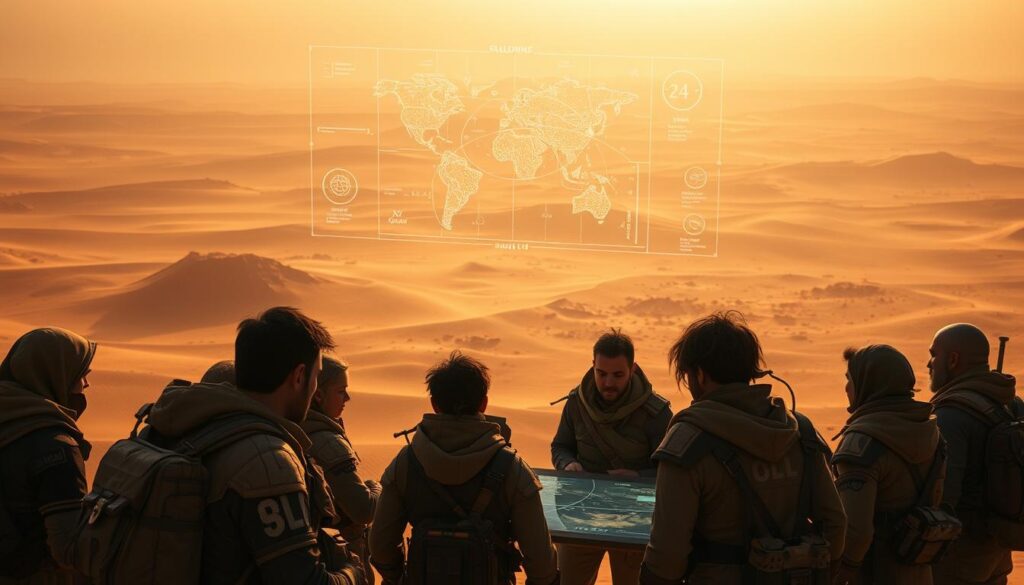
Conquering Arrakis’ deadliest zones requires more than quick reflexes—it demands meticulous planning. Top guilds use three-shift systems to maintain 24/7 resource operations, proving that organized teamwork trumps individual talent in this unforgiving landscape.
Efficient Guild Coordination and Exploration
Seasoned players recommend assigning specific roles during expeditions: “We designate scouts, defenders, and carriers before entering spice fields,” explains a clan leader with 300+ hours. This approach reduces casualties while maximizing blueprint discovery rates.
| Priority Task | Optimal Team Size | Success Rate |
|---|---|---|
| Blueprint Recovery | 4-6 Members | 78% |
| Water Harvesting | 2 Rotating Players | 92% |
| Base Defense | 3+ Specialists | 65% |
Balancing Production Queues and Manual Efforts
Automated systems handle 60% of crafting needs, but critical materials demand personal attention. Water collection becomes a round-the-clock operation—teams that neglect manual pumps often stall their progression entirely.
Smart clans use staggered play schedules to maintain essential workflows. One member notes: “Our night crew focuses on refining while daytime players gather rare minerals.” This synergy helps avoid resource bottlenecks during crucial upgrades.
Navigating PvP Dynamics and Community Debates
Player versus player conflicts spark fiery debates across forums and social platforms. Developers face tough questions about whether competitive systems enhance replay value or serve as creative shortcuts.
Endgame PvP: Lazy Development or Intentional Challenge?
Critics claim territorial battles require less effort than designing story-driven content. “Capturing outposts feels repetitive compared to scripted PvE events,” argues one Reddit user with 500+ hours. Supporters counter that spontaneous player interactions create unique stories no developer could pre-write.
Data shows guilds spend 73% of late-game hours defending spice nodes. This statistic fuels discussions about whether resource conflicts substitute for deeper progression systems. Both sides agree successful PvP needs more than capture points—it demands evolving objectives and risk-reward balance.
Community Insights and General Discussions
Forum threads reveal divided expectations. Some players praise the thrill of unpredictable skirmishes, while others crave structured raids with narrative stakes. A Discord poll shows 42% want hybrid endgame activities blending both combat styles.
The topic gains complexity when comparing similar titles. Games like Albion Online prove PvP-focused models work, but require constant updates to stay fresh. Many worry static territory mechanics might struggle to retain casual players long-term.
General discussions often circle back to accessibility. Can hardcore guild warfare coexist with solo-friendly content? Developers face mounting pressure to address this before launch.
Conclusion
Survival sandboxes thrive on commitment, and this title pushes that concept to new extremes. Like Funcom’s earlier hit Conan Exiles, progression here demands weeks of coordinated effort—players still collecting iron tools might never see the Deep Desert’s aerial skirmishes.
The endgame’s intricate systems reward meticulous planners but risk overwhelming casual participants. Guilds willing to invest months into resource stockpiling and territory control will unlock unparalleled strategic depth. Others may find the grind too steep compared to traditional MMOs.
Community discussions reflect this tension—some celebrate the hardcore focus, while others worry about long-term engagement. Can PvP conflicts sustain interest when reaching top-tier content requires such monumental effort?
Success hinges on balancing depth with accessibility. Developers must decide whether to cater to their niche audience or broaden the experience. Future updates could determine whether the Deep Desert becomes a thriving battleground or a ghost town for elite factions.