
Surviving the scorching deserts of Arrakis requires more than quick reflexes—it demands strategic gear selection. In this unforgiving world, your equipment isn’t just about defense. It’s a lifeline that balances hydration, mobility, and combat readiness.
Protective gear here works like a second skin. Specialized garments adapt to threats, whether you’re dodging enemy fire or battling sandstorms. Each piece influences your stamina usage, water recycling efficiency, and damage resistance, forcing you to think before you equip.
Choices matter deeply. A lightweight suit might help you outrun rivals, while reinforced plating turns you into a walking fortress. But there’s a catch—every upgrade affects your resource management. The right combination could mean the difference between thriving and barely surviving.
Key Takeaways
- Gear selection directly impacts survival rates in extreme environments
- Protective systems are fused with core gameplay mechanics like hydration and stamina
- Different scenarios require specialized equipment for optimal performance
- Every gear choice creates trade-offs between defense, mobility, and resource use
- Strategic planning with equipment leads to long-term success in hostile zones
Introduction to Dune Awakening Armor
Mastering the hostile environment of Arrakis hinges on more than just skill—your gear defines your fate. Protective systems here follow a tiered progression, with seven distinct grades determining their effectiveness. From basic scrap-metal defenses to advanced plastanium composites, each upgrade unlocks new survival possibilities.
Article Overview
The equipment hierarchy starts with Salvage Grade gear crafted from scavenged materials. As you advance through research milestones, you’ll unlock superior tiers like Copper and Steel. Higher grades demand rare resources but offer game-changing benefits:
| Grade | Key Advantage | Research Requirement |
|---|---|---|
| Salvage | Immediate protection | Starter Kit |
| Copper | Heat dissipation | Tier 2 Engineering |
| Steel | Bullet resistance | Tier 4 Metallurgy |
| Plastanium | Self-repair function | Tier 7 Nanotech |
“Mix chest plates from Iron sets with Duraluminum leg guards to create hybrid builds that outmaneuver heavy opponents while maintaining decent protection.”
Game Context and Survival
Your character’s endurance depends on smart equipment combinations. A full Steel set turns you into a walking fortress but slows water recycling—a death sentence in arid zones. Meanwhile, Aluminum gear lets you sprint between oases but offers minimal combat protection.
Three critical factors shape every gear decision:
- Thermal regulation capabilities
- Encumbrance vs mobility balance
- Resource consumption rates
Sandstorms will test your gear’s sealing efficiency, while rival players target underprotected harvesters. Your loadout isn’t just equipment—it’s your survival manifesto.
Understanding Armor and Stillsuits Mechanics
Survival isn’t just about combat—it’s about adapting your equipment to shifting threats. Protective systems fall into two categories: those built for battle and those designed for endurance. Choosing between them shapes your gameplay, but clever combinations can give you the best of both worlds.
Armor vs. Stillsuit Comparison
Combat gear focuses on deflecting damage, using layered plating to reduce injury risks. In contrast, stillsuits excel at water recycling, using catchpocket tech to convert sweat into drinkable reserves. While armor adds weight, stillsuits prioritize breathability for long treks.
| Feature | Armor | Stillsuit | Hybrid Build |
|---|---|---|---|
| Primary Use | Damage reduction | Water conservation | Partial bonuses |
| Key Tech | Reinforced joints | Catchpockets | Mixed perks |
| Full Set Bonus | +25% bullet resistance | +40% water efficiency | +12% balanced stats |
Modular Gear and Customization
Mix a stillsuit body with light armor gloves and boots to sprint longer while recycling moisture. Full matching sets unlock maximum perks, but hybrids let you tackle unexpected challenges. One player reported:
“Wearing three armor pieces with a stillsuit mask gives me enough protection for skirmishes while preventing dehydration during raids.”
Experimentation is key. Try combining four stillsuit parts with one reinforced helmet for sandstorm resistance. Just remember—every choice has trade-offs. Your ideal loadout changes with each mission’s demands.
Heavy Armor: Dominance in Combat
When facing relentless enemy forces, your gear becomes your greatest ally. Thick plating and reinforced joints transform you into a walking fortress, perfect for weathering storms of attacks. The Kirab Heavy Jerkin stands out with its 100-point defense rating—enough to shrug off most projectiles and blunt strikes.
Stat Benefits and Damage Mitigation
This gear category specializes in absorbing punishment. Full sets reduce incoming damage by up to 18% against blades and nearly neutralize concussive strikes. One veteran player notes: “Wearing the Kirab line lets me hold choke points against ten enemies—something lighter gear can’t handle.”
However, every advantage has its cost. Sprinting drains stamina 15% faster, forcing strategic positioning. Heat becomes a critical weakness—venturing into sun-baked zones without auxiliary cooling spells disaster.
Defensive Capabilities in PvE
Heavy protection shines in prolonged battles against AI foes. Clearing imperial outposts or scavenger nests becomes manageable when you can endure multiple hits. Five-piece sets like the Kirab series create synergy:
- Uninterrupted combat during extended raids
- Reduced need for frequent healing pauses
- Superior crowd control through sheer endurance
Just remember: this gear isn’t for solo explorers. Pair it with team members covering mobility and heat management to dominate warzones.
Scout Armor: Balancing Speed and Protection
Outmaneuvering enemies demands gear that keeps you light on your feet yet shielded from danger. Light armor systems excel in scenarios where agility trumps brute force, letting you dictate the pace of engagements. The Kirab Scout Jacket epitomizes this philosophy, blending 34 defense points with a 9% sprint stamina reduction.

Enhanced Mobility for Tactical Engagements
This gear category shines in close-quarters skirmishes. Its +15% blade protection lets you parry melee strikes confidently while conserving energy for evasive rolls. One raider squad leader explains: “With light armor, we flank heavy units before they can rotate their shields—speed becomes our weapon.”
| Feature | Benefit | Combat Impact |
|---|---|---|
| Stamina Efficiency | -9% sprint cost | Longer flanking routes |
| Blade Defense | +15% mitigation | Superior melee dueling |
| Heat Resistance | Moderate shielding | Safer desert traversals |
Scout gear rewards tactical positioning over static defenses. You’ll dodge sniper fire more easily and retreat from unfavorable matchups. However, this playstyle demands sharp awareness—one misstep against heavy gunners can end your streak.
Successful users mix hit-and-run tactics with terrain exploitation. As one veteran notes:
“Wear three scout pieces with reinforced gloves to maintain mobility while blocking critical strikes.”
Master these balances, and you’ll control engagements without sacrificing survivability.
Stillsuits: Essential Survival Gear for Arrakis
Thriving in Arrakis’ deadly ecosystem demands mastery of survival technology that goes beyond traditional combat gear. Stillsuits act as portable life-support systems, merging advanced moisture recycling with thermal regulation to conquer the desert’s twin threats: dehydration and extreme heat.
Water Recycling Features
The Kirab stillsuit body transforms survival through its catchpocket system. This network of micro-filters converts sweat into drinkable reserves at 37% efficiency. Key benefits include:
- 500-unit storage capacity for extended expeditions
- Automatic moisture collection during movement
- Emergency water access via wrist ports
“My Kirab stillsuit generated two liters during a 12-hour sandworm patrol—enough to share with my squad.”
Heat Protection Explained
These garments excel where armor fails. The 0.5 heat protection rating reduces sunstroke risk by 62% compared to standard gear. Strategic design elements achieve this:
| Feature | Armor | Stillsuit |
|---|---|---|
| Base Heat Resistance | 0.1 | 0.5 |
| Ventilation Ports | 4 | 16 |
| Insulation Layers | 3 | 7 |
While offering minimal combat defense (10 armor points), stillsuits enable exploration of high-value areas other gear can’t reach. Their Fremen-inspired design proves essential for treasure hunters using Static Compactors in deep desert zones.
Utility Garments and Special Equipment
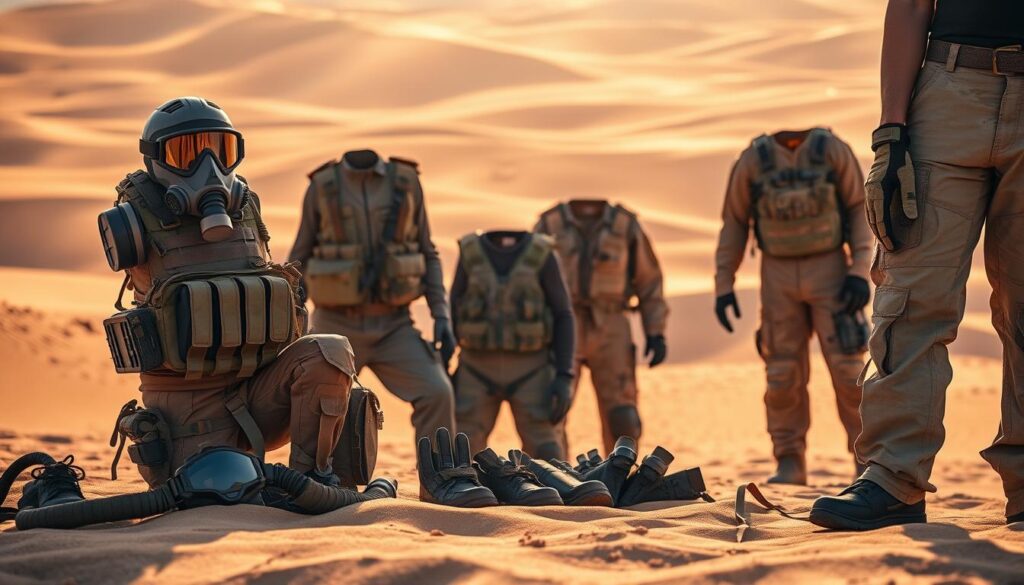
While most gear focuses on combat or survival, some equipment exists solely to conquer Arrakis’ deadliest secrets. Utility garments fill this niche—specialized suits designed for extreme scenarios where standard protection fails. These rare finds trade versatility for unmatched environmental resistance, creating high-risk, high-reward gameplay opportunities.
When Specialization Becomes Essential
Radiation suits dominate this category, offering 85% fire mitigation and complete radiation shielding. Their layered insulation provides triple the heat protection of standard gear, letting players explore volcanic zones and irradiated ruins. One explorer noted:
“Wearing a full utility set allowed me to harvest rare isotopes in the Glassed Wastes—an area that melts regular armor in minutes.”
| Feature | Utility Gear | Standard Sets |
|---|---|---|
| Radiation Resistance | 100% | 15% |
| Combat Defense | Low | High |
| Slot Usage | All 5 | Mixable |
| Heat Protection | 1.8 | 0.6 |
These garments demand careful planning. Occupying all equipment slots means sacrificing combat readiness—you’ll face enemies with minimal weapon resistance. They shine in specific situations:
- Accessing story content locked behind environmental hazards
- Farming unique resources from lethal zones
- Completing faction missions in irradiated territories
Smart players keep utility gear stashed for targeted missions rather than daily use. Their power lies in enabling access, not direct confrontation. When the desert throws its worst at you, sometimes the best defense is the right equipment type for the job.
Evaluating Armor for PvP Encounters
Outsmarting opponents in player battles requires more than firepower—it demands gear that adapts to human unpredictability. Light protection often outperforms bulkier options here, letting you react faster than heavily armored rivals. The key lies in balancing defense with agility to counter unpredictable combat styles.
Mastering Movement Dynamics
Scout gear shines in PvP by turning mobility into weaponry. Stamina efficiency becomes critical when circling enemies or escaping ambushes. One veteran notes: “Light chest plates let me dodge three sniper shots consecutively—something impossible in heavy gear.”
Heavy protection works best in coordinated team fights where positioning matters less. While offering superior stats against explosives, the movement penalty leaves you vulnerable to flanking. Skilled players exploit this weakness ruthlessly.
Successful strategies involve analyzing opponents’ gear during initial clashes. Spotting reinforced gloves signals close-quarters specialists, while cooling vents hint at desert ambush setups. Adapt your approach mid-fight using these clues.
Remember: PvP victory often goes to those who control engagement distances. Light armor enables this through rapid repositioning, while heavy sets force riskier playstyles. Choose wisely based on your squad’s composition and preferred combat zones.