
Discover a gameplay experience unlike any other with this exclusive class that rewards dedicated explorers. While most roles are available immediately, one specialist path requires proving your desert wisdom through challenging trials.
This unique specialist transforms how you interact with harsh environments through enhanced navigation abilities and resource detection skills. Players gain crucial advantages in locating rare materials while conserving vital supplies during expeditions.
Your journey begins by locating Derek Chinara, the mentor who unlocks this path through nine progressively complex missions. Each completed objective reveals new techniques for thriving in extreme conditions, making early pursuit of these quests highly strategic.
Unlike standard skill systems, progression here follows an environmental mastery curve tied to real-world survival principles. This creates deeper immersion as you learn to read shifting sands and predict weather patterns.
Key Takeaways
- Specialist class requires completing specific story missions
- Boosts efficiency in resource collection and travel
- Features nine-stage progression system with unique rewards
- Early adoption provides long-term gameplay advantages
- Training mechanics differ from standard class development
Introduction to Dune: Awakening and the Planetologist Class
In the vast deserts of Arrakis lies a hidden path to mastery most players never find. While many focus on combat roles, one scientific discipline offers game-changing survival tools through environmental understanding.
Breaking the Class Selection Mold
Unlike standard choices available during character creation, this specialist path remains locked behind desert exploration. The system encourages mixing abilities from different roles, but only those who seek specific trainers unlock its full potential.
Imagine spotting rare spice deposits through heat distortions or stretching water supplies during sandstorms. These aren’t magic tricks – they’re learned survival techniques from a skill tree tied to planetary science.
The Science of Survival
This unique role transforms how you interact with ecosystems. Passive abilities reduce travel fatigue, while active skills help locate underground reservoirs. It’s perfect for players who prefer strategy over brute force.
Key benefits include:
- 25% faster resource identification
- Sandworm activity prediction systems
- Emergency shelter construction skills
By blending this expertise with combat classes, you create a desert operative who thrives where others merely survive. The path requires patience, but rewards those who value long-term adaptability.
Exploring the Planetologist Trainer Questline
Unlocking the full potential of this class involves a meticulously designed sequence of missions across diverse terrains. Guided by Derek Chinara, your journey begins with an optional introductory task before diving into nine core challenges. Each step builds expertise through hands-on survival scenarios and resource management tests.
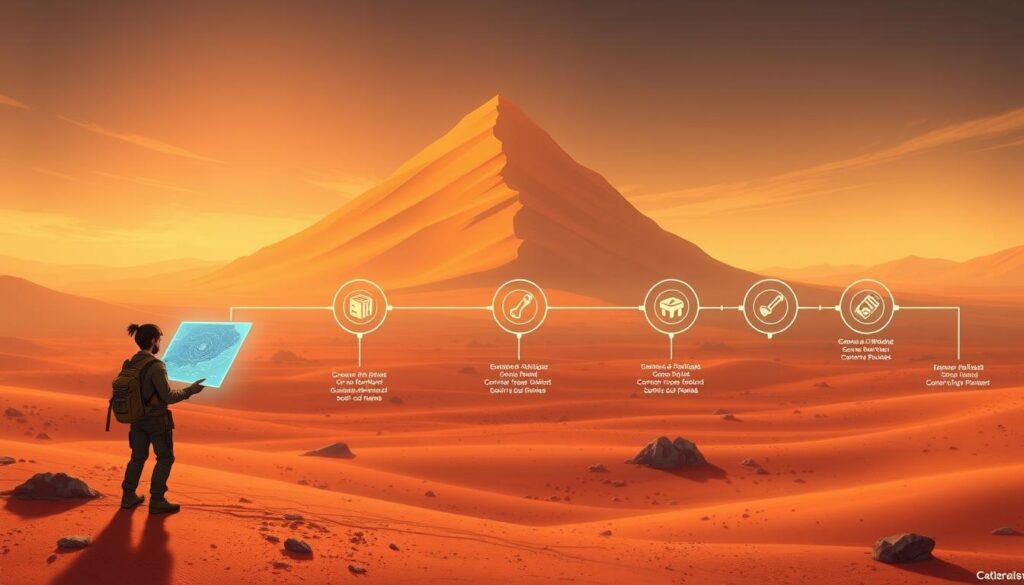
An Overview of the Multiple Quest Steps
The optional Assistance Needed mission serves as a low-risk way to meet your mentor while earning bonus XP. Core objectives follow a clear pattern:
| Quest Stage | Location | Primary Objective |
|---|---|---|
| 1 | Hagga Basin South | Recover historical film reels |
| 3 | Imperial Station | Decode hierarchy protocols |
| 5 | Deep Desert | Track legendary researcher |
| 9 | The O’odham | Assemble final report |
Travel between regions demands careful planning. Some areas require upgraded gear to survive extreme heat or sandstorms. Always stock extra water filters before departing.
Key Rewards and Skill Unlock Milestones
Progress grants immediate benefits and long-term advantages. Early stages boost basic survival skills, while later missions unlock game-changing abilities:
| Completion Tier | Unlocked Feature | Bonus |
|---|---|---|
| Quest 2 | Underground scanning | +15% resource detection |
| Quest 6 | Weather prediction | Sandstorm alerts |
| Quest 9 | Elite stillsuit | 50% water efficiency |
Completing all stages transforms your gameplay approach. You’ll navigate hazards effortlessly while teammates struggle with basic survival mechanics.
Unlocking the “dune awakening planetologist advanced trainer” for Advanced Skills
Progressing beyond basic survival techniques requires completing specific challenges under expert guidance. While other roles split training between cities, this path maintains continuity through a single mentor’s evolving curriculum.
What You Need to Begin
Accessing higher-level abilities simply demands finishing the prior mission in Derek’s sequence. Each completed objective acts as a gateway, with no arbitrary level restrictions or reputation checks. The real challenge lies in surviving harsh travel conditions between testing stations.
“True mastery comes from repeated exposure to Arrakis’ moods, not classroom lectures.”
Transformative Perks of Specialization
Investing in deeper training yields compounding benefits that reshape desert navigation. Early upgrades focus on essentials, while later enhancements introduce specialized capabilities:
| Stage Completed | Core Upgrade | Practical Impact |
|---|---|---|
| Buried Archives | Level 2 Access | Detect spice through rock |
| Dune Survey III | Level 4 Access | Predict sandworm paths |
| Final Report | Level 6 Access | Create portable shelters |
This tiered system ensures gradual power growth without overwhelming players. You’ll notice tangible improvements in resource yields and hazard avoidance after each upgrade tier.
Continued training with your original mentor creates satisfying narrative progression while streamlining skill development. The journey transforms you from cautious novice to confident desert expert through practical challenges rather than menu navigation.
Detailed Walkthrough of Key Quest Events
Your journey through the specialist training program begins with critical missions that test both combat skills and environmental awareness. These early challenges set the stage for mastering survival mechanics while gathering essential research materials.

Assistance Needed and Minimic Film Recovery
Meet Derek Chinara perched above Imperial Testing Station No. 2 in Hagga Basin South. His introductory mission sends you into the facility below, where hostile forces guard valuable minimic film reels. Clear enemies systematically while searching for a glowing yellow sliver on a bookcase – your ticket to hidden chambers containing crucial data.
Key preparation tips:
- Carry extra medical kits for ambush encounters
- Upgrade light armor for better mobility
- Mark extraction routes before engaging enemies
Buried Archives through Clues From the Past
Later stages shift to Imperial Testing Station No. 197 in West Vermilius. This underground complex demands careful navigation through winding tunnels and vertical shafts. Watch for environmental clues like:
| Quest Name | Location | Key Challenge |
|---|---|---|
| Minimic Film Recovery | Station No. 2 | Secret door detection |
| Buried Archives | Station No. 197 | Vertical descent mechanics |
| Clues From the Past | Jabal Eifrit | Sandstorm navigation |
Each imperial testing station introduces new environmental puzzles. Mountain-top installations require thermal gear, while desert outposts test water management skills. Adapt your loadout based on location-specific hazards shown in mission briefings.
“Forget what you know about typical research facilities – these stations reward creative problem solvers.”
Strategic Tips for Maximizing XP and Skill Upgrades
Smart progression planning turns desert exploration into a skill-building powerhouse. The flexible system lets you balance immediate needs with long-term growth without rushing critical decisions.
Optimal Quest Order and Efficient XP Gain
New players should grab the “Assistance Needed” contract when visiting Griffin’s Reach early on. This starter mission offers bonus experience while revealing key locations for future objectives. Pairing main story quests with regional contracts creates efficient expedition loops – complete three tasks in one area before moving to the next zone.
Consider this progression path for maximum efficiency:
- Complete Trial of Aql 1-2 with basic survival skills
- Mix planetary research missions with faction contracts
- Delay advanced training until Trial 3-4 completion
Stockpile water filters and repair kits before tackling desert outposts. Upgraded gear makes challenging areas like Jabal Eifrit more manageable. Always check mission boards for extra contracts during travels – these side tasks boost XP gains without major detours.
“Treat each expedition like a supply run – return with more experience than you left with.”
The skill point system rewards strategic planning. Focus on abilities that complement your preferred playstyle first. Survival specialists might prioritize resource detection, while explorers could boost navigation speeds. Remember – you can always revisit trainers later as needs change.
Navigating Key Locations and Testing Stations
Mastering desert navigation starts with understanding critical waypoints that shape your training journey. Each Imperial Testing Station presents unique environmental puzzles, requiring careful route planning and situational awareness.

Mapping Imperial Testing Stations and Outposts
Your primary hub lies at Imperial Testing Station No. 2 in Hagga Basin South. Look for Derek Chinara perched on cliffs above the entrance – his position makes for an ideal landmark when approaching from any direction.
Key stations demand specific navigation strategies:
- West Vermilius Complex: Descend into a massive underground hole to access Station No. 197
- Jabal Eifrit Challenge: Turn left after entering Station No. 76 to find caged allies
- The O’odham Duo: Prepare combat gear before tackling Stations 71 and 163 in high-risk zones
When visiting Griffin’s Reach, head right upon entry. The first doorway leads to a vital bar area. Don’t miss the upstairs portion accessible via central staircase – crucial NPCs hide in this often-overlooked space.
| Location | Key Feature | Navigation Tip |
|---|---|---|
| Northern Hagga Rift | Descending ramps | Follow initial slope |
| West Vermilius | Underground access | Watch for rock markers |
| Griffin’s Reach | Supply bar | Right-hand priority |
These layouts reward players who study terrain patterns. Efficient routing between locations saves hours of backtracking while reducing exposure to environmental hazards.
Utilizing Additional Class and Trainer Guides from Dune: Awakening
Building a versatile character requires smart use of specialized instructors across Arrakis. Knowing where to find these trainers lets you mix abilities from different roles, creating unique playstyles that adapt to any challenge.
Basic vs Specialized Instructor Benefits
Starter trainer locations like Griffin’s Reach offer essential skills for new players. For example, the basic trooper instructor there teaches combat fundamentals. Meanwhile, advanced mentors in cities like Arrakeen provide game-changing upgrades – think armor customization or tactical squad commands.
Key comparisons:
- Mentat trainers: Basic logic puzzles at Riftwatch vs complex strategy systems in Arrakeen
- Bene Gesserit experts: Helius Gate (near Eastern Shield Wall) teaches voice control basics, while Harko Village unlocks psychological warfare techniques
- Swordmaster progression: From Pinnacle Station parry drills to Harko Village’s duel mastery
You’ll find advanced trainers often cluster in high-risk zones. The Bene Gesserit specialist near the Shield Wall requires surviving sandstorms just to reach them. Plan your character creation path early – mixing basic and elite skills creates unstoppable desert operatives.