Set in a reimagined Arrakis where Paul Atreides’ story never unfolded, Dune Awakening challenges gamers to survive brutal desert conditions. Launching June 10, 2025, this multiplayer experience blends cooperative mechanics with ruthless environmental threats. Scavenge resources, avoid colossal sandworms, and forge alliances—or rivalries—with other survivors on your server.
Three editions offer varying perks: the $49.99 Standard Edition, $69.99 Deluxe with cosmetic upgrades, and $89.99 Ultimate featuring early access. While solo play exists, teamwork becomes essential for overcoming Arrakis’ deadliest challenges. Early testers praise the dynamic world but note a steep learning curve for survival mechanics.
This review analyzes whether the game justifies its price across different player preferences. We’ll break down how its alternate timeline creates fresh storytelling opportunities compared to familiar Dune lore. Content depth, server stability, and long-term replay value will also factor into our final verdict.
Key Takeaways
- Alternate Dune universe with no Paul Atreides storyline
- Multiplayer survival focus requiring strategic cooperation
- Three pricing tiers offering distinct cosmetic and gameplay benefits
- Mixed early feedback on environmental challenges and progression systems
- Potential for extended playtime through dynamic server events
Game Overview and Immersive Dune Experience
The sands of Arrakis tell a different story here – one where strategic survival replaces familiar narratives. This reimagined dune universe challenges players to master brutal conditions through clever planning and adaptation.
Exploring the Harsh Environment of Arrakis
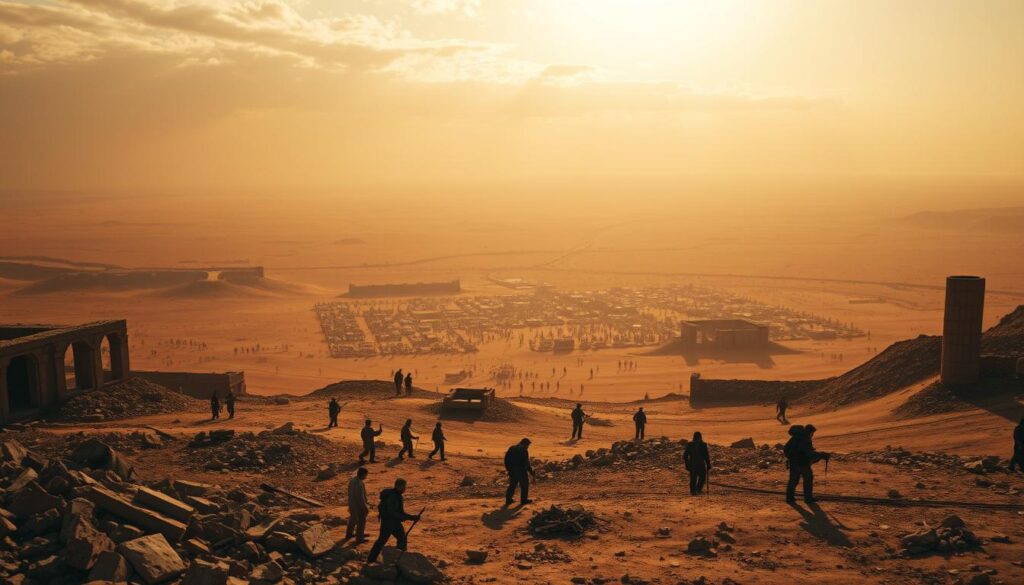
Scorching days and freezing nights test your resolve in this authentic desert setting. Environmental threats escalate naturally – shimmering heat waves drain stamina, while sudden sandstorms force quick shelter searches. “There’s just so much to do,” notes gaming journalist Harry Alston, highlighting the map’s staggering scale.
Three key desert challenges create tense gameplay:
| Hazard | Effect | Solution |
|---|---|---|
| Extreme Heat | Rapid dehydration | Night travel |
| Sandworms | Instant death | Shield management |
| Dust Storms | Lost visibility | Rock formations |
Survival and Base Building Mechanics
Constructing a functional base becomes your lifeline. Storage units protect rare spice harvests, while moisture farms provide essential water. Unlike typical survival games, structures must withstand both enemy raids and tectonic shifts caused by wandering worms.
Progression systems reward exploration. Ancient ruins hide blueprints for advanced gear, encouraging risky expeditions. Cooperative players can share resource burdens, making alliance-building crucial for long-term success in this merciless universe.
Is Dune Awakening Worth Buying? Evaluating Content and Value
This desert survival epic rewards patience while respecting your time. Through smart crafting systems and layered challenges, it creates lasting appeal without overwhelming players.
Gameplay Mechanics and Resource Management
Early survival focuses on water scarcity and basic shelters. Unlike typical grind-heavy titles, progression unlocks practical upgrades like automated moisture collectors. One beta tester remarked: “Researching new gear actually changes how you play instead of just boosting stats.”
The endgame shifts focus dramatically. Building advanced vehicles requires rare materials found in dangerous zones. While cooperative groups can tackle these faster, solo adventurers still enjoy meaningful advancement through scaled-down projects.
PvE, PvP, and Solo vs. Cooperative Play
Three main activity types dominate:
- Exploratory PvE in ancient ruins
- Optional PvP in contested spice fields
- Massive 20-player raids on sandworm nests
Death carries consequences without frustration. Lost resources hurt, but kept gear lets you rebound quickly. This balance keeps sessions rewarding even after setbacks.
With over 80 hours of core content and endless sandbox potential, the game delivers substantial value. Whether building solo outposts or collaborating on megaprojects, Arrakis always offers new challenges for persistent survivors.
Player Reviews, Pricing, and Detailed Game Analysis
Early adopters praise the title’s ambition but highlight specific areas for improvement. Let’s examine how different editions stack up and whether mechanics live up to expectations.
Edition Breakdown and Cost Considerations
| Edition | Price | Key Features | Best For |
|---|---|---|---|
| Standard | $49.99 | Full survival experience | Budget-focused players |
| Deluxe | $69.99 | Exclusive cosmetics + 3 building sets | Style enthusiasts |
| Ultimate | $89.99 | Season pass + early access | Hardcore fans |
The Standard Edition delivers complete core gameplay. Cosmetic upgrades in pricier versions appeal to collectors but don’t affect progression. “You’re not missing crucial content if you skip extras,” confirms beta participant Lara Simmons.
Combat, Crafting, and Overall Player Experience
Ranged battles shine with tactical depth – weapon choices impact engagement ranges and enemy reactions. Melee struggles with clunky animations, though community discussions suggest upcoming tweaks.
Crafting systems receive universal praise. Researching new gear types fundamentally alters exploration capabilities. One player noted: “Unlocking the suspension vehicle changed how I approach spice harvesting entirely.”
While some enemy encounters feel unbalanced, persistent players find workarounds through cooperative strategies. Server stability remains impressive, with minimal crashes reported during peak beta testing hours.
Conclusion
Survival enthusiasts and franchise fans will find much to love in this desert odyssey. While following familiar survival game foundations, creative twists like tectonic base destruction and spice-driven economies refresh the formula. Teamwork transforms tense resource hunts into memorable triumphs, though solo adventurers can still carve their path through Arrakis’ dunes.
The endgame shines brightest when coordinating massive projects with others. As critic Jacqueline Zalace observes: “This adaptation captures Frank Herbert’s spirit through gameplay rather than story.” Technical stability surpasses most multiplayer launches, with servers smoothly handling 50-player worm hunts during peak tests.
At $49.99, the Standard Edition delivers satisfying content depth without premium pressures. Melee combat quirks may frustrate action purists, but tactical shield mechanics reward strategic thinkers. Those seeking a fresh desert challenge with strong community potential won’t regret investing time here – just pack extra water filters.