Funcom’s newest project drops players onto the scorching sands of Arrakis, blending ruthless desert survival with massive multiplayer action. Set in Frank Herbert’s iconic universe, this ambitious title promises to merge resource management, faction wars, and spice-fueled politics into one seamless experience. Scheduled for PC launch in June 2025, it aims to carve its place in a competitive genre.
What sets this release apart? Developers combine persistent world-building with dynamic environmental threats, requiring collaboration to survive sandstorms and rival clans. The MMO framework adds depth, letting thousands shape the narrative through alliances or betrayals. Early footage showcases vast deserts dotted with modular bases and roaming sandworms.
Funcom’s history with Conan Exiles proves their knack for crafting engaging survival systems. Still, questions linger: Can they balance hardcore mechanics with accessibility? Will the June release date clash with other major titles? Our analysis digs into gameplay previews, developer interviews, and market trends to gauge its potential impact.
Key Takeaways
- Blends survival mechanics with MMO-scale player interactions
- Built by creators of successful sandbox titles like Conan Exiles
- PC version launches first, followed by console releases
- Innovates with environmental storytelling and political systems
- Faces stiff competition in a crowded gaming niche
Introduction to Dune: Awakening
Frank Herbert’s legendary sci-fi universe gets a fresh interactive adaptation through Funcom’s open-world survival project. After securing rights to the franchise in 2019, the studio partnered with German developer Nukklear to craft a persistent multiplayer experience rooted in Arrakis’ deadly beauty. Their goal? To merge brutal environmental challenges with the political tension that defines Herbert’s books.
Funcom’s Conan Exiles laid groundwork for this venture, proving their ability to balance harsh survival mechanics with player-driven storytelling. Creative director Joel Bylos states:
“We’re building systems where every drop of water matters, and alliances shift faster than desert sands.”
The setting naturally complements survival gameplay. Arrakis forces players to navigate:
| Challenge | Conan Exiles | Dune: Awakening |
|---|---|---|
| Core Resource | Food/Water | Spice & Water |
| Environmental Threat | Sandstorms | Sandworms & Heat |
| Player Conflict | Clan Raids | Faction Espionage |
Development focuses on authenticity. Modular base-building adapts to shifting dunes, while dynamic events like spice blows create unpredictable opportunities. Early testing reveals mechanics where moisture farming directly impacts faction standing – a clever nod to the novels’ themes.
With PC launch plans set for 2025, the team aims to honor Herbert’s vision while pushing survival genre boundaries. Success hinges on translating political intrigue into gameplay systems, a challenge Funcom seems prepared to tackle.
Overview of Gameplay and Key Features
This title reimagines collaborative survival through fluid role-playing opportunities. Unlike conventional MMOs, character progression avoids rigid class systems, letting participants craft unique strategies through gear and environmental mastery. You might forge alliances to control spice fields one day, then vanish into the dunes alone the next.
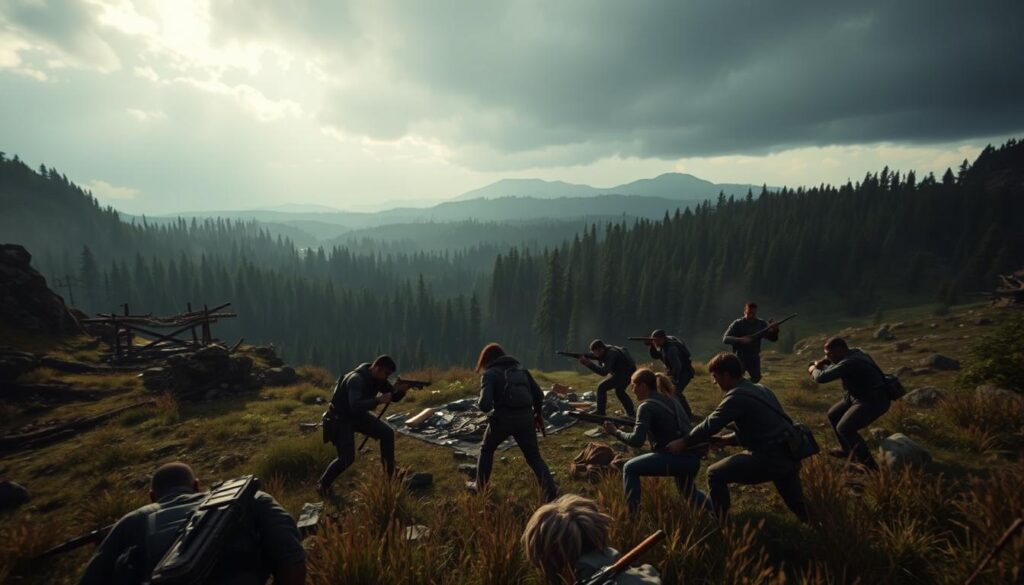
Social flexibility defines the experience. Built-in trading posts and faction hubs let groups barter resources or plot territorial expansion. Yet solitary adventurers thrive too – remote caves and hidden moisture farms offer refuge from political squabbles. Survival demands shift based on chosen playstyles, whether raiding enemy stockpiles or studying ancient Fremen survival techniques.
The developers ditch mandatory team mechanics seen in other titles. Instead, dynamic events like sandworm migrations create organic cooperation moments. One player might distract the creature while others harvest precious spice. These emergent scenarios replace scripted boss battles, rewarding improvisation over predefined roles.
Key systems include:
- Player-driven markets influencing regional economies
- Modular shelters adapting to sandstorms
- Heat management requiring timed expeditions
Combat balances risk and reward. Raiding another clan’s stash could yield rare blueprints – or trigger costly vendettas. This tension between cooperation and competition keeps the persistent world unpredictable, mirroring Arrakis’ unforgiving nature.
Exploring Arrakis: World Map and Social Hubs
Navigating Arrakis demands mastery of three distinct zones, each shaping unique survival strategies. From the relative safety of Hagga Basin to the lawless Deep Desert, players adapt their tactics based on environmental threats and social dynamics.
The Vast Hagga Basin and Its Significance
Spanning 64 square kilometers, Hagga Basin serves as the primary PvE playground. Newcomers establish bases here, shielded from most player combat while tackling story missions and mastering spice harvesting. Permanent structures dot the landscape, protected by game rules preventing demolition in safe zones.
Social Hubs and the Role of the Deep Desert
Arakeen and Harko Village act as bustling trade centers. These hubs feature quest givers, craft stations, and pilot services for ornithopter flights. Players often regroup here before venturing into the Deep Desert – a PvP zone spanning 576 square kilometers of shifting sands.
| Feature | Hagga Basin | Deep Desert |
|---|---|---|
| Size | 64 km² | 576 km² |
| Combat Focus | PvE (Safe Zones) | Full PvP |
| Access Method | Walking/Ornithopter | Flight Only |
| Reset Frequency | Never | Weekly |
The Deep Desert rewards risk-takers with rare resources but resets weekly, erasing temporary bases. Survival here requires constant movement – stationary players become easy targets for rivals or roaming sandworms. As one beta tester noted: “You either master the dunes or become another skeleton buried beneath them.”
Is Dune Awakening the Next Big Survival Game?
This ambitious hybrid blends survival mechanics with MMO-scale interactions, creating a persistent world where strategic alliances determine success. Its server architecture breaks new ground – 40-50 participants per Hagga Basin instance share resources, while hundreds converge in the volatile Deep Desert. This layered approach solves a common problem in the genre: maintaining intimacy in safe zones while enabling epic clashes elsewhere.
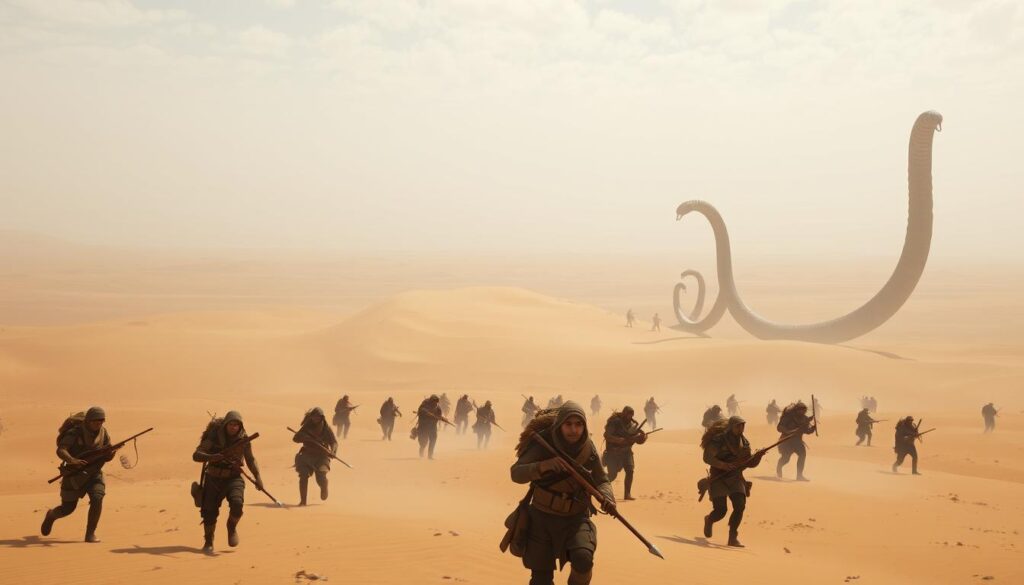
Traditional titles like Rust or ARK struggle with server population balance. Here, the system lets friends cooperate in manageable groups yet compete in grander conflicts. Political systems add depth – controlling spice fields impacts faction reputations, creating ripple effects across the shared map.
Long-term appeal hinges on content diversity. Early testers praise how base-building synergizes with exploration and sudden sandworm threats. One beta participant noted: “You never know if tomorrow brings new allies or a raid that wipes your stockpile.” Regular map resets in danger zones keep strategies fresh without erasing progress in secure areas.
The source material’s richness gives this project an edge. Factions mirror the novels’ power struggles, while resource control mechanics feel authentically tied to Arrakis’ lore. Market trends suggest players crave these layered experiences, but success requires polished execution at launch.
Industry analysts remain cautiously optimistic. The blend of familiar survival elements with massive multiplayer potential could attract both genre veterans and newcomers – if server stability and content updates meet expectations.
Multiplayer Dynamics and Cooperative Play
Collaborative strategies take center stage in this survival MMO, where group dynamics shape every expedition. From intimate scavenger teams to sprawling alliances, the social framework encourages meaningful interactions without forcing rigid playstyles.
Guilds, Parties, and In-Game Alliances
Small squads thrive through the four-player party system. These compact groups tackle spice harvesting runs or explore abandoned research stations. Shared waypoints and resource tracking keep teams synchronized during sandstorm evacuations.
Larger ambitions require guilds – organized groups capped at 32 members. Membership hinges on faction loyalty: Atreides devotees can’t collaborate with Harkonnen loyalists. This creates natural rivalries, as one beta participant noted:
“Choosing a house isn’t just lore – it locks you into wars and trade embargoes.”
| Feature | Parties | Guilds |
|---|---|---|
| Max Size | 4 | 32 |
| Access Rights | Shared loot | Custom permissions |
| Faction Rules | Mixed allowed | Single house only |
The permission system lets leaders control vehicle access and spice vaults. You might grant allies blueprint privileges while restricting sensitive areas. This flexibility supports everything from public trading posts to secret weapon caches.
Endgame content revolves around guild clashes in the Deep Desert. Controlling spice fields demands coordinated raids and defensive rotations. Solo players still contribute by scouting enemy movements or sabotaging moisture harvesters.
Character Progression, Professions, and Skill Customization
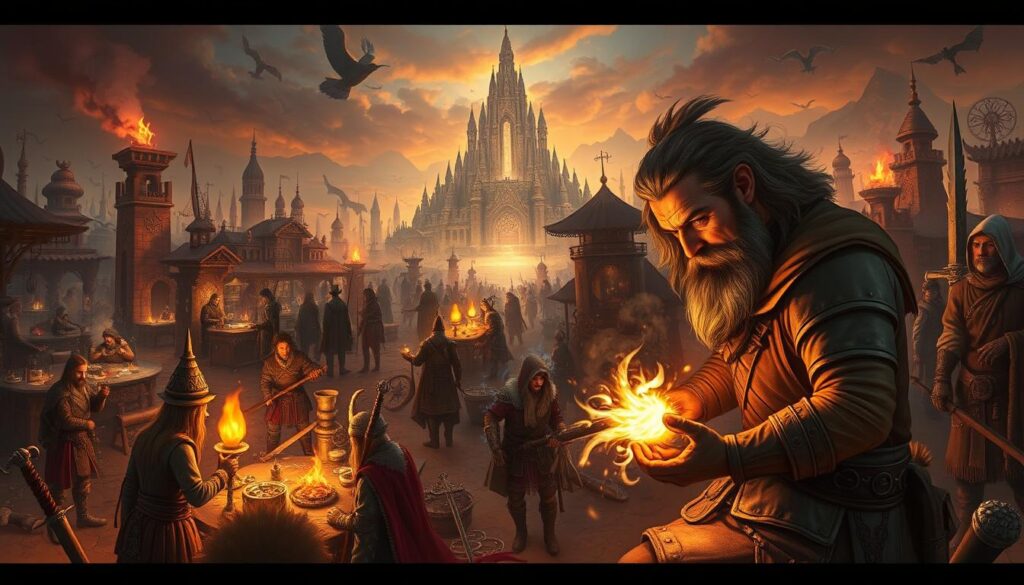
Arrakis rewards those who adapt. Five starting paths shape your journey: Bene Gesserit whisperers, battle-hardened Troopers, logic-driven Mentats, precision-focused Swordmasters, and terrain-savvy Planetologists. Each offers distinct playstyles through unique starting abilities and gear, though all roads eventually open through persistent exploration.
Unlocking Unique Professions and Ability Trees
Your initial choice isn’t permanent. Earn skill points by completing faction missions or surviving spice harvests to unlock other roles. Early-game Bene Gesserit players might later master Trooper combat techniques, blending psychic persuasion with ballistic prowess.
| Starting Profession | Core Ability | Unlock Requirement |
|---|---|---|
| Bene Gesserit | Voice Command | Complete 10 political quests |
| Planetologist | Sand Analysis | Survey 5 spice fields |
Balancing Active Skills and Passives
Strategic loadouts trump overwhelming arsenals. You’ll manage:
- Three instant-use powers like Mentat calculation bursts
- Three persistent boosts such as reduced water consumption
Spice consumption temporarily amplifies selected abilities, creating risk-reward scenarios. One beta tester noted: “Using melange feels addictive – the power surge is incredible, but withdrawal debuffs leave you vulnerable.”
Respec options let you reallocate points when strategies shift. This flexibility encourages experimentation without punishing early choices, keeping progression fresh across hundreds of hours.
Surviving the Elements: Environmental Challenges
Arrakis tests players with threats far deadlier than rival clans. While hunger and sleep mechanics are absent, the desert punishes those who ignore its rules. Every decision revolves around one precious resource: water.
Hydration, Heat, and Hazardous Terrain
Water dictates life in this scorched landscape. Players monitor hydration levels constantly, seeking shade under rock formations or abandoned structures. Advanced gear like moisture harvesters becomes essential for long expeditions.
The iconic stillsuit plays a central role. Basic models recycle sweat, while upgraded versions extract water from defeated enemies. One tester joked: “Nothing beats the thrill of turning raiders into drinking water.”
Environmental dangers keep tension high. Sudden sandstorms reduce visibility and drain stamina. Quicksand traps demand quick reflexes, and radiation zones require protective suits. Night brings Sardaukar patrols – their searchlights mean instant combat if spotted.
Mastering these systems creates rewarding gameplay loops. Whether dodging sandworms or optimizing stillsuits, survival hinges on adapting to Arrakis’ ever-shifting threats. It’s a lot to handle, but that’s what makes conquering the desert so satisfying.