Survival game fans have a new contender entering the arena. Dune: Awakening promises to blend RPG depth with harsh desert challenges on Arrakis. Early testers at PC Gamer reported 7 hours of play revealed innovative mechanics that might convert even genre skeptics.
Developed by Funcom – creators of Conan Exiles – this title uses Unreal Engine 5 to bring Frank Herbert’s universe to life. Players will navigate political intrigue while managing scarce resources across shifting sands. The June 2025 release date follows a strategic delay, giving the team extra time to refine features.
What sets this project apart? Instead of solo survival, it offers massive multiplayer stakes. Guilds compete for control of spice fields while avoiding deadly sandworms. The combination of MMO-scale interactions and personal survival creates fresh opportunities for storytelling.
With gameplay footage already generating excitement, many wonder if the execution will match the vision. Can Funcom deliver an experience worthy of the Dune legacy while innovating in a crowded market?
Key Takeaways
- Blends survival mechanics with MMO elements in Frank Herbert’s universe
- Developed by Funcom, known for Conan Exiles
- Recent delay aims to improve final product quality
- Offers unique political and ecological challenges on Arrakis
- Early previews suggest potential to redefine the genre
Game Overview and Unique Features
Venture into a desert world where every drop of water determines survival. Dune: Awakening reimagines Arrakis through a parallel timeline, letting players explore new stories while honoring Frank Herbert’s iconic universe. The planet’s lethal beauty shines through dynamic sandstorms and heat waves that reshape the landscape daily.
Setting, Lore, and Immersive Environment
Funcom’s version of Arrakis feels alive. Regions range from scorching salt flats to rocky outcrops, each requiring specialized gear. The lore unfolds through abandoned research stations and cryptic Fremen messages carved into caves. Environmental storytelling makes every discovery matter.
Heat isn’t just a backdrop—it’s a constant threat. Players dash between shaded areas like a deadly game of tag with the sun. Sandworms add unpredictable danger, erupting without warning to disrupt travel or spice harvesting.
Survival and MMO Mechanics
Water drives everything. Still suits recycle sweat, while raiding enemy bases steals precious liquid. Crafting advanced gear demands careful rationing, turning every decision into a risk-reward calculation.
| Survival Element | MMO Integration | Strategic Impact |
|---|---|---|
| Water Management | Guild-controlled spice fields | Alliances shift based on resource access |
| Heat Zones | Shared world events | Cooperation needed for rare materials |
| Sandworm Encounters | Territory control mechanics | Dynamic map changes influence base locations |
This blend of personal survival and large-scale politics creates fresh challenges. Solo players scavenge cautiously, while clans wage wars over evaporating oases. The MMO elements ensure no two days on Arrakis play the same.
Combat in Dune: Awakening
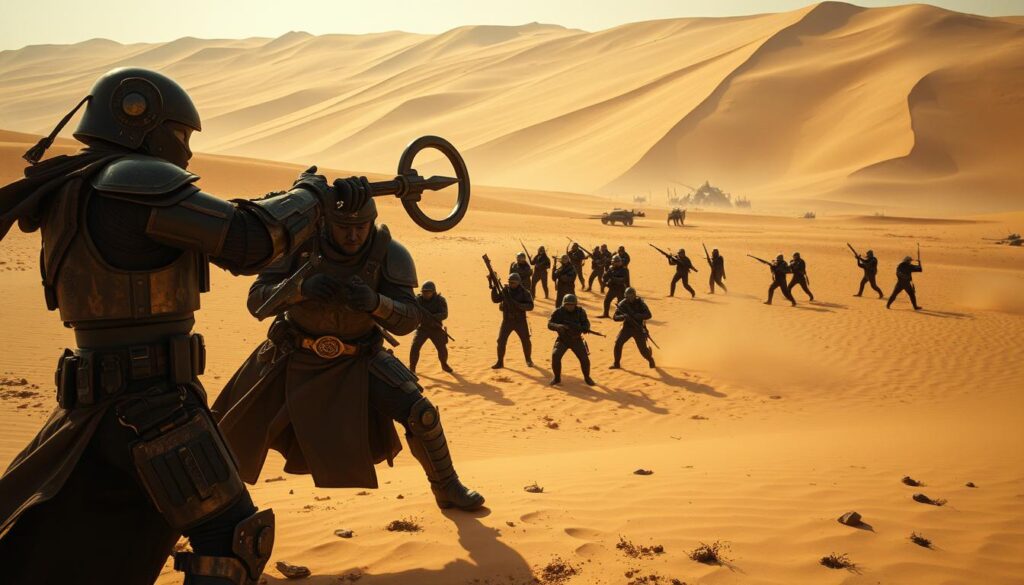
Engaging in combat on Arrakis demands more than quick reflexes—it requires understanding the planet’s deadly dance of blades and bullets. Players face a layered system where shields dictate strategy and every attack carries life-or-death consequences.
Melee Combat: Swords, Shields, and Skill Trees
The shield mechanics shine here. Fast strikes bounce off energy barriers, but deliberate thrusts pierce through—mirroring the novels’ air-molecule logic. “Slow blades cut deep,” as veteran testers often remark during sparring sessions.
Advanced skill trees offer game-changers like Iron Will. This ability blocks Bene Gesserit mind tricks, letting players shrug off psychic assaults. However, current builds favor spammy knife combos that stun-lock opponents, creating imbalance in close-quarters fights.
Ranged Combat: Gunplay and Tactical Engagements
Dart weapons dominate gunplay, with upgrades offering minor damage boosts. The Trooper class spices things up with grappling hooks for vertical flanking. While functional, firearms lack punch compared to melee’s visceral impact.
AI enemies repeat attack patterns across locations, making PvE encounters predictable. Camera glitches during hectic fights compound frustrations, especially without melee lock-on assists. These technical hiccups need ironing out before launch.
will dune awakening be good? Examining Player Experience
Early testers faced a mixed bag of potential and problems during limited access. Only two desert areas were playable despite maps hinting at expansive regions. Frequent crashes and visual glitches—like stretched character models—marred exploration. A month-long delay mid-testing suggests developers prioritized fixing these issues.
Beta Gameplay Insights and Performance Issues
Frame rate drops plagued high-intensity moments, especially during sandstorms. Some testers reported losing hours of progress due to sudden crashes. While core mechanics like base construction felt polished, unstable servers made group activities risky.
Survival Elements and Resource Management Challenges
Scavenging shines through clever water recycling systems. Players convert morning dew into drinkable supplies using stillsuits. Crafting stations demand careful planning—build too many solar panels, and you’ll lack materials for moisture vaporators.
PvE-focused guilds thrived by avoiding contested zones. However, empty servers left PvP dynamics untested. Key endgame territories remained locked, leaving questions about late-stage faction wars unanswered. These unknowns make final judgments tricky until full release.
Innovative Worldbuilding and Lore Depth
This survival title redefines desert storytelling through meticulous environmental design. Funcom crafts a parallel Arrakis where familiar factions clash under new political skies, letting players uncover fresh narratives while respecting Herbert’s universe. “We’re building bridges between canon and creativity,” one developer noted during a 2024 preview event.
Integration of Dune Universe Elements
The game transforms water into more than survival fuel—it’s currency, crafting catalyst, and combat tool. Raid enemy bases to steal liquid reserves or drain moisture from fallen foes. Advanced materials like plasteel require dozens of water units, creating high-stakes resource hierarchies.

Environmental Challenges and Exploration Dynamics
Barren dunes hide strategic depth. Crossing vast space between landmarks demands customized vehicles to outrun sandworms. Clever explorers find shipwrecks stocked with rare blueprints or abandoned spice harvester camps hiding faction secrets.
Stillsuits become lifelines, converting sweat into drinkable reserves during treks. One tester recalled, “Running out of water mid-storm forced me to ambush a rival player—their blood kept me alive.” These systems create organic stories where every death reshapes the desert’s power balance.
From mountain fortresses to underground caves, each zone rewards careful navigation. The game proves empty space isn’t filler—it’s a canvas for emergent survival strategies and heart-pounding escapes across shifting sands.
Conclusion
After 20 hours in closed beta tests, Funcom’s survival game reveals both brilliance and growing pains. The MMO framework shows genuine promise, blending Frank Herbert’s lore with inventive resource systems. Testers praised how materials like plasteel and water drive player interactions, creating tense alliances between rival factions.
Current combat mechanics remain the weakest link. Repetitive enemies and unstable servers hampered late-game testing. However, the strategic delay suggests developers prioritize polishing these elements before release.
While locked endgame zones leave questions unanswered, the core survival loop stands strong. Scavenging mechanics and environmental storytelling could redefine the MMO genre. Early adopters should expect a rough launch period, but the foundation exists for something extraordinary.
If Funcom addresses performance issues and enhances enemy variety, this game might become desert gold. Keep expectations measured, but don’t ignore Arrakis’ call when servers go live.