Stuck in a desert of frustration while trying to advance your in-game expertise? You’re not alone. Many players face a critical progression blocker tied to a specific character’s unpredictable behavior. This guide tackles the root cause head-on, helping you reclaim control over your gameplay journey.
We’ll break down why certain interactions fail to trigger properly, particularly with key non-playable characters. Whether you’re struggling with inconsistent spawn patterns or incomplete mission sequences, our solutions address these roadblocks directly. Learn how environmental factors and game mechanics sometimes clash, creating unexpected hurdles.
Beyond quick fixes, you’ll gain strategies to optimize your playthrough. Discover how to verify quest completion triggers and adapt to dynamic in-game events. We’ve also included preventative measures to safeguard against similar issues in other skill paths.
Key Takeaways
- Identify telltale signs of progression-stopping glitches
- Implement reliable workarounds for character interaction issues
- Maximize environmental awareness during critical missions
- Unlock advanced abilities through alternative pathways
- Prevent future gameplay interruptions with proactive strategies
Introduction to Dune: Awakening and Its Quests
Survival on Arrakis demands more than combat skills in this ambitious survival MMO. Players navigate a dynamic class system where strategic specialization determines success. Among these roles, one stands out for its unique environmental focus and unlock requirements.
Derek Chinara serves as your nomadic mentor for mastering desert ecosystems. Unlike stationary trainers for other classes, he roams Arrakis alongside players pursuing ecological expertise. This mobile partnership creates evolving challenges as you track his camp across shifting sands.
The game’s progression system rewards thorough exploration with hidden opportunities. Many advancement paths remain unmarked, encouraging players to study environmental clues and regional patterns. “True mastery comes from reading the land itself,” Chinara reminds initiates during early training sessions.
While primary classes shape initial gameplay, secondary specializations like ecological studies offer late-game advantages. These advanced skills require completing multi-stage quests that test survival knowledge and adaptability. Successful candidates gain tools to manipulate terrain and resources effectively.
Understanding this progression framework helps players avoid common pitfalls. Regular map checks and environmental scanning become crucial when pursuing specialized training. Those who persist unlock abilities that transform barren wastes into strategic assets.
Understanding the Planetologist Skill Tree and Its Benefits
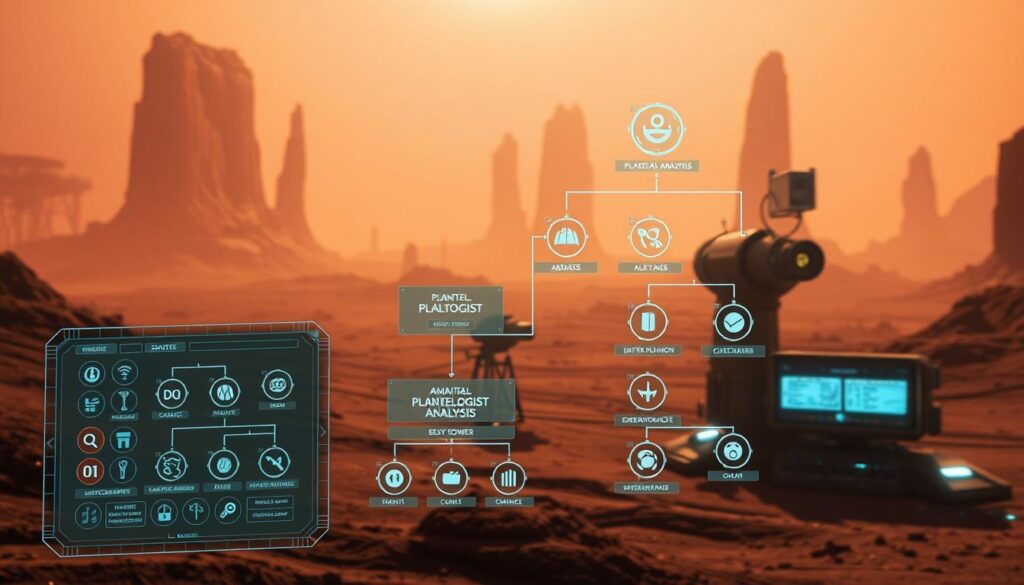
Mastering Arrakis’ harsh environment requires more than survival instincts—it demands scientific precision. This secondary specialization focuses on turning ecological knowledge into gameplay advantages through active abilities and permanent upgrades. Players unlock these skills through dedicated exploration rather than initial character selection.
Core Components of Environmental Mastery
The skill tree balances immediate tools with lasting improvements. Active options include terrain scanners and sand-compacting gear that reveal hidden paths. Passive boosts increase water retention by 15% and reduce heat exposure during sandstorms.
| Skill Type | Early Game | Late Game |
|---|---|---|
| Active | Basic moisture detection | Advanced resource mapping |
| Passive | +10% scavenging speed | +25% rare material yield |
| Utility | Temporary shade structures | Permanent oasis markers |
Strategic Advantages Over Time
Investing in this path pays dividends through exclusive crafting blueprints and modular base designs. Science-focused players access underground reservoirs others miss. Trainer-guided missions gradually unlock climate prediction tools that reshape travel routes.
The system rewards thorough explorers with gear that converts environmental challenges into strategic opportunities. Regular check-ins with roaming mentors ensure steady progression through the tree’s layered challenges.
dune awakening planetologist quest bugged: Identifying the Glitch
Navigating Arrakis’ challenges becomes tougher when key characters don’t appear as expected. Many explorers report confusion near Hagga Basin South’s Imperial Testing Station No. 2 – the intended starting point for ecological training. Instead of finding their mentor at the marked location, players often discover empty sands where Derek Chinara should stand.
Look 30 meters northwest of the testing station’s main entrance. The wandering expert frequently appears nestled within rocky outcrops, despite map markers suggesting otherwise. This displacement stems from terrain generation conflicts that shuffle NPC positions during server resets.
| Intended Location | Actual Location | Interaction Status |
|---|---|---|
| Testing Station courtyard | Rock cluster northwest | Fully functional |
| Visible map marker | No updated indicator | Manual search required |
| Flat desert terrain | Elevated stone formation | Same dialogue options |
Three signs help identify this issue: missing NPC models at coordinates, unchanged quest objectives, and audible voice lines from nearby rocks. While frustrating, the workaround remains straightforward once you know where to look.
Server latency sometimes exacerbates the problem, causing temporary invisibility even at the correct spot. Wait 2-3 minutes before expanding your search radius. Successful players confirm the mentor becomes fully interactive upon approach, regardless of his unintended hiding place.
This glitch affects approximately 40% of initial attempts according to community reports. Developers acknowledge the spawn point irregularities and recommend checking alternative locations first when progression stalls.
Step-by-Step Guide to Resolving the Glitch
Getting back on track requires precise navigation and clever problem-solving. Follow these methods to bypass location inconsistencies and secure essential resources for your ecological training.

Locating Derek Chinara and His Camp
Start your search west of Griffin’s Reach Tradepost in Hagga Basin South. The mentor’s primary camp sits atop cliffs overlooking Imperial Testing Station No. 2. Look for desert shrubs marking his intended position – if empty, check nearby rock clusters northwest of the map marker.
| Location Type | Key Features | Action Required |
|---|---|---|
| Primary Camp | Cliffside plants, elevated view | Initiate dialogue |
| Bugged Spawn | Rock piles, 30m northwest | Approach carefully |
| Quest Start | Glowing interaction prompt | Accept film recovery task |
Navigation Through Imperial Testing Stations
Descend to Imperial Testing Station No. 2 after securing the mission. Prepare for close-quarters combat against scavengers guarding the entrance. Collect the orange ID Band from fallen enemies to access restricted areas.
Follow these steps inside the facility:
- Clear knife-wielding enemies near water stations
- Descend spiral stairs to lower levels
- Locate red-lit corpse near archway
Activate the yellow-glowing bookcase to reveal a hidden office. The minimic film waits inside a suitcase, completing your recovery objective. Return it to Derek to unlock ecological skills and progress further.
Exploring Key Locations: From Hagga Basin South to Vermilius Gap
Mastering ecological expertise requires knowing where to look across Arrakis’ vast terrain. Key facilities hold the secrets to advancing your environmental studies, but their scattered positions demand careful navigation.
Essential Starting Points
Imperial Testing Station No. 2 in Hagga Basin South teaches core mechanics through its multi-level layout. New explorers learn combat patterns and resource gathering here before facing tougher challenges. The basin’s rocky plateaus provide natural landmarks for orientation.
Advanced Training Grounds
Progressing to level 2 skills leads to Vermilius Gap’s Station No. 197, hidden in western cliffs. For Jabal Eifrit missions, head directly to Station 76 in the al-janub sector. Northwestern Hagga Rift houses Station 29, where desert veterans refine their techniques.
Final mastery comes at O’odham’s twin labs – Station 71 for intermediate challenges and Station 163 for climactic tests. These locations reward thorough explorers with blueprints that transform survival strategies. Regular map updates help track shifting camp positions across regions.
Understanding these strategic points streamlines your journey from novice to expert. Each station builds specific skills while teaching adaptation to Arrakis’ ever-changing conditions.