
In the vast deserts of Arrakis, securing high-tier resources defines your survival in Dune: Awakening. Aluminum stands as a pivotal material for crafting elite gear, advanced vehicles, and the legendary Ornithopter—a machine that transforms exploration across the dunes.
Unlike common metals like Iron or Carbon, this resource demands specialized tools and access to dangerous zones beyond Vermillius Gap. Players often face steep challenges when attempting to gather it without proper preparation.
This guide simplifies the process, offering clear steps to locate deposits, optimize harvesting routes, and avoid costly mistakes. Whether navigating solo or with allies, these strategies ensure steady progress toward crafting top-tier equipment.
Key Takeaways
- Aluminum unlocks Tier 4 gear, vehicles, and the Ornithopter blueprint
- Advanced tools and exploration beyond Vermillius Gap are essential
- Efficient farming routes maximize resource yield
- Strategies adapt to both solo and team-based gameplay
- Proper preparation reduces risks in harsh environments
Understanding the Importance of Aluminum in Dune Awakening
Mastering resource management becomes critical as players progress through Dune: Awakening‘s unforgiving landscapes. This lightweight metal transforms mid-game strategies, serving as the foundation for elite equipment upgrades and revolutionary transportation systems.
Aluminum’s Role in Upgrading Equipment and Vehicles
Reaching Tier 4 crafting unlocks game-changing possibilities. Aluminum-based armor withstands sandstorms better than iron alloys, while upgraded harvesters collect resources 40% faster. The real prize? Constructing your first flying vehicle – the Ornithopter – which bypasses deadly surface threats entirely.
These advancements aren’t just cosmetic. Enhanced storage modules let explorers carry triple the salvage from remote sites. Specialized tools like vibration-resistant drills maintain efficiency during electrical storms.
The Connection Between Aluminum and Tier 4 Gear
Tier 4 represents a strategic turning point. Weapons gain thermal dispersion properties for sustained firefights, while environmental suits support extended expeditions beyond the Shield Wall. This progression tier also introduces modular crafting – mix components for situation-specific loadouts.
Smart resource allocation proves vital. Prioritize equipment that complements your playstyle first. Vehicle enthusiasts might focus on thruster upgrades, while combat specialists invest in reactive plating. Every aluminum piece serves multiple strategic purposes.
How to Get Alluminum in Dune Awakening
Surviving Arrakis’ extreme conditions demands more than basic gear—it requires mastering advanced resource acquisition systems. Three specialized tools form the backbone of successful aluminum operations: the Cutterray Mk3, Power Pack Mk3, and Suspensor Belt.
Core Equipment Breakdown
The Cutterray Mk3 slices through metallic deposits faster than lower-tier models. Paired with a Power Pack Mk3, it maintains peak performance during extended mining sessions. These tools work best when combined with a Suspensor Belt, letting explorers scale cliffs where prime ore nodes cluster.
| Tool | Function | Benefit | Upgrade Impact |
|---|---|---|---|
| Cutterray Mk3 | Ore extraction | 40 units/node | +25% yield with Mk4 |
| Power Pack Mk3 | Energy supply | 90min runtime | Faster recharge |
| Suspensor Belt | Mobility boost | Reach elevated nodes | Reduced fall damage |
Node Harvesting Tactics
High-efficiency miners target clusters near Jabal Eifrit’s peaks and Eastern Shield Wall valleys. Each deposit regenerates every 2.5 hours—time routes accordingly. Vehicle attachments help clear multiple nodes quickly, while manual mining suits precision work.
Remember: Overheating tools attract sandworms. Monitor equipment temps and relocate after harvesting 3-4 nodes. This strategy balances risk and reward in Arrakis’ deadliest zones.
Best Farming Spots and Routes for Aluminum

Arrakis hides its most valuable resources in treacherous landscapes where smart navigation meets opportunity. Two regions dominate aluminum production: the Eastern Shield Wall valleys and Jabal Eifrit’s rocky plateaus.
Exploring the Eastern Shield Wall and Jabal Eifrit Regions
The Eastern Shield Wall offers valley networks packed with shimmering deposits. Start near Iron Watch and move southwest past Kief’s Triumph for consistent yields. Seasoned miners often extend their route to House Vernius Representative for bonus ores.
Jabal Eifrit’s flat-topped spires challenge explorers but reward persistence. Vertical cliffs here hold rich veins—ideal for early stockpiling. The Pillars in Jabal Eifrit Al-Garb deliver triple the standard yield per node when accessed via aerial transport.
| Location | Yield/Hour | Risk Level | Access Method |
|---|---|---|---|
| Eastern Shield Wall | 120-150 units | Moderate | Ground vehicles |
| Jabal Eifrit Al-Garb | 200+ units | High | Ornithopter required |
| Northern Hagga Rift | 80-100 units | Low | Basic climbing gear |
Vehicle and Ornithopter Assistance for Chain Farming
Upgraded buggies let teams clear multiple nodes quickly across the Shield Wall. For maximum efficiency, nothing beats aerial mobility:
- Ornithopters bypass cliff-scaling risks
- Chain farming routes connect 5-7 nodes in minutes
- Storage modules carry 300+ units per trip
One pilot recalls: “Flying between Al-sharq and Al-Janub spires cuts collection time by 70% compared to climbing.” Always monitor sandworm activity—rapid ascents save lives when vibrations intensify.
Strategies for Optimizing Aluminum Refining
Transforming raw ore into usable materials requires precision planning. The Medium Ore Refinery becomes your most valuable asset here, demanding 125 steel ingots and 60 cobalt paste for construction. Prioritize gathering these materials early to avoid mid-production delays.
Maximizing Refinery Output
Each batch of refined material consumes 7 ore units and 200 water. This ratio creates an interesting challenge:
- Water consumption outpaces ore usage 28:1
- Storage tanks fill faster than purification systems replenish
- Production halts occur frequently without proper infrastructure
Seasoned crafters recommend this approach: “Build three windtraps before activating your first refinery cycle. This prevents water shortages during critical crafting windows.”
Solving the Water Equation
Two primary solutions exist for sustainable operations:
| Method | Output/Day | Risk Level |
|---|---|---|
| NPC Camp Blood Harvesting | 800-1200 units | Medium (combat) |
| Windtrap Arrays | 1500+ units | Low (setup cost) |
Base placement near faction settlements offers dual benefits. Constant blood access fuels purification systems, while established trade routes simplify cobalt paste acquisition. Remember: Water dictates your production limits more than ore availability.
Advanced players combine both methods. Windtraps handle baseline needs while blood conversion addresses surge demands. This hybrid approach supports crafting multiple Ornithopter upgrades simultaneously without resource droughts.
Additional Tips for Successful Resource Farming
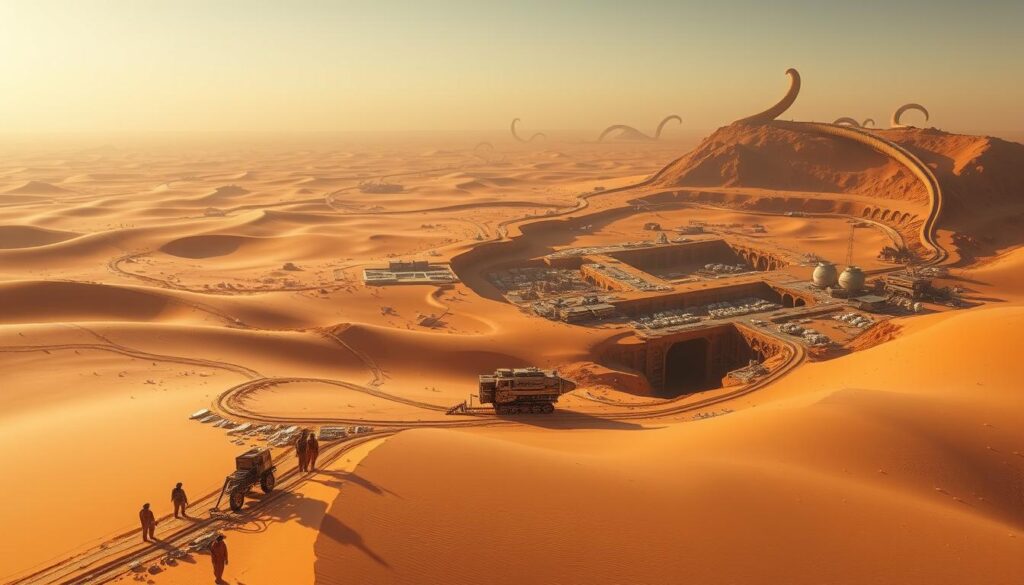
Smart infrastructure decisions separate top miners from casual explorers. Establishing temporary shelters near high-yield zones creates a ripple effect across your operations. Forward bases act as mobile command centers, letting you stockpile materials without vulnerable cross-desert hauls.
Base Location and Forward Base Setup
Place primary bases within 800 meters of aluminum clusters. This reduces return trips by 60% compared to distant outposts. Prioritize elevated terrain for better visibility against sandworm threats.
Forward bases need three essentials:
- Reinforced storage (minimum 150-unit capacity)
- Emergency vehicle repair stations
- Short-range communication arrays
Trading and Multiplayer Synergy
The Exchange in Arrakeen fluctuates like real-world markets. Peak hours see 30% price drops when many players sell. Night owls often snag bargains during low-traffic periods.
| Server Type | Average Price/Unit | Stock Availability |
|---|---|---|
| High Population | 85-110 Solari | 2000+ units |
| Medium Population | 120-150 Solari | 800 units |
| New Server | 200+ Solari | Under 300 units |
Guild partnerships unlock shared resource pools. One member’s excess becomes another’s crafting materials. Coordinate mining shifts to maintain 24/7 node coverage during critical upgrade phases.
Conclusion
Dominating Arrakis’ resource economy begins with aluminum mastery. This guide’s strategies transform basic scavenging into systematic production, letting players craft elite gear and dominate endgame challenges. Those who refine their approach unlock the desert’s true potential.
Efficient operations demand more than upgraded tools. Strategic base locations near Vermilius Gap slash travel time, while coordinated farming routes maximize yield during peak cycles. Seasoned survivors balance risk and reward when harvesting Eastern Shield Wall deposits.
The journey from novice to expert separates temporary settlers from Arrakis’ rulers. Every aluminum ingot fuels progression in Dune: Awakening – whether reinforcing combat armor or assembling aerial transports. Dedicated players reap rewards through smart planning and adaptability.
Investing time in sustainable systems pays dividends. Reliable refining setups and trade alliances create uninterrupted material flows. Soon, that first Ornithopter flight makes every challenge worthwhile.