The survival MMO genre just got hotter with Dune Awakening, an ambitious new title plunging players into Frank Herbert’s iconic desert world. Built on Unreal Engine 5, this open-world adventure blends harsh resource management with massive multiplayer stakes. But does it stand out in a crowded market?
Set on Arrakis, the game challenges you to survive extreme conditions while navigating political intrigue. Water scarcity shapes every decision, and sandstorms threaten even the best-laid plans. The mix of solo exploration and clan-based warfare creates a dynamic balance between quiet strategy and explosive PvP clashes.
Early beta testers praise the immersive atmosphere, where every rustle in the dunes could mean spice harvesters… or hungry sandworms. Yet some question whether the survival mechanics feel overly familiar to genre veterans. Combat reportedly shines in large-scale battles, though solo players might find certain zones unforgiving.
Key Takeaways
- Combines survival mechanics with MMO-scale player interactions
- Faithfully adapts Dune’s lore while adding new gameplay twists
- Unreal Engine 5 delivers stunning visuals of Arrakis’ landscapes
- Resource management heavily impacts progression and alliances
- Offers both intense PvP zones and story-driven PvE content
- Beta feedback highlights strong atmosphere but familiar survival loops
Game Overview and Narrative Immersion
Frank Herbert’s desert planet comes alive in a title where storytelling and multiplayer ambition collide. Players step onto Arrakis not just as survivors, but as detectives unraveling the mystery of the vanished Fremen. This narrative thread weaves through every cracked stillsuit and whispered rumor, grounding the world in authenticity while expanding its lore.
Exploring the Rich Dune Lore
The games’ dedication to source material shines through environmental storytelling. Sand shifts in real-time as unseen worms carve tunnels below, while shield generators require manual deactivation before traversing open dunes. These mechanics aren’t just gameplay quirks—they’re love letters to fans who’ve dreamed of inhabiting this universe.
Newcomers discover Arrakis through intuitive systems that explain spice politics without info-dumps. Veterans relish spotting subtle references, like the distinct patterns of sandworm disturbances described in Herbert’s novels. Lore collectibles scattered across the map deepen understanding of Great Houses and their endless scheming.
Solo Play Versus MMO Experiences
Early hours focus on solitary survival, letting players master resource gathering and storm evasion. The opening act’s personal story—tracking Fremen disappearance clues—feels tailored for lone wolves. This solo-friendly design gives space to appreciate the experience’s atmospheric details before guild recruitment becomes essential.
As you push into the Deep Desert around the 20-hour mark, cooperative play emerges naturally. Water trading routes demand allies, while massive worm-riding events require coordinated teams. The shift from isolated wanderer to clan strategist mirrors Paul Atreides’ own journey—a brilliant touch for this adaptation.
should i play dune awakening: Evaluating the Experience
Surviving Arrakis demands more than quick reflexes—it requires embracing desperation as part of the journey. Every cracked knife blade or empty canteen becomes a visceral reminder of the planet’s brutality. This isn’t just another survival game; it’s a masterclass in atmospheric tension where mechanics and story intertwine.
Balancing Survival and Narrative
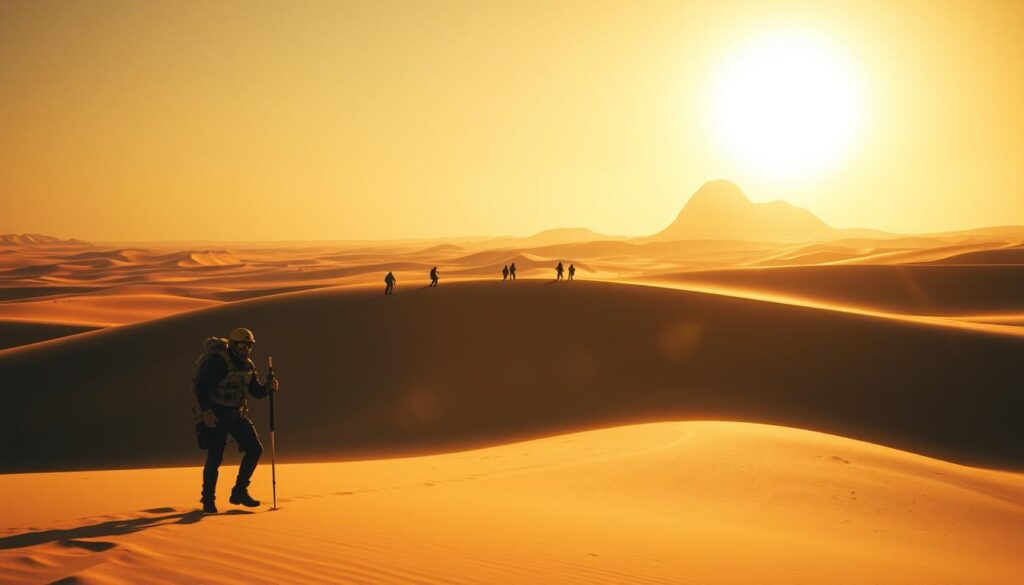
Early hours test patience with grueling treks across sun-scorched basins. Traveling on foot between outposts feels like a genuine struggle, mirroring Fremen life before ornithopter access. While some may find this phase slow, it roots the experience in Herbert’s vision of resource warfare.
Breaking equipment triggers real consequences—a shattered blade forces creative problem-solving, while water rationing becomes tactical. These moments elevate tension beyond typical crafting systems. One beta tester noted, “Running dry mid-expedition made me understand spice workers’ desperation in ways cutscenes never could.”
Vehicle unlocks around the 10-hour mark transform pacing without removing stakes. Faster travel lets players engage more deeply with political subplots and clan dynamics. The game cleverly uses progression milestones to ease grind while preserving Arrakis’ lethal charm.
Narrative threads emerge naturally through survival actions. Discovering Fremen relics during sandstorm shelter-building, or decoding messages while repairing moisture harvesters, keeps both elements equally compelling. This synergy makes every upgrade feel like earned growth rather than arbitrary unlocks.
Survival Elements and Resource Management
Arrakis transforms survival into a high-stakes puzzle where every drop counts. Unlike traditional survival games that drown players in endless grinding, this title prioritizes strategic decision-making over mindless harvesting. The desert’s relentless sun makes water your constant obsession—a mechanic that perfectly mirrors the novels’ themes of scarcity.
Water, Resources, and Crafting Efficiency
Early survival hinges on brutal pragmatism. New players quickly learn that NPC blood becomes liquid gold when processed through base stillsuits. This macabre system creates tense moments—do you risk confrontation or scavenge dew collectors during safer hours?
Resource gathering feels refreshingly efficient. A single trip through Imperial Labs often yields enough rare materials for major upgrades. Crashed ships offer high-tier components but require venturing into PvP zones. The balance between risk and reward keeps expeditions thrilling without becoming tedious.
| Feature | Dune Awakening | Valheim | Rust |
|---|---|---|---|
| Primary Survival Focus | Water Management | Food Variety | Base Defense |
| Resource Grind Time | 15-20 mins per tier | 2+ hours per tier | 1-3 hours per tier |
| Rare Material Locations | PvP Zones/Dungeons | Mountain Biomes | Monuments |
| Crafting Philosophy | Precision Planning | Bulk Farming | Scrap Hoarding |
As your base expands, water transitions from survival essential to crafting component. Advanced players use it to create coolant systems and chemical explosives. This progression mirrors the story’s shift from basic survival to political dominance—a clever narrative throughline woven into the mechanics.
The streamlined approach means more time exploring Arrakis’ secrets than hitting rocks. One beta tester noted, “Finally, a survival game that respects my time while keeping the stakes sky-high.”
Deep Desert Exploration and PvP Dynamics
The game’s most dangerous frontier lies beyond the Shield Wall—a lawless expanse where survival depends on alliances. Here, the Deep Desert tests players with extreme temperatures and rival factions battling over spice-rich territories. This zone serves as the survival MMO’s ultimate endgame arena, where unprepared wanderers become worm food.

Guild Cooperation Versus Solo Journeys
Organized guilds dominate these sands through coordinated raids and shared resource stockpiles. Teams deploy mobile bases called “Sandcaravans” to stake claims, while solo explorers risk ambushes at every dune crest. One beta participant noted, “Running alone here feels like betting your water ration on a coin flip.”
New players needn’t fear immediate PvP pressure—reaching these zones requires 40+ hours of progression. Early gameplay focuses on mastering storm patterns and building reputation with minor factions. This design lets solo enthusiasts enjoy narrative depth before confronting clan warfare.
Untested mechanics like the Exchange system loom large. This player-driven economy could revolutionize resource trading if balanced properly. Developers face a tightrope walk—making guild activities rewarding without alienating lone wolves who prefer stealth over sieges.
The Deep Desert’s risk-reward structure favors groups hunting spice harvesters or ancient tech caches. Yet clever solo operators can thrive by scavenging abandoned camps or triggering worm attacks against enemy convoys. Both approaches capture Dune’s core theme: survival through adaptability.
Skill Trees and Customizable Playstyles
Character progression becomes art in this desert odyssey. The skill tree system stands as one of the best features, letting players mold their survivor into anything from a spice-fueled strategist to a sandstorm-riding warrior. Hybrid builds thrive here—no two Arrakis explorers need share the same strengths.
Class Options: Swordmaster, Bene Gesserit, Trooper, Mentat
Four paths shape your journey. Swordmasters dominate close combat with shield-piercing techniques, while Bene Gesserit agents manipulate allies through Voice commands. Troopers excel in ranged skirmishes, and Mentats crunch numbers to optimize resource flows.
| Class | Primary Focus | Key Ability | Research Bonus |
|---|---|---|---|
| Swordmaster | Melee Combat | Shield Disruption | +30% Blade Durability |
| Bene Gesserit | Social Manipulation | Voice of Command | Double Faction Rep Gains |
| Trooper | Firearm Tactics | Grapple Hook Mobility | +1 Explosive Slots |
| Mentat | Resource Optimization | Yield Forecasting | 50% Faster Crafting |
Upgrading Abilities and Research Paths
Find trainers in abandoned sietches to unlock rival class skills. A Trooper-Mentat hybrid could deploy turrets while calculating enemy weak points. Research doesn’t just boost stats—it rewrites gameplay rules. Advanced suspensor belts let players glide over worm territories, turning deadly zones into tactical playgrounds.
Progression feels meaningful. Double spice yields from upgraded harvesters change economic strategies overnight. One beta player noted, “Mixing Bene Gesserit persuasion with Swordmaster reflexes created my ultimate negotiator-killer build.” Systems here reward creativity over cookie-cutter templates.
Melee Combat Mechanics: Swords, Shields, and Challenges
Close-quarters clashes define Arrakis’ deadliest encounters, where blade work becomes an art of patience. The melee combat system translates Dune’s iconic shield logic into tense exchanges—slow thrusts pierce energy barriers while swift slashes bounce harmlessly. This creates chess-like duels where timing trumps button mashing.
Realism and Immersion in Hand-to-Hand Combat
Shield interactions shine during one-on-one action. Watching a carefully angled knife slide through shimmering defenses feels authentically Dune. Environmental hazards add depth—sand whirlwinds force fighters to recalculate strike speeds mid-swing. Beta participants praised moments where “dueling near spice vents feels like dancing on a razor’s edge.”
Areas for Improvement in Combat Flow
Current combat struggles with mobility. Free 360° movement during clashes makes circling enemies feel disorienting without lock-on assists. Stun-lock loops emerge when players spam quick jabs, reducing strategic depth. Shielded foes sometimes require 15+ hits to defeat, testing patience more than skill.
Repositioning mid-fight becomes chaotic when ranged attackers join the fray. The system shows potential but needs smoother animations and clearer visual cues for shield penetration. With polish, these blade battles could become the melee combat gold standard in survival MMOs.
Ranged Combat Experience: Guns, Darts, and Strategy
Ranged engagements in Arrakis’ dunes demand tactical patience over twitch reflexes. Early firearms like bolt rifles and sonic dart throwers feel serviceable but lack visual distinction—a missed opportunity to mirror the novels’ exotic weaponry. Still, the shield system elevates shootouts into cerebral duels where trigger discipline trumps spray-and-pray tactics.
Sniping Tactics and Weapon Upgrades
Perching atop rock formations offers clear sightlines for picking off spice caravan guards. One beta participant noted,
“Landing a 300-meter headshot while adjusting for sand refraction feels like solving a physics puzzle.”
These moments shine, though weapon progression rarely introduces new mechanics—upgrades focus on damage boosts rather than innovative functionality.
The Trooper specialization’s early availability at trading posts reduces pressure to choose it initially. Why lock into a class when you can master combat fundamentals first? This flexibility lets players experiment before committing to sniper or shotgun builds.
Advanced gear like flamethrowers disrupts established strategies by ignoring shields entirely. Pairing these with mobility upgrades creates exhilarating hit-and-run playstyles. While early gunplay lacks variety, endgame loadouts reward creative hybrids who balance precision with fiery chaos.
Impact of Multiplayer and Guild Cooperation
Surviving Arrakis becomes less lonely when guilds transform barren outposts into thriving communities. Shared water reservoirs and synchronized spice runs turn desperate scrambles into strategic triumphs. This survival MMO thrives when players combine strengths—whether defending against sandworm attacks or racing to claim abandoned harvesters.
Benefits of Team Play in a Survival MMO
Coordinated groups unlock Arrakis’ full potential. Guildmates can split dangerous tasks—one team distracts worms while others salvage crashed ships. If you’ve got a reliable squad, high-risk expeditions become manageable through role specialization. Medics stabilize dehydration victims, while scouts plot safe routes through shifting dunes.
Multiplayer shines during territory control. Clans that dominate spice fields gain access to rare crafting blueprints. Solo players miss out on these rewards unless they join temporary alliances. The game cleverly incentivizes teamwork without forcing constant interaction—a rare balance in the genre.
Quests adapt based on party size. Five-player groups face tougher enemies but earn bonus reputation points. Even casual teams benefit: completed objectives count for all members, saving hours of repetition. This design respects time while encouraging organic cooperation—exactly what keeps MMO communities thriving.