
Gamers have waited years for a title that merges survival mechanics with massive multiplayer worlds. On June 10, 2025, Funcom’s Dune Awakening arrives, promising to deliver exactly that. Built on Unreal Engine 5, this survival MMO drops players into Frank Herbert’s iconic desert planet, Arrakis, blending sandworm threats with faction warfare.
Early beta testers logged over 30 hours exploring just two of the planned zones. Feedback highlights intense resource gathering and base-building systems, though some noted clunky combat mechanics. The vast, evolving world encourages teamwork but also supports solo play—a rare balance in the genre.
Funcom’s adaptation stays faithful to the Dune universe while adding fresh twists. Players trade spice, navigate political alliances, and survive deadly sandstorms. Yet questions linger about long-term progression and endgame content ahead of launch.
Key Takeaways
- Releases June 10, 2025, combining survival and MMO elements
- Beta testers praised exploration but flagged combat improvements
- Features solo and multiplayer modes in Frank Herbert’s universe
- Uses Unreal Engine 5 for stunning desert environments
- Resource management and faction dynamics drive gameplay
Game Overview and Anticipated Features
Survival meets strategy in this ambitious MMO set on Frank Herbert’s desert planet. Dune Awakening blends base-building tension with faction warfare, creating a survival game that rewards both teamwork and cunning. Players navigate Arrakis’ lethal dunes while managing thirst, spice harvests, and sudden sandworm attacks.
The full game expands beyond beta testing’s 30-hour preview. Early access revealed three distinct zones, each requiring unique survival tactics. Progression systems stretch far beyond initial crafting tiers, with tech trees offering vehicle upgrades and advanced moisture farming.
Key features driving excitement:
- Dynamic economy (“The Exchange”) controlling rare spice trades
- PvE oases for cooperative building
- High-risk PvP territories with siege mechanics
Funcom’s design tackles common survival game pain points. Resource gathering feels purposeful rather than tedious, while permadeath only applies in hardcore zones. Vehicle customization ranges from sand bikes to massive harvesters – crucial for surviving the deep desert.
With development spanning five years, this game aims to redefine the genre. The final version promises biomes beyond scorching dunes, though beta testers couldn’t access these areas. Multiplayer servers will host thousands of players, creating living ecosystems of trade and conflict.
Dune Universe Immersion and Setting
Arrakis isn’t just a backdrop—it’s a character that shapes every decision. The desert breathes through shifting sand dunes that ripple when sandworms hunt below. Players quickly learn to disable personal shields before moving across open terrain, creating tense moments where survival depends on reading the environment.

Water scarcity drives brutal choices. Early gameplay forces tough trades between hydration and progress—collecting moisture requires smart base placement, while blood-to-water converters offer risky shortcuts. These systems mirror the Dune universe‘s core themes of resource warfare and human adaptation.
Three elements deepen immersion:
- Dynamic worm attacks triggered by shield vibrations
- Political tensions between factions over spice control
- Crafting systems tied to canonical tech like stillsuits
The desert constantly tests players. Sandstorms erode unprotected base structures, while rare oases become battlegrounds for water access. Environmental cues—like distant rumblings in the sand—keep explorers alert without overwhelming interfaces.
Funcom’s attention to Dune universe lore shines in subtle details. Ancient fighting styles clash with energy weapons during raids, and spice visions temporarily alter gameplay mechanics. Every system reinforces the harsh beauty of Herbert’s creation, making survival feel authentically Arrakis.
Gameplay Mechanics and System Progression
Survival games often trap players in endless gathering loops, but this game flips the script. Strategic planning beats mindless grinding here, with water scarcity dictating every move across Arrakis. Let’s break down how systems evolve alongside player skills.
Resource Management and Tech Tree
Forget hoarding stacks of wood or ore. The real currency? Water. Early tech unlocks like MK2 cutters transform copper mining from a chore into quick, efficient work. Blood banks double conversion rates, letting players turn defeated enemies into survival fuel—if they’re willing to risk PvP skirmishes.
Three upgrades redefine progression:
- Water sickles eliminate NPC hunting dependencies
- Modular base parts adapt to shifting dunes
- Spice compressors purify harvests for high-value trades
Exploration of the Deep Desert
Beta players never saw the deep desert, but leaks suggest seismic rewards. Rumored features include mobile sand platforms and worm-riding mechanics. Expect brutal heatwaves that drain hydration twice as fast, balanced by rare spice geysers worth faction wars.
This zone could become the game’s ultimate test. Survival here demands maxed-out stillsuits and alliance-backed supply lines. Those who conquer it may access Arrakis’ hidden vaults—or become worm food beneath the endless sand.
Should I Buy Dune Awakening
Choosing a survival MMO requires balancing ambition against execution. Early testers agree this title could become one of the best survival games in recent memory, thanks to its smart progression systems and immersive world-building. Unlike many games like Rust or Ark, resource gathering feels purposeful rather than repetitive—water management drives decisions, not mindless tree-chopping.
Beta participants praised features that reduce frustration common in the genre. Permadeath applies only in specific zones, and automated harvesters minimize late-game grinding. However, unresolved combat quirks—like delayed shield responses—remain a concern for action-focused players.
| Feature | Dune Awakening | Valheim | Rust |
|---|---|---|---|
| Death Mechanics | Zoned permadeath | Inventory drop | Full loot loss |
| Resource Collection | Automated systems | Manual gathering | Player-driven |
| Setting Integration | Canonical tech | Mythological | Post-apocalyptic |
Three factors tilt the scales for enthusiasts:
- Authentic Dune lore woven into crafting and politics
- Server-wide economies that reward strategic trading
- Scalable challenges for solo and group play
While the game shows tremendous potential, its full success hinges on untested MMO systems. Those craving a fresh take on survival games may find it irresistible—but cautious players might wait for post-launch updates addressing combat feedback.
Combat Mechanics: Shields and Swords
Arrakis rewards warriors who master its unique rhythm of battle. Shields transform every encounter into a tactical puzzle—activate protection too early, and you can’t attack. Deploy them late, and enemies might land lethal blows. This system forces players to think three moves ahead.

Shield Dynamics Decoded
Firing any weapon instantly disables your energy barrier. Fast bullets bounce off active shields, but slow stabs slice through. This creates intense standoffs where combat becomes a game of timing and feints. Against ranged foes, you’ll toggle shields between reloads. Versus melee attackers, dodging becomes vital.
The best fighters use environmental cues. Sand vibrations hint at approaching enemies, while shield sparks reveal weak spots. Mastering these signals separates survivors from those left in the sand.
Choosing Your Battle Style
Melee combat shines in close quarters where deliberate strikes bypass shields. Daggers work best for quick jabs, while broadswords demand precision. For ranged combat, shotguns overwhelm shields through sheer impact force. Snipers? They’re risky—each shot leaves you exposed.
Three combat truths emerge:
- Shields block bullets but invite blade attacks
- Energy weapons drain protection faster
- Sandstorms randomly disable all tech
Adapt or perish. That’s Arrakis’ law for both Fremen and off-worlders.
Melee Combat: Analysis and Player Experience
Close-quarters battles in Arrakis’ dunes reveal both potential and growing pains in this survival MMO’s combat design. While shield mechanics add tactical depth, early testers report melee combat often feels unpredictable—a mix of deliberate strategy and awkward execution.
Pros and Cons in Beta Gameplay
Beta players highlight two extremes in melee engagements. Quick knife strikes against basic foes deliver satisfying kills, but shielded heavies turn fights into endurance tests. Key findings from test sessions:
- No lock-on system forces manual aiming during chaotic movements
- High-health enemies require 4-5 power attacks, draining stamina
- Stagger mechanics create openings but feel inconsistent
Impact on Player Strategies
Current combat meta revolves around minimizing risk. Many players spam quick slashes to interrupt foes rather than using intended shield-counterplay. This approach works against standard enemies but fails against bosses requiring precision.
Three emergent tactics dominate:
- Knife-spamming to chain stagger effects
- Circle-strafing to avoid turning-speed penalties
- Delayed heavy strikes during enemy recovery frames
While slow-blade kills deliver cinematic moments, most melee encounters prioritize efficiency over style. Developers face a tough balance—preserving Dune‘s methodical fighting spirit while smoothing out the damage sponges and control issues.
Ranged Combat Insights
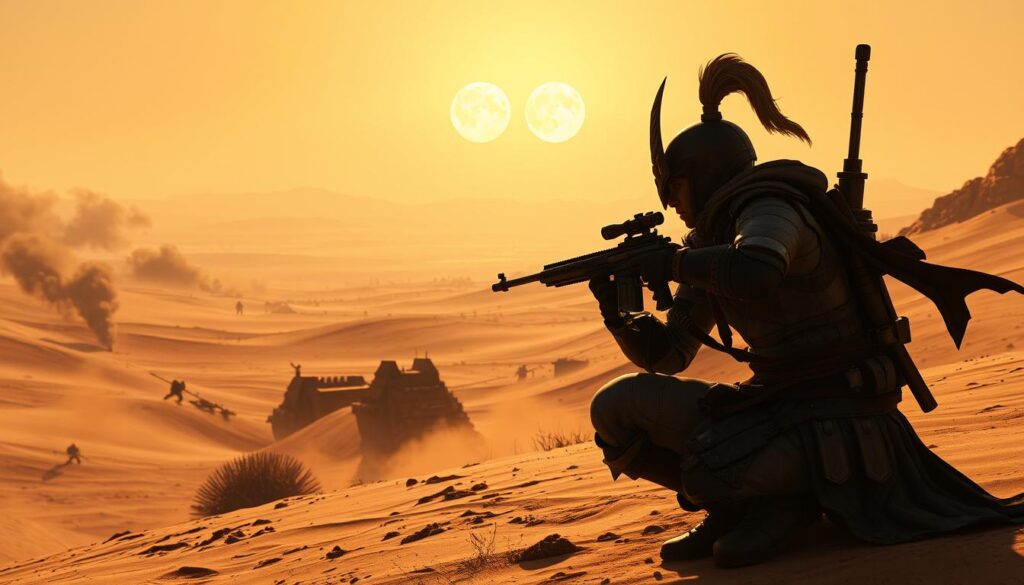
Distance becomes your greatest ally in Arrakis’ open sands. Ranged combat offers safer engagements than risky melee clashes, letting players pick off shooting enemies from cliffs or dunes. Early weapons like bolt rifles and slug throwers feel familiar—reliable but lacking the creative spark seen elsewhere in the game.
“It’s functional, but where’s the lasgun risk-reward or sonic weaponry from the books?”
Progression focuses on incremental upgrades rather than reinvention. A basic sniper rifle gains damage boosts through mods, while shotguns evolve into shield-crushing tools. The Trooper class spices things up later with flamethrowers that melt defenses—a rare nod to Dune‘s lore.
| Feature | Early Game | Late Game |
|---|---|---|
| Weapon Types | Bolt rifles, pistols | Flamethrowers, railguns |
| Tactical Options | Elevation advantage | Shield-bypassing attacks |
| Shield Interaction | Timed volleys | Area denial tactics |
Combat depth emerges through environmental synergy. Sandstorms reduce visibility but mask gunfire. Grappling hooks let Troopers reposition mid-fight, creating hit-and-run opportunities. Still, most engagements follow standard shooter patterns—a missed chance to mirror the novels’ inventive warfare.
While polished, ranged combat lacks the boldness that defines Arrakis. Players wanting true Dune-style battles may stick to melee, but snipers will appreciate the consistency when eliminating spice thieves from afar.
Resource Grind and Progression System
Smart design choices turn survival mechanics into strategic adventures rather than chores. Unlike traditional survival games demanding endless material farming, this title rewards players who prioritize exploration over spreadsheet management. A single expedition often yields enough spice alloys and polymer gels to craft entire gear sets.
From Scavenging to Strategizing
Early gameplay focuses on efficient harvesting. Imperial Labs and crashed ornithopters become treasure troves, offering 5-7 upgrade materials per run. Base construction evolves through three phases:
- Initial moisture vaporators for water autonomy
- Defensive perimeter systems using salvaged tech
- Automated harvesters managing spice production
| Progression Stage | Key Unlock | Gameplay Impact |
|---|---|---|
| Early Game | Portable recyclers | 75% less resource waste |
| Mid Game | Sand bike blueprints | 3x faster desert traversal |
| Late Game | Spice compressors | Double trade value |
Meaningful Milestones
Tech tree advancements transform how players interact with Arrakis. Unlocking suspensor belts enables vertical exploration, while shield generators protect bases from sandstorms. These upgrades create noticeable power spikes without feeling overpowered.
The system respects player time through balanced rewards. Completing objectives feels impactful, whether securing rare blueprints or optimizing water efficiency. Survival becomes less about grinding and more about mastering the desert’s rhythm.
Beta Feedback and Notable Issues
Early testers uncovered both promise and growing pains during the beta phase. Players invested 20-30 hours exploring two starter zones, praising the game‘s environmental storytelling and dynamic weather systems. However, recurring frustrations emerged across multiple playthroughs.
Combat inconsistencies drew particular attention. Melee engagements suffered from camera stutters and missing lock-on features, turning intense duels into awkward shuffles. Ranged attackers fared better, though repetitive AI behavior at key points of interest drained suspense from encounters.
Sandworms became double-edged stars. While their sudden attacks created thrilling moments, losing hours of gear during base relocations pushed some to quit. The beta revealed a lot of potential but also highlighted critical polish needed before launch.
Funcom’s roadmap addresses these concerns, with testers noting marked improvements in later beta builds. For now, the game stands as a bold experiment – one that could redefine survival MMOs if its rough edges get smoothed.