Survival MMOs demand more than just skill—they require grit, strategy, and a world worth fighting for. Funcom’s latest release drops players onto Arrakis, Frank Herbert’s legendary desert planet, where blistering sands and colossal sandworms test every decision. Priced at $49.99, this multiplayer experience blends resource management, base-building, and tense PvP encounters in a setting fans have loved for decades.
Navigating Arrakis means battling environmental hazards and rival factions while securing precious spice. The developers recreate iconic locations with striking detail, from rocky outcrops to sprawling sietches. Combat balances melee strikes with ranged weapons, though survival often hinges on alliances—or clever betrayals.
But does this ambitious project justify its price tag? Our deep dive explores performance across platforms, including Steam Deck compatibility. We’ll break down progression pacing, technical hiccups, and how faithfully it channels the source material’s political intrigue. Whether you’re a series veteran or new to the genre, this review arms you with the details needed to conquer the dunes—or skip the heat.
Key Takeaways
- Set in Frank Herbert’s sci-fi universe, players scavenge resources and build bases on Arrakis
- Multiplayer survival mechanics include PvP combat and environmental threats like sandstorms
- Priced at $49.99 with Steam Deck support for on-the-go gameplay
- Features a mix of crafting, faction alliances, and large-scale sandworm encounters
- Review analyzes performance issues, progression balance, and franchise authenticity
Immersive Arrakis: Experiencing the Dune Universe
Funcom’s vision of Frank Herbert’s desert planet drops players into a fractured timeline where House Atreides battles Harkonnen forces across endless sands. The war-torn setting feels alive with danger—sun-scorched rock formations cast razor-sharp shadows, while rusted spacecraft hulls dot the horizon like forgotten monuments.
Rich Lore Meets Hostile Terrain
Vertical exploration defines this world. Climb wind-carved spires to scout for spice deposits, or descend into shadowy ravines hiding abandoned Fremen tech. Environmental storytelling shines through cracked stillsuits and bullet-riddled ornithopters—silent witnesses to Arrakis’ endless conflict.
Tech That Feels Torn From the Pages
Players craft gear that book fans will recognize:
- Hunter-seeker drones that hum like angry hornets
- Holtzman shields flickering with electric resistance
- Chrysknives glowing faintly in the dark
The dune universe adaptation balances authenticity with creative risks. Newcomers appreciate the intuitive crafting system, while lore enthusiasts spot subtle references in every part of the map. From howling sandstorms to the distant rumble of worms, this version of Arrakis demands respect—and smart hydration planning.
Survival Mechanics and Resource Management
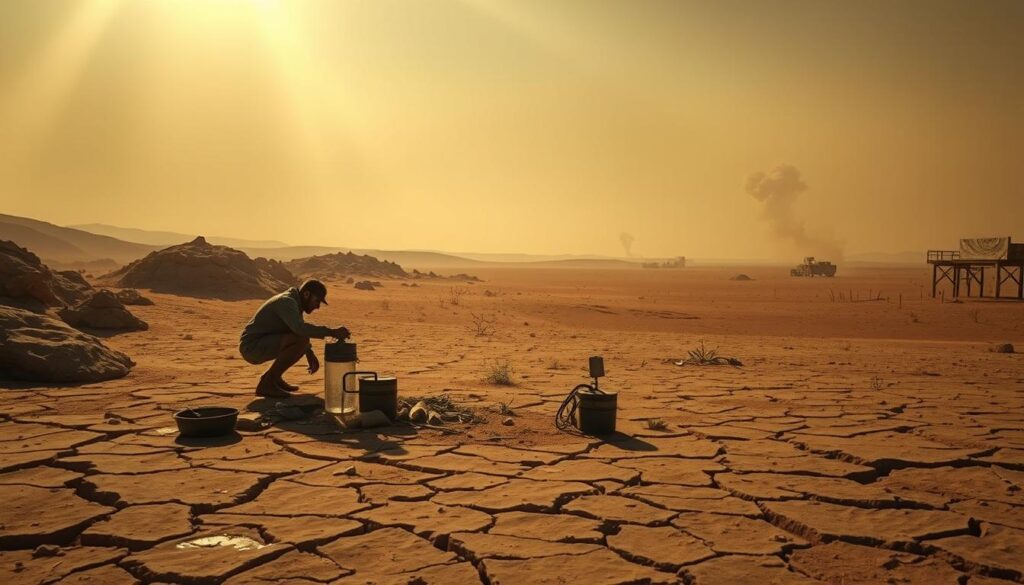
Thirst governs every action on this desert planet. Players face brutal choices between drinking precious reserves or risking dehydration to craft essential tools. The make feel of desperation hits hard when scavenging dew from cacti or siphoning blood from fallen foes becomes routine.
Water Collection, Thirst, and Resource Scarcity
Early gameplay forces brutal efficiency. New survivors scramble to master:
- Dew harvesting from rare plants
- Blood extraction from enemy camps
- Body conversion via portable deathstills
Advanced players unlock windtraps and stillsuits, trading constant scavenging for strategic water production. This progression mirrors the character growth from desperate outsider to seasoned desert dweller.
Crafting, Base Building, and Gear Upgrades
Every blueprint demands shocking water investments. Crafting high-tier materials like plasteel requires 15 liters—enough to sustain three days of exploration. Base expansion becomes a survival arms race:
| Structure | Water Cost | Benefit |
|---|---|---|
| Basic Shelter | 5L | Sandstorm Protection |
| Mining Rig | 20L | Rare Mineral Extraction |
| Vehicle Bay | 35L | Worm-Evasion Transports |
Resource runs become tense expeditions. Players haul mining lasers through rocky passes, praying to avoid sandworm vibrations while gathering flour sand. The loop stays fresh through unpredictable storms and gear decay—your hard-built moisture vaporator could fail mid-raid.
Is Dune Awakening Good? A Survival MMO Deep Dive
Long-term engagement separates memorable survival games from fleeting distractions. This title’s layered progression reveals its strengths slowly, rewarding those who push through the initial 20-hour learning curve with increasingly complex strategic choices.
Evaluating the Core Gameplay Loop
Early hours focus on basic crafting and cooperative raids against AI-controlled spice harvesters. By hour 40, you’ll negotiate territory disputes between factions while managing automated water farms. The shift from scavenger to power broker feels organic, with new mechanics unlocking as your base expands.
Three elements keep the loop compelling:
- Dynamic weather systems that reshape resource availability
- Persistent gear upgrades requiring rare blueprint fragments
- Sandworm migration patterns forcing constant base relocation
Risk, Reward, and Player Progression
Death carries brutal consequences—lose everything carried during expeditions. This tension transforms simple supply runs into white-knuckle missions. Skill trees offer diverse specialization paths:
| Focus Area | Key Perk | Unlock Time |
|---|---|---|
| Stealth | Nightrunner Cloak | 15 hours |
| Combat | Shield Harmonic Tuning | 25 hours |
| Survival | Emergency Water Synthesis | 35 hours |
While some systems feel underdeveloped—like faction reputation gains—the core mechanics shine brightly enough to compensate. PvP elements arrive late (around 80 hours), giving PvE-focused players ample time to prepare before entering high-stakes extraction zones.
After 100+ hours, discovering new sandworm attack patterns still delivers adrenaline spikes. For those willing to invest, the game rewards persistence with one of the most nuanced survival MMO experiences in recent memory.
Open-World Exploration and Vertical Navigation
Arrakis transforms into a climber’s paradise where every rock formation becomes a potential path. The map rewards those who look upward—sheer cliffs hide cave networks, while plateaus offer vantage points to scan for spice blooms. Verticality isn’t just aesthetic; it’s survival strategy.

Traversing the Desert Terrain and Hidden Areas
Stamina management defines exploration. Scale 200-meter rock faces using grappling hooks that snap satisfyingly into crevices. Hidden areas reveal themselves to persistent climbers:
- Crash-landed frigates with intact shield generators
- Underground reservoirs guarded by automated defenses
- Sand-buried research stations containing blueprint fragments
Movement tools reshape gameplay:
| Tool | Uses | Risk Factor |
|---|---|---|
| Suspensors | Glide across gaps | High noise attracts worms |
| Climbing Picks | Vertical ascents | Stamina drain |
| Sand Anchors | Secure vehicles | Limited durability |
Innovative Vehicle and ‘Thopter Mobility
Summon ornithopters mid-sprint to escape advancing sandstorms. Vehicle storage mechanics feel revolutionary—crafted transports shrink into pocket-sized modules. Yet travel remains perilous:
“Fly too low, and worms breach. Fly too high, and winds shred your wings.”
Open space between landmarks becomes a tactical puzzle. Do you race across exposed dunes in a sandbike? Or take the long way through shadowed canyons? Each choice carries consequences in this desert chess match.
Intense PvP and Endgame Politics
Political drama unfolds through razor-sharp mechanics that transform alliances into weapons. The Landsraad system redefines faction warfare with a 5×5 bingo grid—complete lines to vote on server rules like reduced thirst rates or increased worm activity. Weekly objectives push guilds to deliver rare gems or eliminate rival npcs, creating constant power shifts.
Landsraad Bingo and Faction Rivalries
Coordinated efforts yield server-wide perks. One faction might focus on crafting 50 crysknives while another hunts spice smugglers. Successful teams unlock voting rights to shape Arrakis’ dangers:
| Task Type | Example | Reward |
|---|---|---|
| Combat | Kill 25 npcs | +10% blueprint drops |
| Crafting | Forge 10 shields | Reduced sandstorm frequency |
| Exploration | Map 3 worm lairs | Temp radar immunity |
These systems spark organic rivalries—a couple of dominant guilds often clash over resource control, turning the endgame into a chess match of logistics and sabotage.
Sandworm Threats and Dynamic PvP Encounters
The deep desert hosts Arrakis’ deadliest pvp zone. Teams duel amid shifting sands while 200-meter worms breach nearby. Ground fights demand shield tactics—slow melee strikes create tense standoffs. Aerial battles add chaos as ‘thopters unleash missiles at fragile targets.
Three elements define these clashes:
- Worm vibrations masking approaching players
- High-tier blueprints guarded by automated defenses
- Sudden sandstorms forcing mid-fight evacuations
This endgame phase rewards those who master both combat and environmental awareness. Every extraction becomes a part of your faction’s growing legend—or a cautionary tale for the server.
Innovative Combat Mechanics and Iconic Weaponry
Every clash in the desert demands precision and strategy, especially when facing shielded foes. The combat system reimagines third-person skirmishes with cover mechanics that force tactical positioning. Grenades scatter debris to create temporary barriers, but true mastery lies in understanding energy defenses.

Holtzman Shields, Dart Guns, and Drillshot Effects
Holtzman shields flip traditional shooting galleries into methodical duels. Fast strikes bounce harmlessly off the shimmering barrier, while deliberate thrusts pierce through. Time a block perfectly, and opponents stagger—opening them up for crushing counterattacks. This make feel of combat mirrors the source material’s lethal dance.
Specialized tools expand tactical options:
- Dart guns silently drop unshielded NPCs, ideal for stealth raids
- Drillshots emit a satisfying hum as they chew through shields layer by layer
- Vibroblades bypass defenses at close range but leave users exposed
Enemy AI adapts to your loadout. Shielded foes press aggressively, trusting their defenses. Unarmored NPCs use hit-and-run tactics from elevated positions. The effect creates distinct challenges whether you’re clearing outposts or dueling players.
Visual feedback elevates every encounter. Shields flash crimson when absorbing fire, while drillshots leave glowing tracer lines. These cues help players adjust tactics mid-fight without checking menus. Mastery requires learning attack patterns across difficulty levels—a bit of practice transforms chaotic skirmishes into calculated victories.
Conclusion
In the heart of the shifting sands, every decision can mean triumph or disaster. This survival game captures Arrakis’ essence through relentless environmental challenges and strategic crafting systems that push players to evolve. After 100+ hours, the thrill of dodging sandworms or outmaneuvering rivals still delivers pulse-quickening moments.
Creative adaptations like Holtzman shields transform book lore into satisfying mechanics, while endgame politics keep alliances dynamic. Though beta tests revealed performance hiccups, the delayed launch suggests developers prioritize polishing this ambitious world.
For fans craving depth, the gear progression and risk-rebalance structure justify the investment. Technical problems linger, but the core experience stands strong—a worthy journey for those ready to conquer the planet‘s cruel beauty.