Survival on Arrakis demands tough choices. Since its 2025 launch, Dune: Awakening has redefined desert warfare with its player-driven conflicts. Unlike traditional survival games, this open-world MMO lets you decide how to navigate its harsh sands—forge alliances or fight for dominance.
Combat isn’t mandatory here. Funcom designed zones where violence erupts organically, rewarding strategic play without forcing confrontation. Recent updates added dynamic risk-reward mechanics, balancing exploration with territorial skirmishes. Whether raiding spice-rich areas or defending outposts, every action shapes your legacy.
The dev team actively tweaks mechanics based on community feedback. New shield-wall tactics and sandworm-avoidance systems create unpredictable battlegrounds. You’ll master terrain advantages, from cliffside ambushes to sand dune flanking maneuvers.
Key Takeaways
- Player combat remains entirely optional across most zones
- High-risk areas offer greater rewards for bold fighters
- Unique environmental mechanics influence battle outcomes
- Regular updates refine combat balance and player tools
- Customizable playstyles accommodate both pacifists and raiders
Ready your stillsuit. This guide unpacks everything from basic sparring rules to controlling entire regions. Learn which zones test your skills—and which ones let you thrive through diplomacy alone.
Introduction & Game Overview
Mastering Arrakis means conquering its dangers and seizing opportunities. This persistent online world connects thousands through its multi-server architecture, blending survival mechanics with Frank Herbert’s visionary universe. Survival hinges on resource management, environmental awareness, and calculated alliances.
Setting the Stage in Arrakis
Vast deserts stretch endlessly, hiding spice deposits and subterranean threats. Dynamic sandstorms reshape landscapes, burying supply caches or revealing hidden caves. Water scarcity drives competition, while towering sandworms disrupt careless travelers mid-journey.
Key Features and Game Environment
Linked servers create a seamless experience across regions. The Hagga Basin acts as a starter zone, funneling newcomers toward high-stakes Deep Desert territories. Social hubs offer trading posts and faction bases, balancing risk with cooperative play.
| Server Region | Location | Launch Feature |
|---|---|---|
| AUS/OCE | Sydney | Low-latency access |
| NA West | California | Cross-region play |
| EU Central | Frankfurt | Language support |
Players craft unique stories through base-building, spice harvesting, or territorial conquests. The Awakening update introduced shared world events, where entire factions rally against colossal environmental threats. Every choice etches your legacy into Arrakis’ shifting sands.
is there pvp in dune awakening
Arrakis rewards calculated risks. The game’s territory design lets you choose when to clash with others. Clear visual warnings flash when approaching high-stakes regions, ensuring no accidental engagements.

Understanding Optional PvP Zones
Hagga Basin serves as a peaceful starter region. Shipwreck sites break this rule, allowing limited skirmishes under Right of Salvage rules. Venture into Deep Desert for full combat freedom, where spice-rich deposits spark fierce competition.
Funcom’s recent Partial Warfare update reshaped danger zones. Now, resource hunters can claim rare materials in protected sub-areas. These safe pockets reduce risk but extend gathering times.
Impact on Gameplay and Player Experience
Bold fighters gain advantages through contested territories. Raiding parties secure better loot, while cautious explorers progress steadily. This balance keeps both playstyles viable.
The revised zone system addresses community concerns. One player noted: “Finally, I can harvest crystalline without constant ambushes.” Regular adjustments ensure fair rewards for all approaches.
Exploring PvP Zones and Combat Mechanics
Arrakis’ shifting sands create distinct battlegrounds that reward clever tactics. Each zone presents unique risks, forcing players to adapt strategies based on terrain and opponent numbers.
Deep Desert and Hagga Basin Dynamics
The deep desert transforms weekly, wiping conquered territories clean. Nine interconnected servers host up to 900 warriors in this volatile region. Spice-rich plateaus become blood-soaked arenas during peak hours, while clever scouts exploit reset cycles to claim unguarded riches.
Hagga Basin’s shipwrecks offer controlled chaos. Right of Salvage rules let newcomers practice skirmishes over limited resources. These contained battles teach essential skills without the deep desert‘s relentless pressure.
Directional Melee and Shield Mechanics
Forget complex swordplay patterns. Battles hinge on shield management and positioning. Holtzman barriers deflect bullets but crumble under deliberate knife thrusts. “Slow strikes bypass shields entirely,” notes a beta tester. “It creates tense standoffs where patience beats button-mashing.”
Power cells drain faster during attacks, adding strategic depth. Smart fighters conserve energy for critical moments rather than spamming abilities. This system makes every clash in deep desert areas feel uniquely tactical.
Mastering PvP Strategies
Success in hostile territories hinges on calculated decisions and reputation management. Every clash impacts your standing across Arrakis, creating ripple effects that shape progression opportunities. Savvy warriors balance aggression with self-preservation to maximize gains.
Tactical Approaches for High-Risk Areas
Target spice silos and water depots for maximum rewards, but always scout escape routes first. One raider explains: “We circle targets three times—once for loot, twice for ambush spots, thrice for fallback paths.”
Your reputation acts as currency here. Excessive hostility locks traders and safe zones, forcing costly detours. Smart players strike only when objectives outweigh long-term consequences.
Effective Engagement and Retreat Techniques
Use sandstorms as natural smokescreens for strategic withdrawals. Time attacks with shield generator cooldowns—vulnerable moments when enemy defenses drop.
Guilds transform skirmishes into calculated campaigns. Organized teams rotate defense shifts at captured outposts while scouts monitor rival movements. This coordination turns isolated battles into territory-control chess matches.
Remember: Surviving ten risky encounters matters less than winning three critical ones. Sometimes letting rivals claim temporary victories preserves resources for decisive future strikes.
Balancing PvP and PvE Gameplay
Arrakis offers more than just endless conflict—discover sanctuaries where strategy meets serenity. These protected spaces let you recharge, strategize, and build connections that shape your desert journey.
Safe Zones, Trade Posts, and Social Hubs
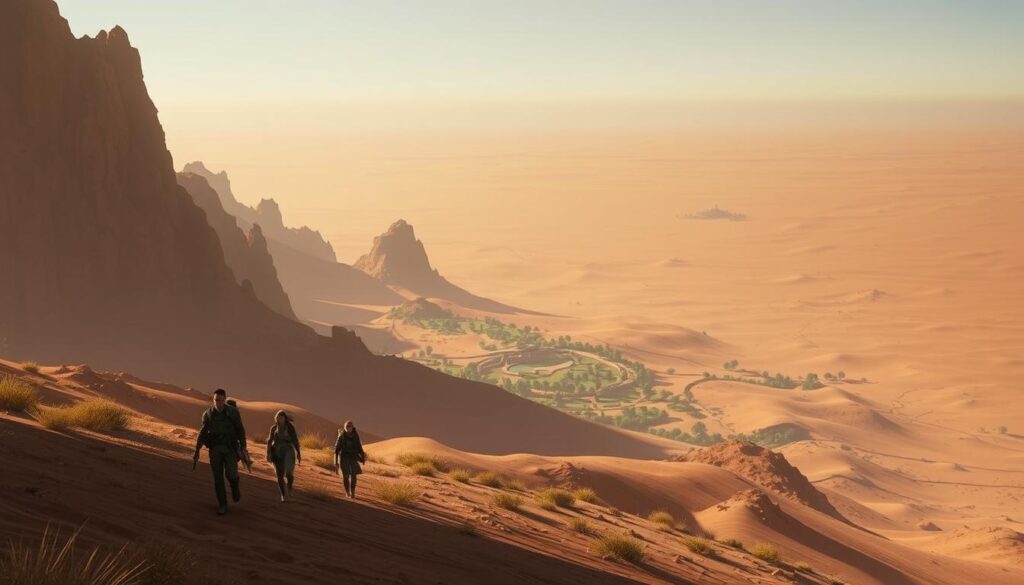
Harko Village buzzes with activity day and night. Crafters exchange blueprints while traders barter spice harvests. Arrakeen’s towering architecture houses faction representatives offering non-combat missions. Both locations enforce strict no-combat rules through automated defense systems.
Venture beyond these hubs to find imperial testing stations. These areas challenge teams with environmental puzzles and AI-controlled threats. One beta player noted: “Coordinating reactor repairs during sandstorms felt more intense than any player battle.”
Funcom’s roadmap promises expanded pve content for cooperative players. Upcoming updates include faction-specific storylines and raid-style events against colossal sandworms. These additions will create alternative paths to endgame progression beyond territorial conquests.
The current balance lets you alternate between adrenaline-fueled raids and relaxed crafting sessions. With protected areas serving as anchor points, even cautious explorers can access high-tier resources through persistence rather than combat prowess.
Future pve content expansions aim to diversify endgame options further. Whether you prefer quiet diplomacy or grand-scale operations, Arrakis now rewards multiple playstyles equally.
Resource Management, Base Raiding & Guild Dynamics
Arrakis’ economy thrives on calculated gambles. Every expedition requires deciding which resources to risk and which to safeguard. Smart storage solutions become vital as you balance immediate needs against long-term ambitions.
Loot, Resource Collection, and Risk vs. Reward
Death stings but rarely cripples. You lose carried spice, currency, and partial materials—equipment stays intact unless swallowed by worms. One survivor joked: “Sandworms turn you into a naked mole rat, but regular deaths just trim your wallet.”
Contested zones flip the script. Enemies can snatch your dropped loot in volatile regions, while protected areas let you reclaim items. Seasoned scavengers time raids during shield-disabling sandstorms, knowing bases become treasure vaults when defenses flicker.
Building, Defending, and Guild Strategies
Strongholds demand constant attention. Shield generators drain power weekly, creating windows for attackers. Guild architects often build decoy storage facilities while hiding core assets underground.
The Landsraad council shakes up endgame dynamics. When guilds activate “Right of Salvage,” entire regions become free-for-all looting grounds for seven days. A beta tester shared: “We stockpile gear before votes—it’s like preparing for hurricane season.”
Coordinated guilds assign roles: scouts monitor storm patterns, builders reinforce structures, and diplomats negotiate protection treaties. This teamwork turns scattered resources into unstoppable empires across Arrakis’ ever-shifting sands.
Conclusion
Your journey across Arrakis reflects personal priorities. Funcom’s game thrives on letting players carve unique paths through its ever-changing sands. Whether building trade empires or leading raids, the awakening of your legend depends on strategic choices.
Recent updates refined endgame dynamics, balancing risk with inventive solutions. Protected zones now offer safer routes to high-tier items, while contested areas reward bold maneuvers. This evolving system ensures both cautious planners and aggressive tacticians find satisfying progression.
Community feedback continues shaping content expansions. Developers recently teased cooperative events that’ll challenge entire servers to collaborate against environmental threats. Such additions promise fresh ways to engage beyond the initial launch period.
Grab your stillsuit and choose your role carefully. Arrakis awaits those ready to leave lasting marks on its merciless landscape—no single approach guarantees supremacy in this living desert saga.