
Surviving the brutal sands of Arrakis takes more than luck. Funcom’s upcoming open-world survival game, built on Unreal Engine 5, blends intense combat with strategic resource management. Whether you prefer stealthy solo play or chaotic multiplayer clashes, this title adapts to your style without forcing unnecessary fights.
Mark your calendar: the PC version launches June 10, 2025, followed by Xbox Series X|S on May 20, 2025. The developers crafted a world where cooperation and competition coexist. Scavenge for water during dust storms, then ambush rivals at spice harvesting sites—every decision impacts your survival.
This guide reveals how to thrive in both PVE challenges and player-driven conflicts. Learn to exploit terrain advantages, master quick-build defenses, and decode the game’s dynamic event system. With smart preparation, you’ll dominate the leaderboards from launch day.
Key Takeaways
- PC launch arrives June 10, 2025; Xbox version releases earlier on May 20, 2025
- Unreal Engine 5 powers realistic desert environments and seamless combat
- Flexible gameplay supports solo survivalists and competitive squad play
- Resource management directly impacts combat effectiveness
- Dynamic weather systems create strategic opportunities
Overview of Dune Awakening PvP Mechanics
Mastering Arrakis requires strategic navigation through three distinct zones. Protected areas let you trade gear and upgrade equipment without combat risks. Limited Warfare regions blend exploration with optional skirmishes during spice events, while War of Assassins territories demand constant vigilance against rival factions.
Smart Conflict Balancing
The Reputation System adds weight to every combat decision. Attack players outside designated areas, and you’ll lose standing with key factions. This impacts access to vendors, quests, and story progression—forcing you to balance aggression with diplomacy.
Survival Infrastructure Essentials
Holtzman shield technology revolutionizes base security. Your fortified structures become invulnerable when offline, letting you focus on crafting advanced gear during safe periods. The system integrates with spice harvesting tools, creating weapons that perform better in specific zones.
Limited Warfare areas transform during spice blooms. These temporary events convert peaceful zones into resource-rich battlegrounds, rewarding those who adapt quickly. You can either defend harvesters or sabotage rivals—all while avoiding permanent reputation damage.
Essential Strategies for Dominating the Desert Battlegrounds
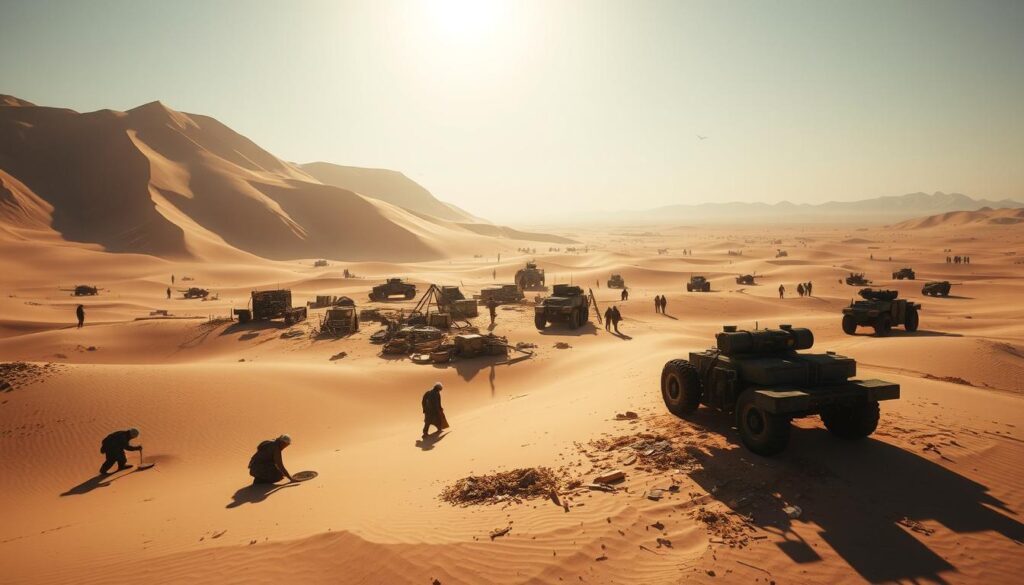
Thriving in the harshest environments demands more than quick reflexes—it requires smart planning and teamwork. The Deep Desert hides rare materials critical for crafting top-tier gear, but claiming them tests both survival skills and strategic thinking.
Effective Resource Farming and Spice Collection
Focus your farming efforts where it matters: Titanium Ore and Stravidium Mass only appear in shifting Deep Desert zones. These materials reset weekly, so scout new locations early to outpace rivals. Spice Field eruptions act as natural alarms—skilled players grab resources fast before conflicts erupt.
Use the Landsraad’s Right of Salvage votes wisely. Temporary full-loot rules let guilds claim massive hauls, but only if your group secures key zones first. Always carry portable moisture traps—staying hydrated boosts harvesting speed during critical moments.
Cooperative Tactics and Guild Coordination
Guild success hinges on role specialization. Assign scouts to track material spawns, defenders to shield caravans, and siege experts to break enemy outposts. Voice chat coordination turns chaotic skirmishes into calculated wins.
Territory contests reward preparation. Build hidden supply caches near contested areas to resupply during prolonged fights. Remember: survival in endgame zones depends on balancing aggression with smart retreats when sandstorms or rival guilds overwhelm your position.
dune awakening pvp: Expert Tactics and Safety Guidelines
Outsmarting Arrakis’ deadliest threats demands equal parts preparation and adaptability. Whether you’re leading guild assaults or scavenging solo, understanding risk-reward dynamics separates survivors from spice-stained casualties.
Mastering Combat Zones and Survival Protocols
The Deep Desert transforms into a chaotic warzone during peak hours. Partial loot drops mean carrying only essential gear during raids—store rare materials in shielded bases immediately. Pro tip: Use Hagga Basin’s safe perimeter to test loadouts before venturing into high-risk areas.
Environmental Mastery and Threat Avoidance
Sandstorms aren’t just visual obstacles—they drain moisture reserves 40% faster. Equip Softstep Boots to minimize vibrations that attract sandworms, and always monitor server population charts. One player noted: “Getting caught in a 100-player skirmish during a worm emergence feels like fighting two armies at once.”
Smart scavengers use scanner modules to locate buried caches while avoiding rhythmic footfalls that trigger worm attacks. When storms hit, use the static interference to mask your movements from rival groups. Remember: survival often means letting others trigger environmental hazards first.
Funcom’s upcoming fixes aim to balance aerial combat, but until then, keep these strategies in play:
- Rotate between contested zones to avoid camping groups
- Time resource runs during server off-peak hours
- Always carry emergency recall devices
Conclusion
Your journey through the desert battlegrounds begins now. With the strategies you’ve learned, you’re equipped to face both environmental threats and rival factions. True mastery comes from balancing aggression with smart resource management while adapting to unpredictable conditions.
Patience proves vital in this survival environment. Every skirmish teaches valuable lessons, and your personal story unfolds through calculated risks in high-stakes areas. Newcomers often surprise veterans by using terrain creatively—don’t underestimate clever positioning during clashes.
Stay updated on game contents through developer announcements and community insights. Even top players refine their tactics daily, learning from both victories and defeats. Whether you prefer stealthy solo missions or coordinated strikes, consistent practice sharpens your edge.
The desert rewards those who prepare. Keep your gear ready, your alliances stronger, and your instincts sharper. Soon, others will study your strategies when navigating these ever-shifting sands.