
Step into the scorching sands of Arrakis, where survival demands more than quick reflexes. Funcom’s ambitious survival MMO, powered by Unreal Engine 5, invites you to carve your path across the desert in a solo journey unlike any other. Released in June 2025, this title blends atmospheric storytelling with ruthless mechanics that test your adaptability.
The vast dunes whisper secrets of Frank Herbert’s universe, recreated with stunning detail. Every decision matters as you navigate shifting alliances, limited resources, and environmental hazards. Unlike group-focused modes, the solo campaign amplifies tension, turning each victory into a personal triumph.
This guide explores how to thrive alone in a world designed to break the unprepared. Learn to master sandstorms, outsmart hostile factions, and build strategies that reflect your playstyle. Discover why many find solo gameplay more rewarding—despite its unforgiving nature.
Key Takeaways
- Unreal Engine 5 delivers breathtaking visuals of Arrakis’ harsh landscapes
- Solo play emphasizes strategic planning over group coordination
- Survival mechanics require careful resource and risk management
- Progression systems reward patience and adaptability
- Storytelling integrates seamlessly with open-world exploration
Embracing the Dune Awakening Single Player Experience
Silence becomes your greatest companion in this desolate landscape. The game’s sound design transforms empty spaces into moments of tension, where every rustle of sand carries meaning. Knut Avenstroup Haugen’s score doesn’t just accompany your journey—it shapes your emotional connection to the environment.
Atmosphere and Worldbuilding on Arrakis
Explorers spending 100+ hours in this desert setting often describe it as “audio-visual meditation.” Distant machinery groans like a dying beast, while sudden sandworm vibrations make your palms sweat. These details create a living world that punishes haste and rewards observation.
The Quiet Power of Going Alone
Without multiplayer distractions, you’ll notice how wind sculpts dunes into new shapes each morning. One veteran player notes: “The loneliness isn’t a bug—it’s the point.” This isolation mirrors Frank Herbert’s vision, where survival hinges on respecting the environment’s rhythms.
Resource gathering becomes almost ritualistic. You’ll plan routes by starlight, savor small victories like finding clean water, and feel genuine dread when storms erase your footprints. It’s a survival experience that values patience over quick reflexes, making every hour invested deeply personal.
Mastering Gameplay Mechanics and Survival Elements
Survival hinges on understanding intricate systems that reward careful planning. The tier progression acts as both teacher and gatekeeper, guiding you through increasingly complex challenges. Newcomers often feel overwhelmed by the initial hours, but this structure ensures you build essential skills for solo success.
Tier Progression: From Copper to Steel
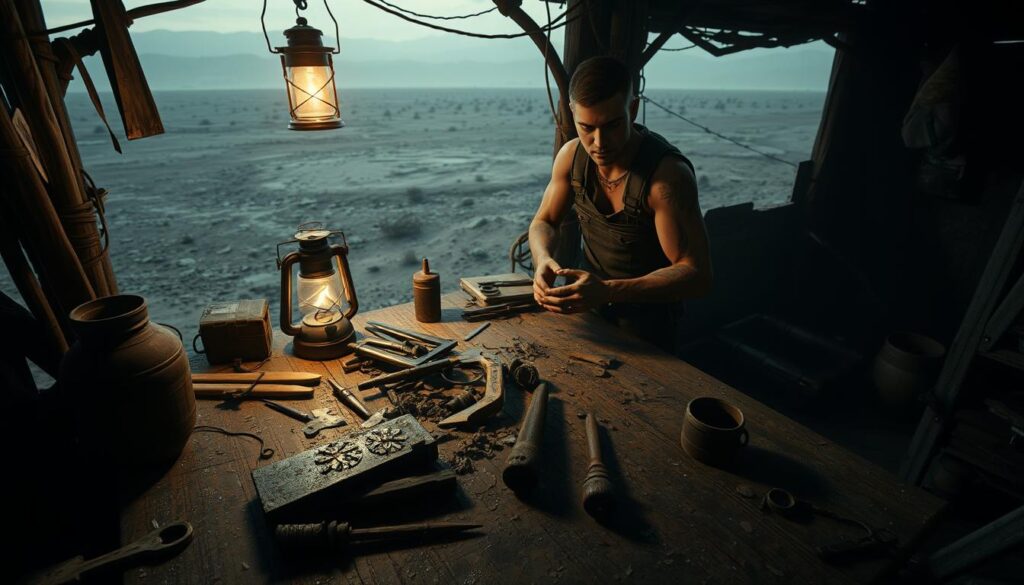
Early tiers focus on basic materials like copper and iron, which become obsolete as you advance. Each upgrade demands revisiting familiar zones—a design choice that transforms routine into strategy. One veteran notes: “Running the same canyon for stone teaches you to optimize routes better than any map marker.”
The Crafting Grind Demands Precision
Gathering blood samples or scavenging processors requires different approaches. Fabricating better gear means collecting:
- Common materials (stone, scrap metal)
- Rare components (processors, fabrics)
- Environmental resources (water, blood)
While group players divide tasks, solo adventurers must master every step. The crafting chain forces tough choices—upgrade your weapon now or save resources for base repairs after the next sandstorm? This tension creates authentic stakes, where every decision echoes across hours of gameplay.
Patience pays off. That steel blade might look like its iron predecessor, but surviving a worm attack proves its worth. The grind isn’t just about better stats—it’s about earning your place in the desert.
Navigating the Grind: Resource Gathering in the Deep Desert
Venturing into the heart of Arrakis demands more than courage—it requires smart planning. The deep desert reshapes survival rules, where a misplaced base can cost you weeks of progress. One traveler spent 80 hours rebuilding their outpost three times, learning the hard way that location determines everything.
Strategic Base Placement and Trading Post Benefits
Setting up near trading posts pays dividends. These hubs let you grab contract quests and buy rare materials, cutting hours off grinding runs. But currency doesn’t grow on spice bushes—you’ll still need to scavenge remote zones to fund purchases.
The Hagga Basin acts as your training ground before tackling endgame areas. Veterans recommend mastering this region first: “Skip Hagga, and the deep desert will eat you alive.” Weekly zone resets add urgency, rewarding those who optimize early-game progress.
Smart soloists balance scavenging with smart trades. Prioritize:
- Base walls that withstand sandworm vibrations
- Storage upgrades to hoard seasonal resources
- Fast travel routes between key outposts
While designed for guilds, lone wolves can thrive here through preparation. Every resource choice becomes a calculated risk—do you spend water reserves on crafting or save them for the next sandstorm? The game doesn’t compromise, but neither should your strategy.
Solo Strategies: Combat, Exploration, and Environmental Challenges
Combat in the deep desert separates the prepared from the prey. While group fighters rely on shared strengths, solo adventurers face melee combat systems that demand precision and patience. Every clash becomes a test of timing and terrain mastery.
Melee Combat, Stealth Limitations, and Group vs. Solo Dynamics
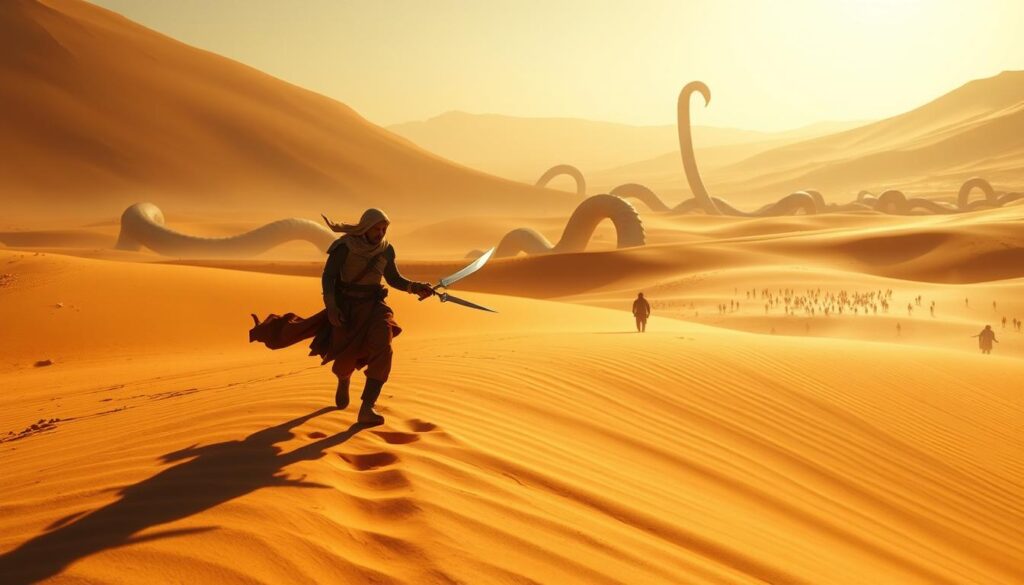
The janky swordplay feels serviceable against single opponents but crumbles during group assaults. One frustrated traveler noted: “Swinging at three attackers while dodging sniper fire turns battles into slapstick tragedies.” Stealth mechanics compound these issues—distract one guard, and suddenly the entire outpost hunts you.
Enemy detection systems lack nuance. Rooftop archers spot you through sand haze, while melee fighters swarm like angry hornets. This forces creative solutions: luring foes into quicksand or using sandworm tremors to mask your movements.
Tips for Overcoming Harsh Conditions and Endgame Obstacles
Master these tactics to survive:
- Use cliff edges to funnel enemies into single-file approaches
- Stockpile sonic grenades to disrupt ranged attackers
- Time raids during sandstorms when visibility favors stealth
Environmental threats amplify the stakes. A veteran soloist advises: “Pack double the water before crossing dunes—sandworms destroy supply caches faster than raiders.” Endgame zones demand meticulous planning, as one wrong step can erase hours of progress.
The survival MMO format shines brightest here. While groups bulldoze through challenges, lone wolves earn victories through cunning and adaptability. Every scar tells a story of hard-won wisdom in this merciless landscape.
Conclusion
Surviving Arrakis alone isn’t just a challenge—it’s a revelation. Those who embrace the solo journey discover a rhythm to the sands that group play obscures. One dedicated explorer put it best: “You don’t conquer this world. You learn to breathe with it.”
Funcom’s technical foundation shines here. The engine renders sun-scorched vistas that make every dune crossing feel perilous yet poetic. Recent balance changes show developers listening to lone travelers, refining combat pacing and resource distribution.
While friends can share the burden, true immersion comes from solitary decisions. Do you ration water for crafting or risk dehydration to reach a shelter? These moments craft your story, not just your stats. The endgame still favors groups, but patient soloists find workarounds through clever base placement and timed raids.
For those seeking more than checklist completion, this experience redefines survival games. It’s not about winning—it’s about earning your place in a world that forgets the unprepared. As updates expand the desert, solo adventurers will keep finding reasons to walk the sands alone.